Should more chemicals be brought into CBAM?
Should More Chemicals Be Brought Into CBAM?
Europe's carbon border policy is approaching its next big test: should more chemicals be brought into the EU's Carbon Border Adjustment Mechanism (CBAM)?
The mechanism began its definitive phase on 1 January 2026 and currently covers six sectors: iron and steel, aluminium, cement, fertilisers, electricity and hydrogen. Chemicals and polymers are not yet included, but the European Commission has already identified chemicals as a potential area for future expansion.
The question is becoming increasingly important because European chemical producers are facing intense global competition while also dealing with higher energy costs and increasingly demanding decarbonisation requirements.
That raises a difficult policy question: could expanding CBAM protect European chemical production from carbon leakage, or would it add another layer of complexity to an industry already under pressure?
Chemicals Are Not Yet Covered by CBAM
CBAM currently applies to selected imports of cement, iron and steel, aluminium, fertilisers, electricity and hydrogen.
The mechanism places a carbon cost on the embedded emissions of covered imported goods, with the objective of making the carbon cost of imports more comparable with that faced by EU producers under the EU Emissions Trading System.
Chemicals were left outside the initial system partly because the sector is considerably more complicated than many of the industries already covered.
A steel product, for example, can have a relatively identifiable production route and emissions profile. Chemical manufacturing is much more interconnected.
Feedstocks can pass through refineries, crackers and intermediate chemical plants before becoming polymers, coatings, solvents, detergents, packaging materials or thousands of other products.
The Commission therefore chose a gradual approach rather than attempting to place the entire chemical industry under CBAM immediately.
The EU Is Already Considering Chemicals for the Next Expansion
The European Commission's 2025 CBAM review explicitly identifies chemicals and polymers as possible candidates for future inclusion.
The Commission says a phased approach could initially target selected organic chemicals and polymers with relatively simple value chains or established EU ETS product benchmarks before progressively expanding coverage.
The timeline matters.
The Commission's current two-step approach focuses on strengthening and extending CBAM during 2026–2027. In the second step, beginning in 2027, it plans to assess whether additional EU ETS sectors at risk of carbon leakage — including chemicals — should be added.
So a broader chemical CBAM is not an immediate change to today's rules. It is a policy option being actively evaluated.
Why Chemicals Could Be a Logical Addition
There is a strong argument for including at least some chemical products.
Chemical production is energy-intensive and frequently depends on fossil-based feedstocks. European manufacturers therefore face both direct and indirect costs associated with the transition to lower-carbon production.
If an EU producer has to pay for carbon emissions while an imported competing chemical is produced in a jurisdiction with weaker carbon constraints, the European producer could face a cost disadvantage.
That is the basic carbon-leakage problem CBAM is designed to address.
The European Commission itself says CBAM is intended to prevent situations where carbon-intensive production moves outside the EU or where EU products are replaced by more carbon-intensive imports.
For chemicals, this issue can be particularly important because the sector operates through globally integrated supply chains.
Europe's Chemical Industry Is Already Under Pressure
The timing of the debate is significant.
According to Cefic's October 2026 Chemical Trends Report, EU27 chemical production declined 2.0% during the first seven months of 2026. Upstream segments such as other organic basic chemicals and polymers remained among the weakest-performing areas.
Cefic also says the industry continues to face structural competitiveness problems, including weak demand, overcapacity and intense global competition.
The association's earlier Q2 report highlighted a substantial energy-cost disadvantage for European chemical producers compared with the United States, with the EU-US gas price gap widening during 2026.
That makes the CBAM debate particularly sensitive.
Adding a carbon border measure could protect producers from certain forms of carbon leakage, but companies are also concerned about whether the mechanism could increase administrative and compliance costs without solving Europe's broader energy and competitiveness problems.
The Chemical Supply Chain Is the Biggest Problem
The biggest obstacle may not be the idea of CBAM itself.
It is how to calculate the embedded carbon in thousands of chemical products.
The Commission's own analysis highlights the complexity of tracing emissions through chemical value chains. Organic chemicals and polymers can ultimately become inputs into detergents, cosmetics, pharmaceuticals, textiles, packaging and many other products.
That creates a difficult calculation problem.
Consider a polymer manufactured outside Europe.
Its carbon footprint may depend on:
Feedstock → refinery → cracker → intermediate chemical → polymer → compound → finished product
If CBAM only measures emissions at one point in that chain, significant upstream emissions may remain outside the calculation.
A system that is too narrow could therefore fail to capture the actual carbon intensity of imported products.
Cefic Says the Current CBAM Design Is Not Ready
Europe's chemical industry has already expressed concerns about expanding CBAM to complex chemical value chains.
Cefic argues that the existing CBAM design is not yet suitable for organic chemicals and polymers because several major issues remain unresolved.
These include exports, full value-chain coverage, indirect carbon costs and implementation feasibility.
Cefic has also highlighted the sheer scale of the chemical industry. Its consultation response notes that approximately 45,000 chemicals ultimately reach numerous consumer products and that chemical supply chains can extend from refinery feedstocks through multiple downstream manufacturing stages.
That makes a simple "add chemicals to CBAM" approach unrealistic.
A workable system would need to determine which chemicals should be covered, how emissions should be calculated and how downstream products should be treated.
Polymers Could Be One of the First Targets
Polymers are particularly interesting because they sit at the intersection of the chemical and plastics industries.
Products such as polyethylene and other major polymers are manufactured in large volumes and are embedded in global packaging, automotive, construction and consumer-product supply chains.
A recent study in Nature Sustainability examined how CBAM could work for chemicals including ethylene and polyethylene. It found that the current CBAM framework would capture only around 50–60% of production emissions for these products, leaving significant upstream emissions unpriced.
The research suggests that a more comprehensive system would need to consider fossil feedstocks and refinery products as well as downstream chemical production.
That illustrates why polymers could be technically attractive candidates but also why their inclusion would require significant methodological work.
Refinery Products Could Become Part of the Debate
Another area under examination is the relationship between refining and chemicals.
Certain refinery products can function as chemical feedstocks, including naphtha, pygas and reformate.
The Commission's analysis specifically examined organic chemical precursors such as these products as part of its assessment of possible CBAM expansion.
This is important because many chemical production routes begin before the chemical plant itself.
If CBAM only measures emissions at the final chemical-production stage, some of the carbon intensity associated with feedstock production could remain outside the mechanism.
A future chemical CBAM may therefore need a much broader view of the industrial value chain.
Could CBAM Make European Chemicals More Competitive?
There are two different arguments here.
The first is that CBAM could help create a more level playing field.
If European producers face carbon costs and imported competing products do not, applying an equivalent carbon adjustment to imports could reduce the incentive to move production to regions with weaker climate policies.
The second argument is that CBAM cannot solve Europe's entire competitiveness problem.
European chemical companies also face high energy costs, weak demand, overcapacity and competition from regions with lower-cost feedstocks.
Cefic's latest figures show that these structural pressures remain significant even as some market indicators improve.
CBAM could address one part of the problem without eliminating the others.
The Export Problem Is Still Unresolved
One of the biggest concerns for chemical producers is exports.
CBAM places a carbon cost on certain goods entering the EU, but European manufacturers selling products outside the EU do not automatically receive an equivalent carbon-cost adjustment.
This can create a potential competitive issue for EU producers exporting carbon-intensive products into markets where competitors do not face comparable carbon costs.
Cefic has specifically identified the lack of a solution for exports as one of the conditions that would need to be addressed before CBAM could effectively cover complex chemical value chains.
For an industry as export-oriented as chemicals, this issue could be just as important as import protection.
Indirect Emissions Add Another Layer
Electricity is another challenge.
A chemical plant may purchase large quantities of electricity and steam rather than generating all of its energy internally.
The carbon intensity of that energy depends on the electricity mix and production system.
The EU is already working on CBAM rules concerning electricity emissions, and the Commission has identified indirect emissions as another area for future consideration.
For chemicals, this could significantly affect the final carbon footprint assigned to an imported product.
A chemical manufactured in a country with coal-heavy electricity could have a very different emissions profile from an otherwise similar product manufactured using low-carbon electricity.
Europe May Need a Phased Chemical CBAM
The Commission's own analysis points toward a gradual approach rather than attempting to regulate the entire chemical industry simultaneously.
One possible route would be to start with a limited number of high-volume organic chemicals and polymers where production routes and emissions benchmarks are relatively well understood.
The system could then expand as companies, regulators and customs authorities gain better emissions data.
This would also give producers outside the EU time to develop systems for measuring and verifying embedded emissions.
Such an approach would be consistent with the Commission's stated plan to consider further CBAM expansion in 2027 after additional experience and data have been collected.
The Chemical Industry Is Watching the 2027 Decision
The debate over chemicals is therefore moving toward a critical point.
CBAM is already operating for its initial six sectors, and the EU is now discussing how to make the mechanism broader and more effective. The Council agreed its position on strengthening CBAM in June 2026, including extending the mechanism to additional downstream products and reinforcing anti-circumvention measures.
The bigger expansion question remains for the next stage.
Should Europe bring organic chemicals and polymers into CBAM?
The answer will depend on whether policymakers can solve the technical problems around embedded emissions, indirect emissions, exports and complex global supply chains.
For Europe's chemical producers, the stakes are high. A well-designed system could reduce carbon-leakage risks and support investment in cleaner production. A poorly designed system could add costs and administrative complexity without addressing the industry's deeper competitiveness problems.
The next major test will therefore not simply be whether chemicals enter CBAM, but which chemicals enter, how their emissions are calculated and how the rules account for the entire value chain.
Sources:
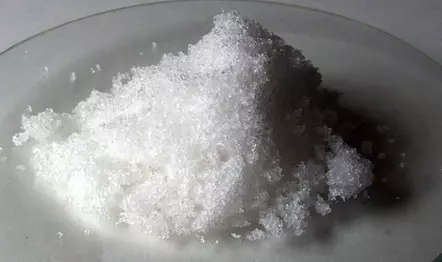
Aluminium Nitrate
Found this useful?