Sodium Bicarbonate Supply Chain Concentration Risk
Sodium Bicarbonate Supply Chain Concentration Risk
Sodium bicarbonate may be a relatively simple commodity chemical, but its supply chain is more concentrated than its familiar applications suggest. Heavy dependence on soda ash, geographically concentrated natural resources, large Chinese production capacity and limited diversification in some regional markets can leave buyers exposed to disruptions in feedstock, energy, logistics and plant operations.
Sodium bicarbonate, commonly known as baking soda, is used across a remarkably broad range of industries.
Its applications include:
Food and beverages
Pharmaceuticals
Animal feed
Household products
Flue-gas treatment
Detergents
Chemicals
Water treatment
Personal care
That diversity normally provides a degree of demand resilience.
The supply side is more complicated.
Sodium bicarbonate is produced primarily from natural or synthetic soda ash, making the availability and economics of upstream soda ash an important part of the bicarbonate supply chain. S&P Global notes that the 10 largest sodium bicarbonate producers accounted for more than 56% of installed global capacity in 2023, with China the world's largest producer and consumer.
For procurement teams, this creates a fundamental issue:
A buyer may have several bicarbonate suppliers on paper while still being exposed to the same upstream production regions or feedstocks.
The Supply Chain Starts With Soda Ash
Sodium bicarbonate is closely linked to the soda ash industry.
Soda ash can be converted into sodium bicarbonate through downstream processing, while natural trona deposits can provide the underlying sodium carbonate feedstock.
This creates an important procurement relationship:
Trona / raw materials → Soda ash → Sodium bicarbonate → Food, pharma, industrial and environmental applications
Any disruption upstream can therefore affect downstream availability or pricing.
S&P Global identifies natural and synthetic soda ash as the primary sources for sodium bicarbonate production.
China Is a Major Concentration Point
China represents the largest production base for both soda ash and sodium bicarbonate.
GHCL's 2025–26 annual report estimates China's soda ash capacity at approximately 40.5 million metric tons, almost half of global capacity, with 2025 production around 39.8 million metric tons.
This scale creates two different implications for buyers.
First, China's enormous production base can provide competitive supply and pricing.
Second, disruptions affecting Chinese production, exports, energy availability or logistics can have consequences beyond the domestic market.
The concentration therefore creates both cost advantages and systemic exposure.
Natural Soda Ash Creates Geographic Concentration
Natural soda ash is produced from trona deposits.
Those deposits are not distributed evenly around the world.
The United States' Green River Basin in Wyoming is particularly important.
A 2026 filing based on industry data states that roughly 90% of U.S. soda ash production originates in the Green River Basin.
This means a significant portion of natural soda ash production is geographically concentrated in one region.
That matters for sodium bicarbonate buyers because natural soda ash can ultimately serve as an important feedstock for bicarbonate production.
Wyoming Is a Strategic Supply Hub
Wyoming's Green River Basin contains some of the world's largest trona resources.
Large integrated producers can mine the mineral and convert it into soda ash and downstream bicarbonate products.
This integration can provide:
Feedstock security
Lower transportation costs within the production system
Greater cost control
Consistent product quality
Reduced dependence on external soda ash suppliers
A supplier with direct access to trona can therefore have a different risk profile from a producer purchasing soda ash on the open market.
Integration Is Becoming a Competitive Advantage
The importance of vertical integration is particularly clear in the U.S.
Church & Dwight, for example, manufactures sodium bicarbonate at facilities in Green River, Wyoming and Old Fort, Ohio and states that trona is the primary source of soda ash used for its bicarbonate requirements. It also has a supply relationship with Tata Chemicals' Wyoming trona operation.
This type of upstream linkage illustrates why buyers should examine more than the final bicarbonate supplier.
Two suppliers may sell an identical grade while having very different access to feedstock.
Solvay Demonstrates the Scale of Integration
Solvay remains one of the industry's major bicarbonate producers.
Its 2025 capacity presentation describes Solvay as the global number-one producer of sodium bicarbonate outside China, with approximately 28% of the non-Chinese market capacity in its internal assessment.
The company's portfolio includes soda ash and sodium bicarbonate production across multiple regions.
This geographic footprint can provide diversification compared with a producer dependent on a single plant.
At the same time, concentration among large integrated producers means that major plant outages can have outsized effects on particular regional markets.
Europe Faces a Different Risk Profile
European production has a different cost structure from natural-trona operations in the United States.
Synthetic soda ash production can be more sensitive to:
Natural gas prices
Electricity costs
Carbon costs
Environmental regulation
Plant utilization
This has become increasingly important as European chemical manufacturers face structurally higher energy costs.
In February 2026, Solvay announced that it would reduce soda ash production capacity at its Torrelavega, Spain site from 600 kt to 420 kt, citing global oversupply and persistently high European energy and carbon costs. The company said its sodium bicarbonate operations at the site would remain unaffected.
The announcement demonstrates an important distinction:
Soda ash capacity changes do not automatically mean an equivalent bicarbonate supply loss.
But they can still influence the economics and strategic positioning of the broader soda ash and bicarbonate chain.
Supply Concentration Does Not Mean Constant Shortage
It is important to distinguish concentration risk from structural scarcity.
The sodium bicarbonate market can remain well supplied while still being vulnerable to localized disruptions.
A concentrated market may experience:
Normal conditions → Adequate supply
Plant outage → Regional tightness
Logistics disruption → Longer lead times
Feedstock disruption → Higher production costs
Multiple disruptions → Global price pressure
The risk is therefore about sensitivity, not necessarily permanent shortage.
Product Grade Creates Another Layer of Risk
Not all sodium bicarbonate is interchangeable.
Buyers may require:
Technical grade
Food grade
Feed grade
Pharmaceutical grade
High-purity material
Specialized environmental-treatment grades
A disruption in commodity-grade supply does not necessarily mean an equivalent shortage of pharmaceutical-grade material.
Qualification requirements can also make substitution more difficult.
This creates a particularly important risk for pharmaceutical and food manufacturers.
Pharmaceutical Buyers Have Less Flexibility
Pharmaceutical-grade sodium bicarbonate may require strict control of:
Purity
Heavy metals
Microbiological specifications
Particle characteristics
Manufacturing conditions
Documentation
Regulatory compliance
Switching suppliers can require qualification and validation.
Consequently, a buyer may technically have several producers available but only one or two that are already approved.
That is effective concentration risk.
Food Buyers Face Similar Constraints
Food manufacturers may require suppliers to maintain:
Food-grade certification
Traceability
Allergen controls
Halal certification
Kosher certification
Consistent particle size
Defined impurity specifications
The more requirements a buyer adds, the smaller the qualified supplier pool becomes.
Therefore:
Global supplier count ≠ qualified supplier count
This distinction is critical when assessing supply security.
Logistics Can Amplify Geographic Concentration
Sodium bicarbonate is not necessarily an expensive product relative to its weight.
Transportation can therefore become an important component of landed cost.
Long-distance sourcing can expose buyers to:
Ocean freight
Port congestion
Container availability
Inland transportation
Fuel costs
Customs delays
A geographically distant alternative may technically exist but still be commercially unattractive.
This limits the practical value of theoretical supplier diversification.
Regional Self-Sufficiency Matters
A buyer located close to a major production cluster may have a much lower supply risk than a buyer dependent on imports.
For example, North American buyers can access large natural soda ash resources and integrated production systems.
Asian buyers may have access to China's enormous domestic production base.
European buyers may depend more heavily on regional synthetic production and imports depending on grade and application.
The same global market can therefore present very different risks by region.
Turkey Provides an Important Natural-Soda Alternative
Turkey has emerged as another major natural soda ash production center.
Its large trona resources provide diversification from the U.S. Green River Basin.
GHCL's industry review identifies China, the United States, Turkey and Western Europe as the major concentrations of soda ash production capacity.
Turkey's position is strategically important because it adds a major natural-soda source outside North America and China.
For European, Middle Eastern and Asian buyers, Turkish supply can therefore provide an alternative to some other production regions.
China's New Capacity Changes the Equation
China's soda ash sector continues to expand.
GHCL reports that China's Berun natural soda ash project added 5 million metric tons of capacity in its first phase, with a further 2.8 million metric tons associated with Phase II expected in 2026.
Additional capacity can reduce scarcity risk.
But it can also increase competitive pressure on producers elsewhere.
For sodium bicarbonate buyers, the effect may be transmitted through:
More soda ash capacity → Greater feedstock availability → Potentially lower input costs → More competitive bicarbonate supply
The opposite can occur if capacity additions are delayed or production rates fall short of expectations.
Natural Versus Synthetic Production Matters
Sodium bicarbonate buyers should understand how their supplier obtains its upstream feedstock.
Natural trona-based production generally has different economics and environmental characteristics from synthetic soda ash.
Natural production can benefit from:
Large mineral deposits
Lower processing requirements
Integrated mining
Competitive energy economics
Synthetic production can offer greater geographic flexibility because it does not require access to trona deposits.
However, synthetic operations can be more exposed to energy and carbon costs.
This creates different risk profiles for different suppliers.
Energy Is an Underappreciated Risk
Although sodium bicarbonate itself may appear relatively straightforward, upstream production can be energy intensive.
Synthetic soda ash production requires significant process energy.
This means that energy-price shocks can eventually affect bicarbonate economics.
Europe provides a useful example.
High natural-gas and carbon costs have already influenced soda ash production decisions in the region.
For buyers, this means energy exposure should be included in supplier-risk assessments.
Carbon Policy Could Reshape Supplier Economics
The difference between natural and synthetic production may become increasingly relevant as carbon costs evolve.
Natural trona-based production can have a different emissions profile from conventional synthetic production.
Producers are therefore investing in process improvements.
Solvay, for example, has developed its e.Solvay technology with claimed reductions in CO₂ emissions and lower water, brine and limestone consumption.
As carbon-related costs become more significant, production technology could become an increasingly important procurement variable.
The Supply Chain Is Not Controlled by One Company
It would be misleading to describe sodium bicarbonate as a single-producer market.
S&P Global's 2023 assessment identified more than 10 major producers representing over 56% of global installed capacity, with the largest producer accounting for more than 14% and Solvay nearly 14%.
The real risk is therefore not monopoly.
It is concentration across producers, countries, feedstocks and production technologies.
This is a more complex form of supply-chain risk.
Tier-Two Supplier Mapping Is Essential
A buyer's supplier map should extend beyond the company listed on the purchase order.
For each supplier, procurement teams should identify:
Supplier → Manufacturing site → Soda ash source → Trona or synthetic feedstock → Logistics route
This can reveal hidden common dependencies.
For example, three apparently independent bicarbonate suppliers may ultimately depend on the same regional soda ash producer.
In that case, switching between them would provide less diversification than expected.
Effective Supplier Diversification
A stronger sourcing strategy separates suppliers by risk origin.
Instead of:
Supplier A + Supplier B + Supplier C
buyers should aim for something closer to:
Natural-trona supplier + Synthetic supplier + Different geographic region
This creates genuine diversification.
The goal is not simply to have multiple vendors.
The goal is to have vendors whose failure modes are different.
Contract Structure Can Reduce Exposure
Long-term supply contracts can help stabilize availability.
Buyers may negotiate:
Minimum annual volumes
Reserved production capacity
Price-adjustment mechanisms
Emergency allocation clauses
Inventory commitments
Alternative-grade provisions
Force-majeure procedures
These provisions can be particularly valuable for pharmaceutical and food manufacturers that cannot easily substitute material.
Strategic Inventory Can Provide a Buffer
Inventory is another tool.
For a commodity such as sodium bicarbonate, holding additional stock may provide protection against short disruptions.
The appropriate buffer depends on:
Supplier lead time
Import dependency
Production flexibility
Product shelf life
Storage capacity
Criticality of the ingredient
A company with a single qualified supplier may need a larger safety stock than one with several validated alternatives.
Dual Sourcing Is Not Always Enough
Dual sourcing can create a false sense of security.
If both suppliers depend on the same upstream region, the buyer may still face correlated disruption.
For example:
Supplier A → Chinese soda ash
Supplier B → Chinese soda ash
is less resilient than:
Supplier A → U.S. trona
Supplier B → Turkish trona
Even if the second arrangement costs slightly more.
This is why procurement teams should evaluate source diversity, not just supplier count.
Price Risk and Availability Risk Are Different
A supply chain can be highly available but still experience significant price volatility.
Conversely, prices can remain relatively stable while a specific grade becomes difficult to source.
Buyers should therefore track two separate indicators:
Availability Risk
Can the required quantity and grade be obtained?
Cost Risk
At what price can it be obtained?
The drivers are not always identical.
Procurement Should Monitor Soda Ash First
Because soda ash is such an important upstream input, bicarbonate buyers should monitor:
Soda ash capacity changes
Trona production
Plant outages
New capacity
Energy prices
Export flows
Freight rates
Major producer announcements
This provides an early-warning system for downstream bicarbonate procurement.
Key Risk Indicators
Procurement teams can build a sodium bicarbonate dashboard around:
Risk Indicator | Why It Matters |
|---|---|
Soda ash prices | Major upstream cost signal |
Trona production | Natural-feedstock availability |
Chinese operating rates | Global supply-scale indicator |
U.S. Green River output | Natural soda ash concentration |
Turkish production | Diversification indicator |
European energy prices | Synthetic production economics |
Plant outages | Immediate supply disruption |
Freight rates | Landed-cost exposure |
Supplier inventory | Short-term availability |
Certificate status | Qualified-supplier availability |
This turns a seemingly simple chemical purchase into a structured supply-risk program.
What Buyers Should Ask Suppliers
Before signing a long-term sodium bicarbonate contract, buyers should ask:
Where is the product manufactured?
What is the primary soda ash feedstock?
Is the supplier vertically integrated?
Where does its soda ash originate?
How many production sites can supply the same grade?
What is the normal lead time?
What emergency allocation can be guaranteed?
What alternative sites are qualified?
How frequently are certificates renewed?
How much inventory is normally maintained?
These questions reveal supply resilience far better than a simple price quotation.
The Risk Is Likely to Become More Important
Sodium bicarbonate demand spans industries that are not closely correlated.
Food demand can remain stable even when industrial demand weakens.
Environmental applications can grow because of emissions regulations.
Pharmaceutical applications have their own demand drivers.
This broad demand base makes bicarbonate a relatively resilient chemical.
But resilience on the demand side can increase the importance of supply continuity.
If several major applications require the same limited production base, a supply disruption can affect multiple industries simultaneously.
A New Procurement Model
The traditional approach to sodium bicarbonate purchasing is straightforward:
Find a qualified supplier → Negotiate price → Purchase volume
A more resilient approach is:
Map upstream feedstock → Identify geographic concentration → Qualify independent suppliers → Contract strategic capacity → Maintain inventory → Monitor leading indicators
This model is more complex but provides greater protection against disruption.
Conclusion
Sodium bicarbonate's supply chain is not inherently short of producers, but it is exposed to significant concentration at several levels.
China represents an enormous production center for soda ash and bicarbonate, while natural trona resources are concentrated in specific geographic regions such as Wyoming and Turkey. The U.S. Green River Basin alone accounts for roughly 90% of U.S. soda ash production, while China's soda ash capacity is estimated at approximately 40.5 million metric tons.
The result is a supply chain in which the biggest risk is not necessarily a global shortage.
It is correlated disruption.
Multiple suppliers can still depend on the same soda ash market, mineral deposit, energy system or transportation corridor.
For buyers, the solution is therefore not simply adding another vendor.
It is creating genuine geographic, feedstock and production-route diversification.
Sodium bicarbonate may remain an inexpensive and familiar chemical, but its procurement strategy increasingly requires the same supply-chain discipline applied to more strategically sensitive commodities.
The key question for buyers is no longer:
“How many suppliers do we have?”
It is:
“How many genuinely independent sources of supply do we have?”
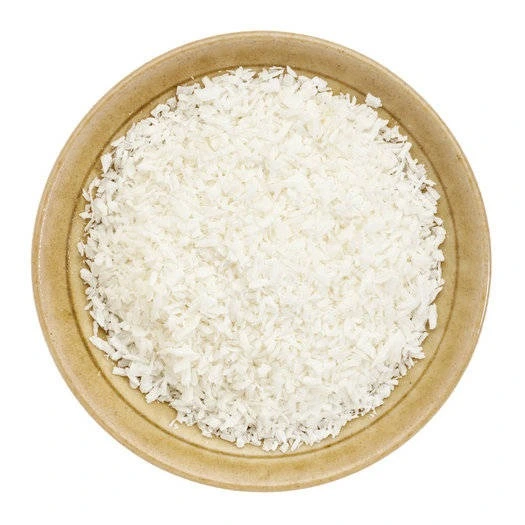
Sodium Bicarbonate (Feed)
Found this useful?