Sodium Gluconate: Industrial Applications in Construction and Water Treatment
Sodium gluconate serves two important industrial functions: it helps construction manufacturers control cement setting times and supports water treatment formulations that manage metal ions, scale and corrosion. These capabilities make it a useful chemical for industries where process stability, material performance and equipment protection directly affect operating costs.
Sodium gluconate (C₆H₁₁NaO₇), also known as the sodium salt of gluconic acid, is a water-soluble organic compound commonly supplied as a white to yellowish crystalline powder. Its chelating properties allow it to interact with metal ions, while its influence on cement hydration makes it valuable in concrete admixtures. As construction activity and industrial water management continue to create demand for specialised chemicals, sodium gluconate remains an important raw material for manufacturers and bulk chemical buyers.
What Is Sodium Gluconate and Why Do Industries Use It?
Sodium gluconate is produced by neutralising gluconic acid with a sodium-based alkali. Manufacturers commonly obtain gluconic acid through glucose fermentation, followed by purification, crystallisation and drying to produce the final powder.
Its industrial value comes from two primary characteristics:
Chelating ability: It binds metal ions such as calcium, iron and other dissolved metals, helping control their behaviour in industrial formulations.
Setting-time control: It influences cement hydration, allowing concrete manufacturers to extend working time and manage setting behaviour.
The compound dissolves readily in water, which makes it suitable for liquid chemical formulations and industrial processing systems. Its versatility also supports applications in metal cleaning, detergents, textile processing and other chemical manufacturing operations.
For procurement teams, understanding these properties helps identify the appropriate grade and specification for each application rather than treating all sodium gluconate supplies as interchangeable.
Sodium Gluconate Applications in Construction and Concrete Manufacturing
Construction represents one of the most important industrial application areas for sodium gluconate. Concrete manufacturers use it as a setting retarder to regulate cement hydration and maintain workable concrete for longer periods.
When manufacturers mix cement with water, hydration begins and gradually develops the material's strength. However, high temperatures, transportation delays and complicated construction schedules can accelerate the loss of workability, creating difficulties during placement and finishing.
Sodium gluconate helps manage this process by delaying cement setting under suitable formulation conditions.
Its applications in construction include:
Ready-mix concrete: It helps maintain workability during transportation from batching plants to construction sites, particularly when delivery distances are long.
Hot-weather concreting: High ambient temperatures can accelerate setting. Sodium gluconate helps admixture manufacturers formulate systems that provide better control over setting time.
Mass concrete projects: Large foundations, dams and other substantial structures often require extended placement periods. Retarders help maintain workable conditions throughout the operation.
Precast concrete: Manufacturers can incorporate sodium gluconate into specialised admixture formulations to manage setting behaviour according to production requirements.
Cement-based mortars: It supports controlled setting in selected mortar and dry-mix construction chemical formulations.
Sodium gluconate can also contribute to water-reducing admixture systems. When formulated appropriately with other ingredients, it helps manufacturers balance fluidity, cement dispersion and setting behaviour.
How Sodium Gluconate Improves Concrete Performance
The main advantage of sodium gluconate in concrete production is its ability to extend the period during which workers can handle and place fresh concrete.
This can provide several operational benefits:
Extended working time: Construction teams gain additional time for transportation, placement, compaction and finishing.
Improved workability: Properly designed admixture formulations help maintain the required consistency during handling.
Better production flexibility: Concrete manufacturers can adjust formulations to accommodate temperature changes and transportation schedules.
Controlled hydration: Retarded cement hydration helps manage setting behaviour in applications that require longer working periods.
However, dosage requires careful attention. Excessive addition can delay setting beyond the required timeframe and affect early strength development. Manufacturers should conduct laboratory trials using their actual cement, aggregates, water and admixture combinations before approving a commercial formulation.
Role of Sodium Gluconate in Industrial Water Treatment
Industrial water systems frequently contain dissolved minerals and metal ions that can interfere with equipment performance. Cooling towers, boilers, heat exchangers and industrial circulation systems face particular challenges when water contains significant concentrations of calcium, magnesium, iron and other dissolved substances.
Sodium gluconate contributes to water treatment through its chelating and metal-ion management properties. It forms complexes with certain metal ions, helping control their availability and behaviour within formulated treatment systems.
One important application involves managing mineral deposits in cooling water circuits. Calcium-containing compounds can contribute to scale formation on heat-transfer surfaces, reducing thermal efficiency and increasing maintenance requirements.
Sodium gluconate can support scale-control formulations by interacting with calcium ions. Research published in the Journal of Saudi Chemical Society examined its scale and corrosion inhibition behaviour in cooling water systems, including its interaction with calcium ions.
Its potential water treatment applications include:
Cooling water systems: It can support formulations designed to manage scale formation and protect circulating equipment.
Boiler water treatment: It can serve as a metal-ion control ingredient in selected industrial treatment formulations.
Industrial cleaning: It helps bind metal ions during cleaning processes, supporting the removal of certain mineral and metallic residues.
Metal processing water: It can assist with controlling dissolved metals in selected manufacturing and surface-treatment operations.
Scale and Corrosion Control in Cooling Water Systems
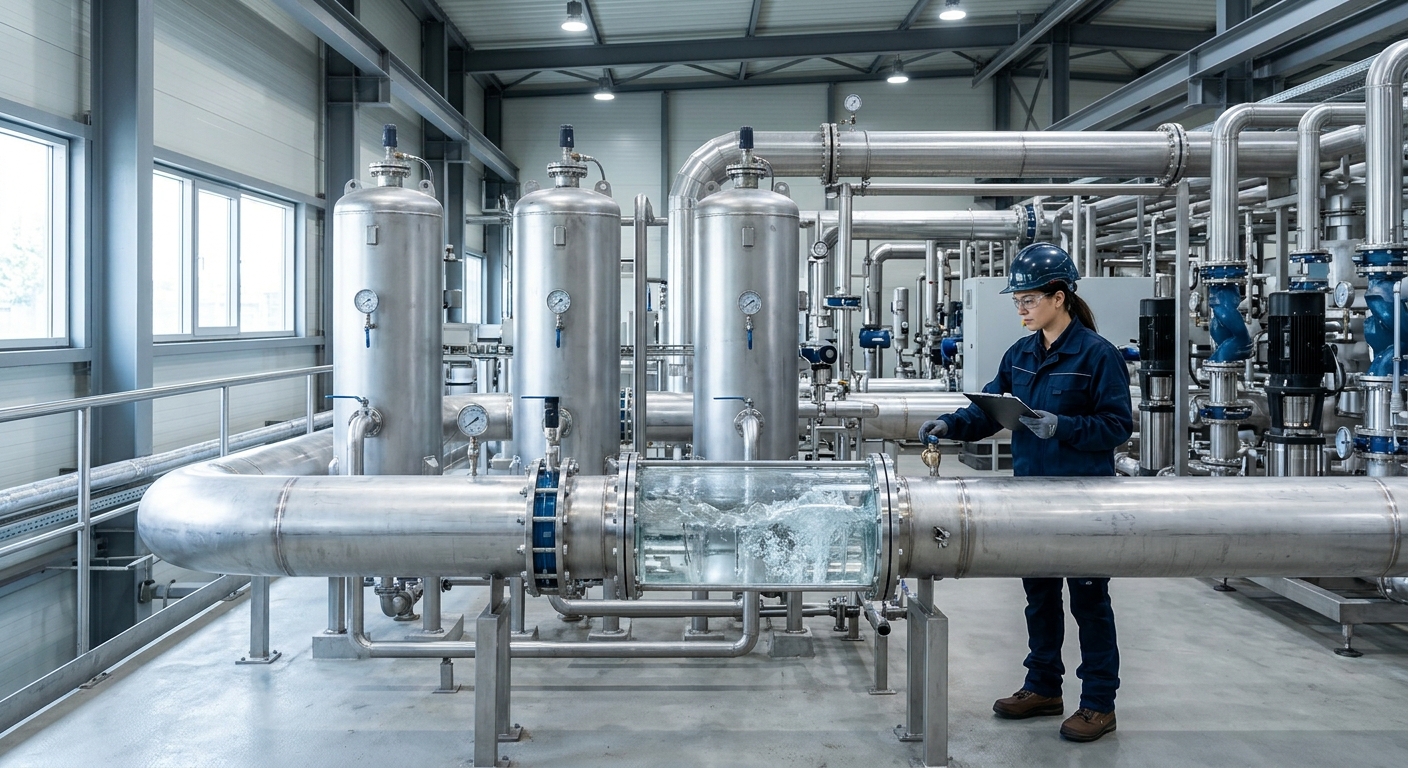
Scale formation and corrosion create two separate but closely connected challenges for industrial water management. Mineral deposits restrict water flow and reduce heat transfer, while corrosion gradually damages metal surfaces, pipelines and equipment.
Sodium gluconate can contribute to treatment strategies addressing these problems through its interaction with dissolved metal ions and certain metallic surfaces.
Its role in scale management involves complex formation with calcium and other relevant ions. Under appropriate operating conditions, this interaction can help reduce the availability of minerals that contribute to deposits.
Research published in the journal Corrosion Science also investigated sodium gluconate as a corrosion and scale inhibitor for ordinary steel in simulated cooling water. This highlights its relevance to industrial formulations designed to protect metallic equipment.
However, sodium gluconate does not replace a complete cooling water treatment programme. Its performance depends on several operating factors:
Water hardness: Calcium and magnesium concentrations influence mineral deposition and treatment requirements.
Operating temperature: Temperature changes affect mineral solubility and chemical performance.
Water pH: Alkalinity and acidity influence metal-ion behaviour and treatment chemistry.
Chemical concentration: The treatment formulation must provide sufficient chemical activity without creating unnecessary operating costs.
System composition: Other treatment chemicals, dissolved salts and contaminants can affect compatibility and overall performance.
Industrial water treatment manufacturers therefore evaluate sodium gluconate alongside other scale inhibitors, corrosion inhibitors and biocides to develop application-specific formulations.
Industries That Purchase Sodium Gluconate
Demand for sodium gluconate extends beyond construction and water treatment. Its ability to interact with metal ions and support specialised chemical formulations creates opportunities across several industrial sectors.
The main purchasing industries include:
1. Construction chemical manufacturers
These manufacturers purchase sodium gluconate for concrete retarders, water-reducing admixtures, cement additives and specialised mortar formulations. Consistent quality helps maintain predictable performance across production batches.
2. Industrial water treatment companies
Water treatment formulators use it in selected cooling water and industrial cleaning products. Their purchasing requirements often depend on water chemistry, formulation compatibility and treatment performance.
3. Metal finishing and electroplating businesses
Sodium gluconate can support metal cleaning and surface preparation by binding metal ions and assisting with the removal of certain residues.
4. Detergent and cleaning product manufacturers
Its chelating properties make it useful in selected cleaning formulations where dissolved metal ions can interfere with cleaning performance.
5. Textile processing companies
Textile manufacturers can use sodium gluconate in processing formulations to manage metal ions that may affect dyeing and finishing operations.
For chemical traders, these different applications create opportunities to supply multiple customer segments through a single industrial chemical category.
Quality Specifications and Sourcing Considerations for Buyers
Sodium gluconate procurement requires attention to product purity, physical characteristics and application-specific performance. A product that works well in one formulation may not automatically meet the requirements of another industrial process.
Industrial buyers should review the following specifications before confirming an order:
Purity: Many industrial specifications require a minimum purity of 98%. Buyers should confirm the exact requirement for their intended application.
Appearance: The material generally appears as a white or yellowish crystalline powder. Significant variation may indicate differences in product quality or handling conditions.
Moisture content: Loss on drying affects product handling, storage stability and formulation calculations.
Chloride content: Chloride levels matter in applications involving reinforced concrete and corrosion-sensitive equipment.
Sulphate content: Buyers should assess sulphate levels against their formulation and process requirements.
Heavy metals: Appropriate limits for lead, arsenic and other heavy metals help maintain product quality and application suitability.
pH value: The pH of an aqueous solution provides useful information for formulation and quality control.
A Certificate of Analysis (COA) should accompany each relevant batch to confirm that the supplied material meets the agreed specifications. Buyers should also request a Technical Data Sheet (TDS) and Safety Data Sheet (SDS) before approving a supplier.
Packaging, Storage and International Procurement
Most industrial sodium gluconate shipments use moisture-resistant bags, commonly in 25 kg packaging, although larger bulk formats may also suit high-volume buyers.
During procurement and storage, buyers should consider:
Sealed packaging to prevent moisture absorption and contamination.
Dry, ventilated warehouse conditions.
Protection from direct water exposure and damaged packaging.
Clear batch identification and traceable shipping documentation.
Consistent product specifications across repeat orders.
International buyers should also assess supplier production capacity, shipment schedules, export documentation and the reliability of logistics arrangements.
A competitive quoted price matters, but consistent quality and dependable delivery are equally important for manufacturers operating continuous production lines.
What Procurement Teams Should Consider When Buying Sodium Gluconate
For procurement managers, selecting the right sodium gluconate supplier involves more than comparing prices per tonne. Product consistency, documentation and supply reliability all influence the long-term cost of industrial operations.
Several purchasing practices can help reduce sourcing risks:
Define the application: Specify whether the material will serve concrete admixture production, cooling water treatment or another industrial process.
Compare technical specifications: Evaluate purity, moisture, chloride content and other relevant parameters across supplier offers.
Request samples: Conduct application-specific trials before committing to large-volume purchases.
Evaluate supplier reliability: Review production capacity, export experience, packaging standards and delivery performance.
Consider total procurement costs: Include freight, insurance, import duties, handling expenses and potential storage costs when comparing international offers.
Buyers should also distinguish between industrial and food-grade sodium gluconate. Although the chemical identity remains the same, different applications may require different quality standards, documentation and regulatory compliance.
Building relationships with dependable suppliers can help manufacturers maintain consistent production schedules and reduce the risk of unexpected material shortages.
The Future of Sodium Gluconate in Industrial Applications
The continued development of construction chemicals and industrial water treatment technologies creates opportunities for sodium gluconate across established manufacturing sectors.
Construction manufacturers increasingly require admixture formulations that provide better control over cement hydration, particularly in projects involving high temperatures, extended transportation distances and complex placement schedules. Sodium gluconate offers formulators a useful ingredient for developing these specialised products.
Industrial water treatment also presents opportunities as manufacturers seek effective ways to manage mineral deposits, dissolved metals and equipment maintenance requirements. Its chelating properties make it relevant to formulations designed for cooling systems, metal cleaning and other industrial processes.
For chemical traders and international buyers, these applications provide a reason to maintain reliable sourcing channels and monitor changing customer requirements.
The purchasing priority should remain consistent quality, suitable technical specifications and dependable global supply. Buyers who evaluate these factors alongside competitive pricing can establish stronger procurement strategies and support uninterrupted industrial operations.
Ready to source Sodium Gluconate from verified global suppliers? Explore competitive offers on our platform today.
Sources:
2. Sodium Gluconate Technical Data Sheet, Bisley International

Monosodium Glutamate (E621)
Found this useful?