Sodium Silicate Uses in Cleaning Products, Construction Materials and Water Treatment
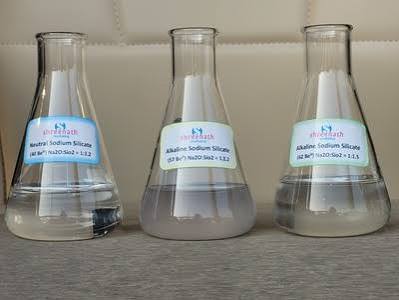
Sodium silicate serves several important functions across industrial cleaning, construction and water treatment. Also known as water glass, this inorganic chemical combines sodium oxide and silica in varying proportions, allowing manufacturers to adjust its alkalinity, solubility, viscosity and binding properties to suit different production requirements.
For chemical traders, procurement managers and industrial buyers, selecting sodium silicate involves more than comparing prices per tonne. The physical form, total solids content, silica-to-alkali ratio and application-specific grade all influence handling costs and final performance.
Understanding these specifications helps buyers identify suitable products for detergent manufacturing, cement-based materials and selected water-treatment operations while reducing the risk of purchasing an incompatible grade.
How Sodium Silicate Composition Determines Industrial Performance
Sodium silicate is generally produced by heating silica with sodium carbonate to form a glass-like material, which manufacturers can subsequently dissolve in water to produce liquid sodium silicate. Manufacturers can also adjust the composition to create products with different chemical and physical properties.
The principal specification is the silica-to-alkali ratio, commonly expressed as the weight ratio of silicon dioxide (SiO₂) to sodium oxide (Na₂O). This ratio influences alkalinity, viscosity, solubility and the way the silicate interacts with other formulation ingredients.
A lower ratio generally indicates a greater proportion of alkali relative to silica. Such products often suit applications that require stronger alkalinity, while higher-ratio silicates can provide different binding and polymerization characteristics.
Buyers should also distinguish between weight ratios and molar ratios, because suppliers may report either measurement. A specification sheet should clearly identify the convention used to prevent incorrect comparisons between products.
Sodium Silicate Uses in Industrial Cleaning Products
Cleaning-product manufacturers use sodium silicate as a multifunctional ingredient in laundry detergents, automatic dishwashing formulations and industrial cleaning compounds. Its alkalinity and ability to interact with mineral deposits and other formulation ingredients make it useful in products designed to remove grease, oily soils and accumulated grime.
Its principal functions include:
Alkalinity support: Sodium silicate contributes alkalinity that helps cleaning formulations tackle certain acidic and greasy soils.
Corrosion protection: Under suitable formulation conditions, silicates help protect metal surfaces and equipment from corrosion during cleaning.
Builder performance: Silicates support detergent systems by contributing to soil removal and helping manage certain mineral-related problems.
Formulation stability: Depending on the formulation, silicates can assist with dispersion and improve overall cleaning performance.
The appropriate grade depends on the cleaning application. Industrial laundry products, heavy-duty cleaners and automatic dishwashing detergents may require different alkalinity levels, solubility characteristics and silicate ratios.
Procurement teams should assess compatibility with surfactants, builders, enzymes and other additives. A grade that performs well in one detergent system may produce unwanted precipitation, viscosity changes or stability problems in another.
Construction Materials and Sodium Silicate Applications
In construction, sodium silicate functions as a binder, hardening aid, adhesive component and material for selected surface-treatment or stabilization processes. Its interaction with mineral substrates makes it useful in applications involving concrete, cement-based products and soil reinforcement.

Common applications include:
Concrete and cement treatments: Selected silicate formulations react with components in cementitious materials and can help densify concrete surfaces.
Soil stabilization: Sodium silicate can participate in chemical grouting and ground-strengthening systems when used with a suitable hardener.
Adhesives and binders: Its binding properties support industrial adhesive formulations and certain mineral-based materials.
Specialty construction products: Manufacturers use silicates in selected refractory materials, sealants and other products requiring inorganic binding properties.
Construction buyers should not assume that every sodium silicate grade improves concrete in the same way. Performance depends on substrate composition, concentration, application method, curing conditions and compatibility with other treatment chemicals.
For concrete surface treatments, buyers should evaluate penetration, reaction behavior and the intended finish. For soil stabilization, the procurement specification should address gelation or setting behavior, the selected hardener and the required ground conditions.
Sodium Silicate Uses in Water Treatment
Water-treatment applications require careful control because sodium silicate can perform different functions depending on water chemistry and treatment design. Established uses include corrosion control, metal stabilization and the preparation of activated silica for coagulation assistance.
Corrosion control is one important application. Under appropriate conditions, soluble silicates help develop protective films on metal surfaces, reducing corrosion in selected water-distribution systems and industrial equipment.
Sodium silicate can also support the stabilization of iron and manganese. Following suitable oxidation treatment, it can help keep these metals dispersed in colloidal form rather than allowing them to deposit immediately, although effectiveness depends on the water chemistry and operating conditions.
A third use involves activated silica as a coagulant aid. Treatment operators prepare activated silica from sodium silicate through controlled neutralization, then use it alongside a primary coagulant where the process design supports this approach. Activated silica can help produce stronger flocs that settle more effectively.
Water-treatment buyers should confirm the intended function before purchasing. A grade suitable for an industrial corrosion-control system may not be the right choice for activated-silica preparation, and drinking-water applications require compliance with the relevant treatment-chemical specifications.
Liquid vs Solid Sodium Silicate: Which Form Should Buyers Choose?
Sodium silicate is commercially available as an aqueous liquid and as solid glass, flakes, granules or powders. The best option depends on consumption volume, storage facilities, transport economics and the way the chemical enters the production process.
Liquid sodium silicate suits facilities that have tanks, pumps and metering equipment. Operators can dose it directly into many processes, reducing the need to dissolve solids on-site, but buyers pay to transport the water already present in the solution.
Solid sodium silicate can offer logistical advantages where concentrated material, compact storage or long-distance transportation matters. However, the buyer must consider dissolution equipment, preparation time, dust control and the additional handling steps required before use.
Before choosing a form, compare the following factors:
Delivered cost: Compare cost per tone of active silicate solids rather than relying only on the quoted price per tone of product.
Handling infrastructure: Liquid grades require compatible tanks, pumps and transfer lines, while solid grades need suitable storage and dissolution arrangements.
Production consistency: Automated liquid dosing can simplify process control, whereas solid products may require additional steps to achieve a consistent solution.
Supply conditions: Packaging, moisture exposure, transport distance and expected consumption all influence the practical choice.
Solids Content, Grades and Silica-to-Alkali Ratio
Total solids content measures the proportion of material remaining after accounting for water in a liquid product. Two liquid sodium silicate products can have the same silica-to-alkali ratio but different solids contents, which affects delivered active material, viscosity, density and dosing requirements.
For example, a liquid product containing 40% solids supplies approximately 400 kg of total solids per tone of solution. A product containing 50% solids supplies approximately 500 kg per tone, assuming the stated percentages use the same analytical basis.
The ratio then describes the relationship between silica and sodium oxide within the silicate composition. Buyers should treat these two specifications separately rather than using either as a substitute for the other.
Grade selection should follow the intended use:
Detergent grade: Prioritize alkalinity, solubility, compatibility with other ingredients and any formulation-specific restrictions.
Construction grade: Evaluate binding performance, reaction behavior, consistency and suitability for the relevant mineral substrate.
Water-treatment grade: Specify composition, purity, contaminant limits and compliance with the intended treatment application.
General industrial grade: Confirm whether the material meets the process requirements for adhesives, mineral processing or other industrial uses.
A supplier's grade name alone does not establish suitability. Request a current technical data sheet and certificate of analysis covering SiO₂, Na₂O, total solids, density, viscosity and relevant impurity limits.
Procurement Checks for Reliable Sodium Silicate Supply
Sodium silicate purchasing decisions should connect technical specifications with commercial and operational requirements. Differences in concentration or ratio can change the quantity required, the cost of handling and the performance of the finished formulation.
Procurement teams should verify these details before confirming an order:
Application and grade: Identify whether the material will enter a detergent formulation, construction treatment or water-treatment process.
Chemical specifications: Confirm the SiO₂:Na₂O ratio, total solids and relevant physical properties.
Quality requirements: Request batch-specific documentation and define acceptable impurity limits, especially for sensitive treatment applications.
Packaging and logistics: Assess drums, intermediate bulk containers, bulk tankers or solid packaging against the site's handling capabilities.
Commercial comparison: Calculate cost on an equivalent active-solids basis and include freight, dilution, dissolution and storage expenses.
Safety and storage: Confirm suitable equipment materials, spill controls and handling procedures. Sodium silicate solutions can be strongly alkaline, so operators should follow the supplier's safety data sheet.
These checks help buyers avoid comparing products that differ significantly in concentration or functionality. They also improve supplier evaluation by linking chemical specifications with measurable process requirements.
What Buyers Should Prioritize When Sourcing Sodium Silicate
The most effective sodium silicate purchasing strategy starts with the application, then works backward to the required grade, physical form and chemical composition. Cleaning manufacturers may prioritize detergent compatibility and alkalinity, construction companies may focus on binding or surface-treatment performance, while water-treatment operators need reliable results under their specific water chemistry and process conditions.
Buyers should request comparable technical specifications from multiple suppliers and calculate the cost of usable silicate rather than comparing nominal product prices alone. Consistent documentation, reliable delivery, appropriate packaging and repeatable quality can matter as much as the initial quotation.
For traders and distributors, clearly identifying solids content, silica-to-alkali ratio and application suitability also makes product offers easier for industrial customers to evaluate. This supports better purchasing decisions and reduces the likelihood of grade substitutions that disrupt production.
Sodium Tripolyphosphate
SOURCE LINK: https://pubchem.ncbi.nlm.nih.gov/
Found this useful?