





Agrochemicals & Fertilizers
Aug 4, 2026schedule4 Min Read
South Asia and West Africa's resilient fertilizer demand
Discover why South Asia and West Africa continued purchasing NPK fertilizers despite elevated global prices
Full Reportarrow_forward

prodchem
Aug 4, 2026
South Korea's Trade Commission has opened a formal antidumping investigation into Chinese PVC suspension resin, and two of China's largest producers, Tianjin Bohua and Wanhua Chemical, sit at the center of the case. The probe lands at a moment when Chinese polymer overcapacity has become one of the most persistent stories in global plastics trade, and it adds South Korea to a growing list of markets pushing back on Chinese import volumes.
The Korea Trade Commission has named two Chinese suppliers and their affiliates as investigation targets in the PVC suspension resin case, alongside a separate case covering tin plated steel sheets from other Chinese producers. The commission has indicated it plans to issue final determinations on these investigations by April of next year, following further review.
This is not South Korea's only active antidumping case involving Chinese chemical imports. The commission has also recommended a duty of up to 19.17 percent on Chinese butyl acrylate, and it recently finalized duties of up to 31.55 percent on PVC paste resin imports from four European countries, showing that PVC and its derivative products are drawing sustained scrutiny from multiple angles at once.
Both companies carry real weight in the global PVC market, which is part of why their inclusion in this case is significant.
Tianjin Bohua operates an 800,000 tonne per year PVC production line as part of a major relocation and expansion project, positioning it as one of the larger suspension PVC producers in northern China.
Wanhua Chemical ranks among the world's largest chemical companies and produces suspension PVC across several grades, exporting significant volumes by sea to markets across Asia and Africa in addition to its large domestic base.
Both companies also appear in China's broader wave of new PVC capacity additions, with new plants and production lines commissioned across multiple Chinese producers in recent years even as domestic demand growth has slowed.
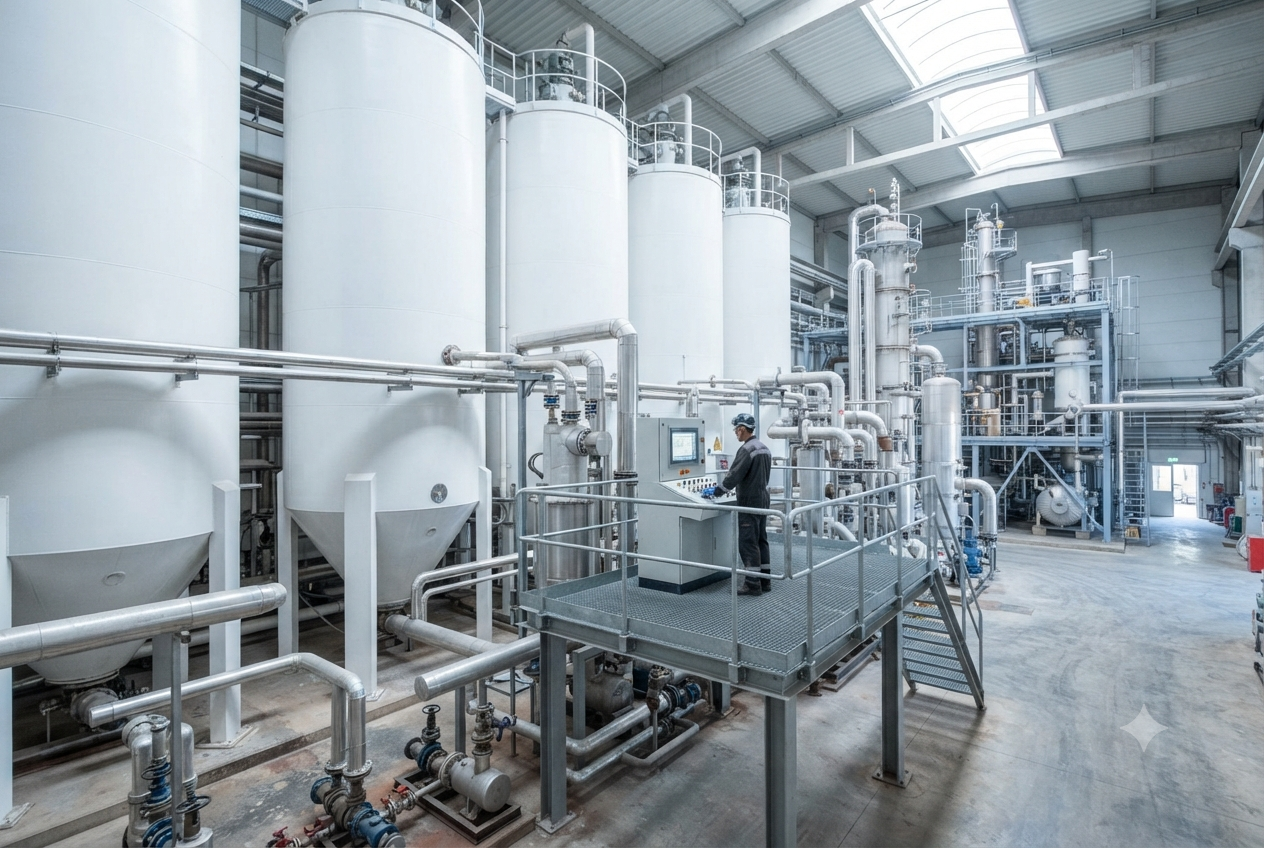
China's PVC industry has expanded rapidly even as its own construction and consumer demand growth has cooled. Actual Chinese PVC production capacity climbed by more than 2 million tonnes in a single recent year to reach a record high, with growth continuing even as global demand has failed to keep pace.
That imbalance has pushed Chinese producers to lean harder into export markets, and PVC pricing pressure tied to Chinese overcapacity has already triggered antidumping action well beyond South Korea. India has an active case covering PVC suspension resin imports from China, Indonesia, Japan, Korea, Taiwan, Thailand and the United States, reflecting how widely this pricing pressure has spread across import markets that once absorbed volumes more comfortably.
For companies sourcing PVC resin, particularly those relying on Chinese suppliers for suspension grade material, the South Korean case is worth tracking closely even outside Korea itself.
Expect duty exposure to build gradually. With a final determination not due until next year, buyers currently sourcing from Tianjin Bohua, Wanhua Chemical or affiliated exporters into Korea should plan for the possibility of retroactive or newly imposed duties once the case concludes.
Watch how Chinese producers respond commercially. Producers facing antidumping pressure in one market sometimes redirect volumes toward markets without active cases, which can shift pricing dynamics for buyers in unaffected regions.
Track parallel cases, not just this one. With PVC suspension resin already under investigation in India and PVC paste resin duties already finalized against European producers in Korea, the pattern suggests more markets could open similar cases as overcapacity pressure continues.
Reassess supplier diversification plans. Given how concentrated large scale PVC capacity has become among a handful of major Chinese producers, buyers may want to evaluate exposure to any single producer named across multiple active or pending cases.
The Korea Trade Commission's case against Tianjin Bohua and Wanhua Chemical is not an isolated dispute over a single shipment. It reflects a structural mismatch between China's PVC production capacity and the demand available to absorb it, a mismatch that is now showing up as trade friction across multiple import markets simultaneously.
Buyers with meaningful exposure to Chinese PVC resin should treat this case as one data point in a broader trend rather than a standalone regulatory event, and should build monitoring of related cases in other markets into their sourcing strategy going forward. Ready to source PVC resin from verified global suppliers? Explore competitive offers on our platform today.
Featured Product
Found this useful?
Continue Reading
Discover why South Asia and West Africa continued purchasing NPK fertilizers despite elevated global prices

Learn how the rising DAP affordability gap is affecting smallholder farmers in developing markets, reducing fertilizer access

Learn how the rising DAP affordability gap is affecting smallholder farmers in developing markets, reducing fertilizer access