
Stevia and Monk Fruit Supply Struggling to Keep Pace With Sugar-Reduction Demand
The global push toward sugar reduction is moving natural high-intensity sweeteners from niche clean-label ingredients into mainstream food and beverage formulations. Stevia and monk fruit are at the center of this shift because they can deliver intense sweetness with little or no sugar contribution while supporting plant-based and natural-positioning claims.
The problem for buyers is that demand growth is increasingly colliding with a supply chain that remains geographically and technically concentrated.
Stevia prices were described as steady-to-firm in Q1 2026, with stronger demand from beverages, functional foods, dairy and low-sugar formulations. In China, March 2026 stevia prices were reported at about $78,211/MT, with stronger export demand and controlled raw-leaf availability supporting the market.
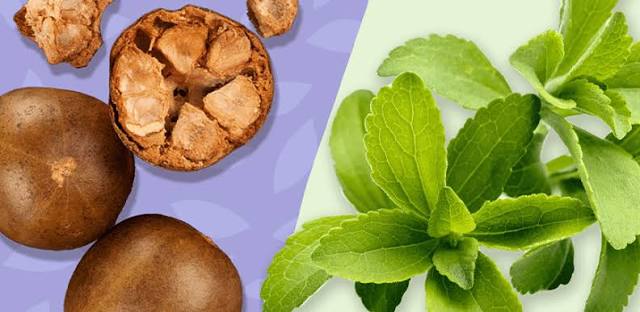
Monk fruit faces an even more concentrated agricultural structure. Current industry research indicates that more than 90% of monk fruit cultivation is concentrated in several counties in Guangxi, China, leaving the crop exposed to localized weather, agricultural and logistics disruptions.
For procurement teams, the emerging challenge is therefore not simply “Can we buy stevia or monk fruit?” but “Can we secure the exact glycoside profile, quality and volume our reformulation pipeline requires?”
Demand Is Moving Toward Better-Tasting Glycosides
Not all stevia is commercially interchangeable.
Traditional Reb A remains widely used, but newer formulations increasingly favor Reb M and Reb D because they can provide a cleaner, more sugar-like sweetness with less bitterness and lingering aftertaste.
This is creating a two-speed stevia market.
Commodity-oriented grades can face considerable price competition, while premium glycoside profiles and specialty formulations command greater technical attention. A 2026 industry supplier assessment noted that competition has pushed mainstream Reb A grades toward historically low price levels, while Reb M and specialty products have also experienced price pressure as more suppliers enter the market.
At the same time, the commercial demand for higher-purity Reb M continues to expand. Suppliers are investing in extraction, enzymatic conversion and fermentation technologies to increase availability and improve taste performance.
This means buyers should stop treating “stevia” as a single procurement category.
A more useful purchasing structure is:
Reb A
Reb M
Reb D
Reb A/Reb M blends
Enzymatically modified steviol glycosides
Fermentation-derived steviol glycosides
Application-specific stevia systems
The right choice depends on sensory performance, regulatory requirements, formulation economics and supply security.
Stevia Has More Leaf, But That Does Not Automatically Mean More Finished Sweetener
One of the most important misconceptions in the market is that a larger stevia harvest automatically solves supply constraints.
Industry analysis heading into 2026 reported that China's 2025 stevia crop benefited from favorable weather and expanded acreage, improving raw-leaf availability. Yet demand was growing quickly enough that additional leaf supply did not necessarily translate into lower prices for high-purity finished extracts.
The reason is straightforward:
Leaf availability ≠ extract availability ≠ high-purity glycoside availability.
The supply chain contains several bottlenecks:
Stevia cultivation → leaf harvesting → drying → extraction → purification → glycoside separation → blending → export.
A shortage at any stage can restrict finished-product availability.
Extraction and purification capacity becomes particularly important for buyers requiring high-purity Reb A, Reb M or specialty glycosides. A supplier may have access to sufficient raw material but still face constraints in converting it into the specific specification required by a multinational beverage or food manufacturer.
Monk Fruit Has an Even More Concentrated Supply Base
Monk fruit presents a different supply risk.
Luo Han Guo, the fruit used to produce monk fruit sweetener, is predominantly cultivated in Guangxi, China. Current market research identifies this geographic concentration as one of the industry's major structural constraints.
This creates a classic agricultural concentration risk:
One crop + specialized climate + concentrated geography + rising global demand = limited substitution flexibility.
Unlike many commodity crops, monk fruit cannot simply be shifted to any agricultural region. Its cultivation depends on particular environmental conditions, making geographic diversification difficult.
The supply chain is further complicated by the relatively low concentration of mogrosides in the raw fruit. Extraction and purification therefore require substantial processing to obtain commercially useful sweetener grades.
This makes monk fruit particularly vulnerable to:
Crop-yield variability
Extreme weather
Regional agricultural disruption
Processing bottlenecks
Freight disruption
Export restrictions
Quality variability
Rapid demand increases
For buyers, the risk is less about absolute global scarcity and more about how quickly supply can respond when demand jumps.
Why Beverage Reformulation Is Increasing Pressure
Beverages are one of the most important demand drivers because sugar reduction can require large-scale reformulation across entire product portfolios.
Monk fruit research indicates that beverages represented more than 60% of Luo Han Guo revenue in 2025, while zero-sugar product launches continue to expand the ingredient's mainstream use.
This matters because beverage manufacturers tend to require:
Consistent sweetness
Low off-notes
High purity
Excellent solubility
Batch-to-batch consistency
Strong regulatory documentation
Large-volume supply contracts
Technical formulation support
A beverage launch can therefore create substantially more pressure on specific grades than a broad market statistic suggests.
For example, demand for generic stevia may be manageable while demand for high-purity Reb M suitable for a particular beverage profile becomes constrained.
That distinction is increasingly important for procurement.
The Real Bottleneck: High-Purity and Application-Specific Supply
The natural sweetener market is developing a widening gap between commodity supply and application-specific supply.
A food manufacturer may technically have hundreds of suppliers offering “stevia,” but only a much smaller number may be capable of providing:
the right glycoside + the required purity + consistent sensory profile + required volume + regulatory documentation + reliable delivery.
This is where supplier count becomes misleading.
China remains one of the world's dominant sweetener production hubs, including stevia and other high-intensity sweeteners. At the same time, market research identifies natural sweeteners as more constrained than many synthetic sweeteners and polyols because agricultural supply and purification capacity create additional bottlenecks.
For procurement, this means the relevant metric is not:
Number of listed suppliers
but:
Number of qualified suppliers capable of delivering the exact specification.
Stevia vs. Monk Fruit: Which Has the Greater Supply Risk?
Factor | Stevia | Monk Fruit |
|---|---|---|
Agricultural footprint | Broader | Highly concentrated |
Raw-material diversification | Moderate–high | Low |
High-purity processing dependency | High | Very high |
Taste-profile complexity | High | High |
Availability of alternative grades | Higher | Lower |
Supply scalability | Moderate–high | Moderate |
Geographic concentration risk | Moderate | Very high |
Price competition | High | Increasing |
Strategic sourcing priority | High | Very high |
The conclusion is not that monk fruit will necessarily become physically scarce.
Instead, monk fruit has less room for rapid supply expansion, while stevia has a broader agricultural and product-grade ecosystem.
That makes monk fruit particularly important to include in forward procurement planning.
Fermentation Is Emerging as a Strategic Supply-Side Solution
One of the most significant developments in stevia sourcing is the move beyond conventional agricultural extraction.
Fermentation and bioconversion technologies can produce specific steviol glycosides such as Reb M without relying exclusively on extracting the compound directly from large quantities of stevia leaves.
This has two strategic advantages.
First, it can improve access to high-value glycosides with desirable taste characteristics.
Second, it potentially separates supply growth from agricultural expansion.
The commercial importance of this pathway has increased as regulatory approvals have expanded access to fermentation-derived steviol glycosides in additional markets. Industry commentary entering 2026 specifically identified fermentation-based Reb M as an important supply-growth pathway, although capacity was still considered insufficient to completely offset demand pressure.
For buyers, fermentation therefore represents supply diversification rather than an immediate replacement for agricultural stevia.
Blending Is Becoming a Supply-Risk Management Tool
The rise of sweetener blending also changes procurement strategy.
Instead of relying entirely on a single expensive glycoside, formulators can combine ingredients to balance sweetness, aftertaste, mouthfeel and cost.
Examples include:
Stevia + monk fruit
Reb A + Reb M
Stevia + erythritol
Stevia + allulose
Monk fruit + allulose
Stevia + other natural sweetening systems
This approach can reduce dependence on one particular glycoside grade.
It also provides procurement teams with substitution flexibility if one material becomes temporarily constrained.
The objective should not be to make every formulation interchangeable. Instead, companies should pre-qualify acceptable alternative sweetener systems before supply disruption occurs.
Price Volatility Is Not the Only Risk
Natural sweetener buyers should avoid focusing exclusively on price.
The more serious risk can be availability at the required specification.
A buyer may have a favorable contract price for Reb M but still face commercial disruption if:
The supplier cannot increase allocation
A production line experiences downtime
Raw-material quality changes
Purity falls outside specification
Shipping delays occur
Regulatory requirements change
A substitute glycoside changes the sensory profile
Reformulation approval takes too long
This is why procurement should evaluate natural sweeteners using a broader risk-adjusted cost model.
Risk-Adjusted Sweetener Cost
Effective cost = Purchase price + formulation cost + qualification cost + inventory carrying cost + disruption risk
A slightly more expensive supplier with reliable capacity and technical support can therefore be cheaper than a low-cost supplier that creates frequent reformulation or shortage risk.
Ranking the Sourcing Priorities for Natural Sweetener Buyers
Rank | Procurement priority | Strategic importance |
1 | Qualified supply capacity | Prevents volume shortages during product launches |
2 | Exact glycoside specification | Determines taste and formulation performance |
3 | Geographic diversification | Reduces agricultural and regional disruption risk |
4 | Supplier processing capability | Determines access to high-purity grades |
5 | Multi-year supply visibility | Protects against demand spikes |
6 | Alternative-grade qualification | Enables rapid substitution |
7 | Batch consistency | Reduces reformulation risk |
8 | Traceability | Supports quality and regulatory requirements |
9 | Price structure | Important, but not sufficient on its own |
10 | Technical formulation support | Reduces time and cost of reformulation |
This ranking shifts natural sweetener sourcing from price purchasing to resilience purchasing.
What Buyers Should Do Before the Next Supply Squeeze
Natural sweetener procurement teams can take several practical steps.
Lock in Strategic Volumes
For high-risk grades such as premium Reb M or specialized monk fruit extracts, buyers should consider longer-term agreements and staged delivery schedules rather than relying entirely on spot purchases.
Dual-Source Critical Grades
A second supplier should be qualified before the first supplier experiences a disruption—not afterward.
Build Formula Flexibility
R&D teams should establish acceptable substitution ranges for Reb A, Reb M, monk fruit and blended systems.
Separate Commodity and Strategic Grades
Generic stevia should not be managed under the same sourcing model as high-purity or specialty glycosides.
Monitor Agricultural Indicators
Stevia acreage, crop conditions, weather and harvest quality can provide an early warning before finished-extract availability becomes constrained.
Track Processing Capacity
For premium glycosides, processor capacity may be more important than total leaf availability.
Maintain Sensory Benchmarks
Any alternative supplier or glycoside should be evaluated against the finished-product sensory profile, not merely its analytical specification.
The Next Competitive Advantage May Be Supply Flexibility
The natural sweetener market is unlikely to be defined by a simple shortage-versus-surplus cycle.
Instead, the industry is becoming increasingly segmented.
Commodity stevia can remain highly competitive and price-sensitive, while premium Reb M, specialty glycosides and high-performance monk fruit systems experience tighter availability and stronger technical competition.
Current market estimates illustrate the growth trajectory. One 2026 estimate places the global monk fruit sweetener market at about $448.6 million in 2026, rising to roughly $818.7 million by 2034, while other research estimates a substantially larger market depending on whether the broader Luo Han Guo ingredient category is included.
These differences in market sizing are a reminder that category definitions vary. But the strategic direction is consistent: sugar reduction is creating sustained demand for natural high-intensity sweeteners.
Supply chains will therefore be judged increasingly on how quickly they can respond to reformulation demand.
The Intelligence Takeaway
Stevia and monk fruit are not necessarily facing an across-the-board physical shortage. The more important problem is a growing mismatch between rapidly expanding sugar-reduction demand and the availability of specific, high-quality, high-purity sweetener grades.
Stevia benefits from a broader agricultural base and expanding fermentation and bioconversion technologies, but high-purity Reb M and specialty grades remain strategically important. Monk fruit faces greater structural concentration because cultivation is heavily centered in Guangxi, China, while extraction and purification add another supply constraint.
For natural sweetener buyers, the winning strategy is therefore dual sourcing + long-term capacity visibility + formula flexibility + alternative-grade qualification.
The strongest procurement teams will not simply ask suppliers for the lowest price per kilogram. They will ask:
“Can you guarantee the right sweetness profile, at the required specification and volume, throughout the life of our sugar-reduction pipeline?”

Liquid Glucose
Found this useful?