Sustainable Chemical Manufacturing: Strategies for Reducing Environmental Impact
Chemical manufacturing depends on large volumes of raw materials, energy, water and specialized processing equipment. As environmental expectations increase across global industries, manufacturers face growing pressure to reduce resource consumption while maintaining production capacity, product quality and competitive operating costs.
Sustainable chemical manufacturing provides a practical approach to addressing these challenges. It combines cleaner production technologies, efficient resource management and responsible sourcing to reduce the environmental footprint of chemical products throughout their lifecycle.
For chemical traders, importers, exporters and procurement managers, this transition also changes how businesses evaluate suppliers and purchase industrial ingredients. Buyers increasingly consider manufacturing practices, product specifications, documentation and supply chain transparency alongside price and availability.
Manufacturers do not need to transform every operation simultaneously. Targeted improvements in production efficiency, waste management and raw material selection can create measurable progress while supporting long-term commercial objectives.
What Is Sustainable Chemical Manufacturing?
Sustainable chemical manufacturing involves producing chemical products through processes that minimize environmental damage, conserve natural resources and maintain economic viability.
Unlike approaches that focus exclusively on treating industrial pollution, sustainable manufacturing emphasizes preventing environmental problems during production. This includes improving chemical reactions, reducing unnecessary material consumption and controlling emissions before they enter the environment.
The concept covers several interconnected areas:
Environmental responsibility: Reducing air emissions, wastewater pollution and hazardous waste generation.
Resource efficiency: Using raw materials, water and energy more effectively.
Process optimization: Improving production methods to minimize losses and unwanted by-products.
Chemical safety: Selecting suitable substances and operating conditions that reduce risks to workers and surrounding communities.
Economic performance: Reducing operating expenses while maintaining product consistency and manufacturing reliability.
Sustainable manufacturing also requires lifecycle thinking. A chemical's environmental impact does not begin and end at the factory gate. Raw material extraction, transportation, product application and end-of-life management can all influence its overall footprint.
Seven Strategies for Reducing Environmental Impact
Manufacturers can adopt several practical strategies to improve environmental performance without sacrificing production quality.
1. Improve raw material efficiency
Raw material losses increase procurement costs and generate additional waste. Manufacturers can improve efficiency by optimizing formulations, controlling material handling and selecting reaction pathways that convert a greater proportion of inputs into useful products.
2. Reduce industrial energy consumption
Chemical manufacturing frequently involves heating, cooling, pumping, mixing and separation. Energy-efficient motors, optimized thermal systems, improved insulation and heat recovery can reduce unnecessary electricity and fuel consumption.
3. Minimize industrial water consumption
Water supports cooling, cleaning, steam generation and several chemical processing operations. Facilities can introduce water recycling systems, optimize cleaning procedures and reuse suitable treated process water where technical and regulatory requirements allow.
4. Prevent waste at the production stage
Waste prevention often provides better long-term value than relying exclusively on treatment and disposal. Manufacturers can improve reaction selectivity, monitor production conditions and recover suitable solvents or process materials.
5. Replace unsuitable chemical inputs
Where technically feasible, manufacturers can evaluate less hazardous solvents, alternative feedstocks and safer processing chemicals. Every replacement requires performance testing to confirm compatibility with existing production requirements.
6. Improve packaging and transportation
Efficient packaging reduces unnecessary material consumption and can improve warehouse utilization. Better shipment planning, optimized container loading and consolidated deliveries can also reduce transportation-related costs and emissions.
7. Introduce continuous process monitoring
Modern sensors and automated monitoring systems help operators identify changes in temperature, pressure, flow rates and chemical concentrations. Early detection can prevent production losses, reduce off-specification batches and improve operational control.
These strategies work best when manufacturers combine technical improvements with clear environmental performance targets.
Cleaner Production Technologies Transforming the Chemical Industry
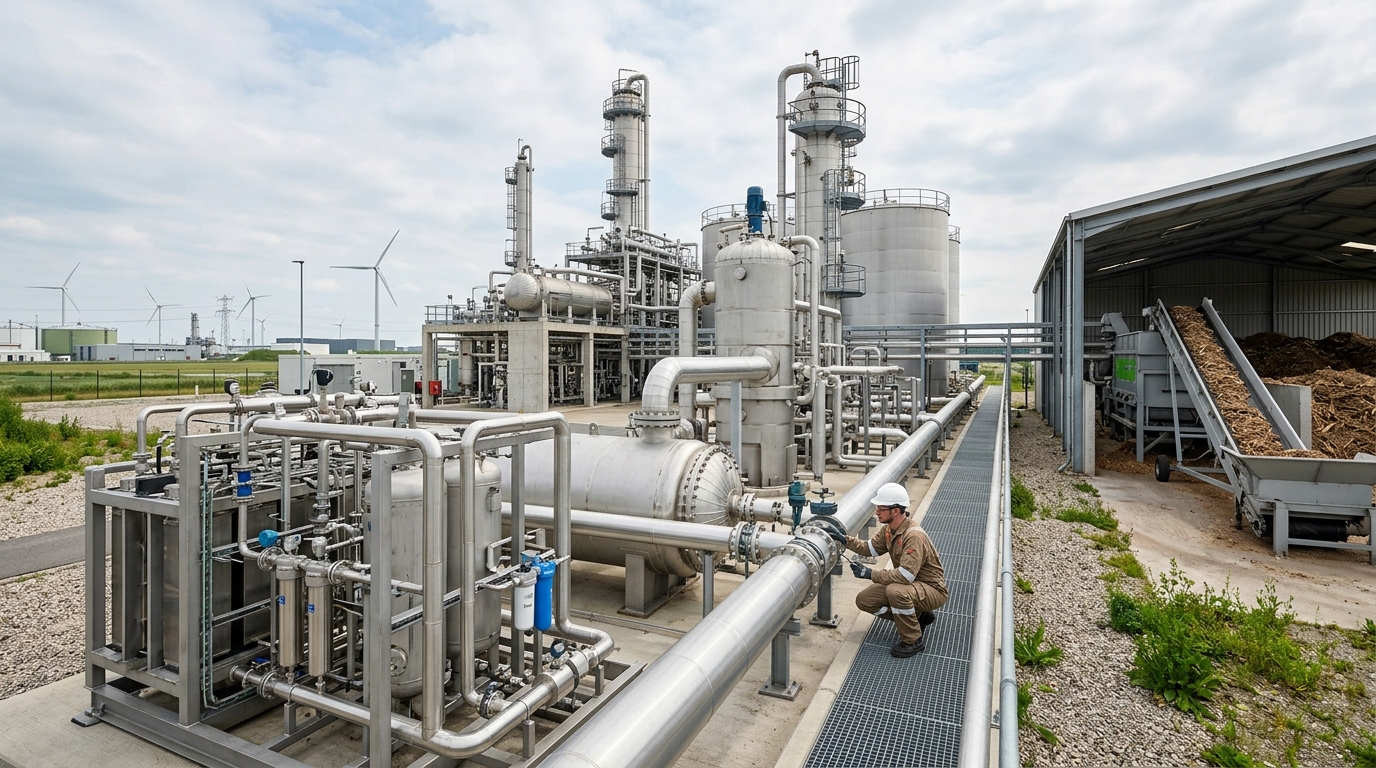
Technology plays a central role in reducing the environmental impact of chemical manufacturing. Modern production facilities increasingly evaluate equipment and processing technologies based on their ability to improve efficiency, reduce emissions and minimize material losses.
Several technologies offer practical opportunities for industrial manufacturers.
Advanced catalytic systems: Catalysts can improve reaction selectivity and reduce the need for excess reagents, helping manufacturers achieve better material efficiency.
Solvent recovery systems: Distillation, filtration and other separation technologies allow suitable solvents to be recovered and reused instead of discarded after a single production cycle.
Membrane filtration: Membrane-based separation can support wastewater treatment, process water recovery and selected chemical purification applications.
Heat recovery equipment: Heat exchangers capture energy from hot process streams and transfer it to other operations, reducing additional heating requirements.
Automation and digital monitoring: Process control systems help operators maintain consistent production conditions and identify inefficiencies before they cause significant losses.
Renewable energy integration: Solar power and other renewable energy sources can help facilities reduce their dependence on conventional energy supplies.
The choice of technology depends on production scale, chemical compatibility, operating conditions and investment requirements. Manufacturers should assess both installation costs and potential long-term savings before introducing major equipment changes.
Sustainable Raw Materials and Responsible Chemical Sourcing
Raw material selection directly influences the environmental footprint of chemical manufacturing. Procurement teams can support sustainability objectives by evaluating alternative ingredients, renewable feedstocks and suppliers with transparent production practices.
Several commercially available chemicals have applications in manufacturing strategies that prioritize resource efficiency and responsible sourcing.
Citric Acid: Used in detergents, food processing and industrial cleaning products. It provides useful acidifying and chelating properties in various formulations.
Lactic Acid: Supports food, pharmaceutical and personal care manufacturing. It also serves as a feedstock for certain biodegradable polymer applications.
Sodium Gluconate: Used in detergents, cleaning formulations and industrial processes where metal-ion control is important.
Refined Glycerine: Serves pharmaceutical, cosmetic and personal care manufacturers and has applications in multiple industrial formulations.
Sorbitol: Used in food, pharmaceutical and personal care products as a humectant and formulation ingredient.
Vegetable oils: Coconut oil, refined palm oil and refined soybean oil provide feedstocks for oleochemical manufacturing, soaps and selected surfactant applications.
However, renewable or plant-derived ingredients do not automatically guarantee a lower environmental footprint. Buyers should consider agricultural practices, land use, processing requirements, transportation distances and the complete lifecycle of each material.
For chemical traders, offering reliable documentation and consistent product specifications can help manufacturers assess alternative raw materials with greater confidence.
Waste Management, Recycling and Circular Manufacturing
Industrial waste management is a major component of sustainable chemical production. Chemical facilities generate different waste streams, including unused raw materials, process residues, wastewater, packaging materials and spent solvents.
Instead of treating every waste stream as disposable, manufacturers can investigate opportunities for recovery, reuse and recycling.
Effective approaches include:
Solvent recycling: Recovering suitable solvents through separation and purification systems for reuse in compatible manufacturing operations.
Chemical recovery: Extracting reusable substances from selected process residues and wastewater streams.
Wastewater treatment: Using appropriate physical, chemical and biological treatment methods before discharge or reuse.
Packaging recovery: Introducing systems for collecting and recycling compatible industrial containers and packaging materials.
Industrial by-product utilization: Identifying opportunities to use suitable manufacturing by-products as inputs for other industrial processes.
The circular economy concept extends this approach by encouraging manufacturers to keep materials in productive use for longer. It also promotes product designs and manufacturing processes that make recovery and recycling easier.
Nevertheless, recovered materials must meet relevant quality, safety and regulatory requirements before manufacturers reuse them. Proper testing and contamination control remain essential.
Measuring Environmental Performance in Chemical Manufacturing
Manufacturers need reliable performance indicators to determine whether sustainability initiatives deliver meaningful improvements. Without measurable targets, companies may invest in environmental projects without understanding their actual operational impact.
A structured monitoring programme should cover several areas.
Material efficiency: Track raw material consumption per unit of finished product, production yields and the volume of material lost during processing.
Energy performance: Monitor electricity and fuel consumption across production lines. Energy intensity per tonne of finished product can help identify inefficient operations.
Water management: Measure freshwater consumption, wastewater generation and the percentage of suitable water recovered for reuse.
Waste generation: Record hazardous and non-hazardous waste volumes, recycling rates and disposal requirements.
Emissions: Monitor relevant greenhouse gas emissions and industrial air pollutants using appropriate measurement methods.
Supplier performance: Evaluate sourcing transparency, product documentation and relevant environmental management practices.
Life cycle assessment (LCA) can provide a broader view by examining environmental impacts across raw material extraction, manufacturing, transportation, product use and disposal.
No single indicator can establish that a chemical product or manufacturing process is sustainable. Companies should combine operational measurements with lifecycle considerations to avoid shifting environmental burdens from one production stage to another.
Supply Chain Challenges and the Role of Chemical Procurement
Sustainable chemical manufacturing requires cooperation beyond the factory. Chemical suppliers, distributors, importers and logistics providers all influence the availability, quality and environmental characteristics of industrial raw materials.
Procurement teams face several challenges when introducing sustainable sourcing practices.
Price competitiveness: Alternative raw materials may carry higher purchase prices or require additional formulation adjustments.
Supplier reliability: Manufacturers need suppliers capable of maintaining consistent quality and dependable delivery schedules.
Product traceability: Buyers may require additional information about manufacturing origins, raw material sources and production practices.
Regulatory compliance: Different markets impose requirements for chemical registration, classification, labelling, transportation and environmental protection.
Product compatibility: Alternative ingredients must undergo technical evaluation before manufacturers introduce them into established production processes.
Chemical traders can address these challenges by developing relationships with qualified manufacturers and providing accurate product specifications, Certificates of Analysis and Safety Data Sheets.
International sourcing platforms can also help procurement managers compare supplier offers and identify competitive supply opportunities. However, buyers should evaluate the total cost of ownership rather than selecting materials based exclusively on the lowest quoted price.
The Business Case for Sustainable Chemical Manufacturing
Environmental improvements can generate commercial advantages when manufacturers integrate sustainability into their operational strategies.
Some of the most important benefits include:
Lower production costs: Reduced energy consumption, improved material yields and lower waste generation can decrease recurring operating expenses.
Improved operational efficiency: Modern process controls and equipment upgrades help manufacturers improve production consistency and reduce unnecessary downtime.
Stronger customer relationships: Businesses that demonstrate responsible manufacturing practices can better respond to customers with environmental purchasing requirements.
Regulatory preparedness: Proactive environmental management can help manufacturers prepare for changing chemical safety and environmental regulations.
Long-term supply chain resilience: Diversifying raw material sources and evaluating renewable feedstocks can help businesses manage certain supply risks.
These benefits require investment, technical expertise and effective management. Manufacturers should prioritize projects that offer measurable environmental improvements alongside realistic financial returns.
What Chemical Manufacturers and Buyers Should Prioritize Next
Sustainable chemical manufacturing is becoming an important consideration in industrial production and international chemical trading. Reducing environmental impact requires more than installing new equipment or switching to alternative ingredients. It involves improving the entire production and sourcing process.
Manufacturers should prioritize energy efficiency, waste prevention, water recovery and responsible raw material selection. Procurement managers should work with suppliers that provide reliable documentation, consistent product quality and transparent sourcing information.
Chemical traders can contribute by connecting industrial buyers with suitable products and dependable international suppliers. Businesses that combine competitive sourcing with greater attention to environmental performance can strengthen their position in an increasingly sustainability-conscious marketplace.
Acrylonitrile
Found this useful?