A regulatory development advancing in Europe could trigger the phaseout of chemicals that release trifluoroacetic acid (TFA), placing billions of dollars in fluorochemical commerce at risk. TFA is an extremely persistent degradation product formed when certain fluorinated compounds including refrigerants, pharmaceuticals and agrochemicals break down in the environment. For procurement teams sourcing fluorinated materials and manufacturers whose products depend on TFA-releasing chemistries, this potential restriction represents transformational disruption affecting product availability, development timelines and competitive positioning across multiple industries over the next decade.
The regulatory development occurs within European Union frameworks where precautionary principles favor restricting persistent substances even when immediate harm is not definitively proven. Unlike product-specific bans, a TFA-focused restriction would affect entire classes of fluorochemicals based on their environmental fate rather than direct toxicity.
What TFA Actually Is and Why It Matters
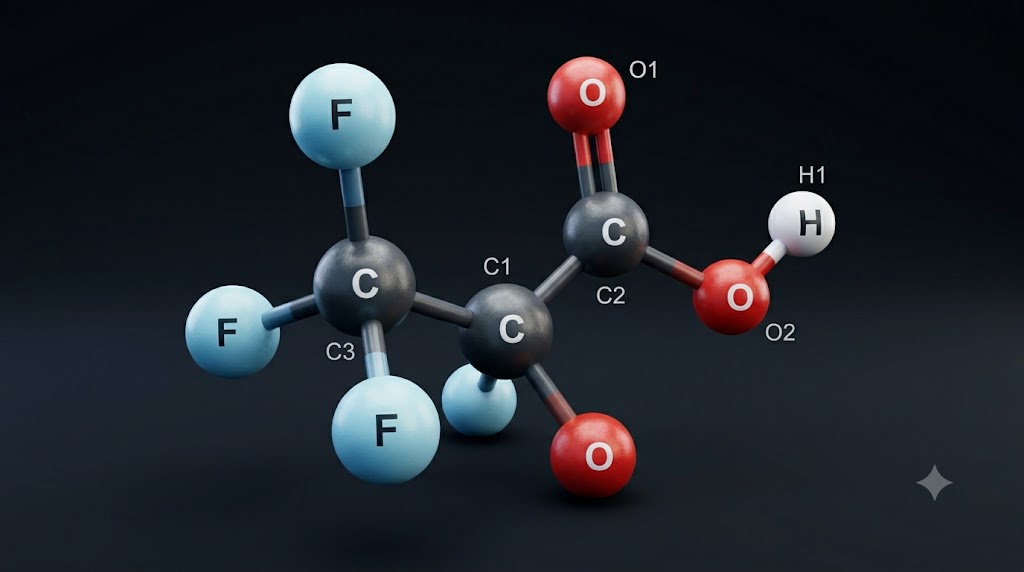
Trifluoroacetic acid is a small, highly stable organic acid containing three fluorine atoms attached to an acetic acid backbone. The compound's extreme persistence stems from the strength of carbon-fluorine bonds, among the strongest in organic chemistry.
Key TFA characteristics:
Environmental persistence where the substance does not degrade through chemical, biological or photolytic processes
Water solubility causing accumulation in surface water, groundwater and precipitation
High mobility allowing transport through environmental compartments
Ubiquitous presence detected in water sources across Europe and globally
TFA occurs naturally at trace levels from atmospheric reactions. However, anthropogenic sources including degradation of fluorinated chemicals now dominate environmental loading.
European monitoring programs consistently detect TFA in drinking water at concentrations ranging from 0.1 to 10 micrograms per liter. While below acute toxicity thresholds, regulators express concern about continual accumulation, irreversible environmental contamination and uncertainty about long-term exposure effects.
Which Chemicals Release TFA
Numerous commercially important fluorinated compounds degrade to TFA through environmental processes including photolysis, hydrolysis and microbial metabolism.
Major TFA precursor categories include:
Refrigerants and blowing agents where hydrofluorocarbons (HFCs) and hydrofluoroolefins (HFOs) degrade to TFA
Agrochemicals including fungicides, herbicides and insecticides with fluorinated active ingredients
Pharmaceuticals containing fluorinated functional groups that metabolize or degrade to TFA
Fluoropolymer production where processing aids and monomers release TFA during manufacturing or disposal
The refrigerant sector represents the largest TFA source globally. HFO-1234yf, widely adopted in automotive air conditioning as low-global-warming-potential alternative to HFC-134a, degrades rapidly to TFA in the atmosphere.
Other significant contributors include fluorinated pharmaceuticals where metabolic pathways or environmental degradation produce TFA. Agrochemical active ingredients containing trifluoromethyl or related groups also contribute substantially.
The Regulatory Development in Motion
European regulatory authorities are evaluating restrictions on TFA-releasing substances through several overlapping processes.
Primary regulatory pathway:
REACH restriction proposal where Germany submitted dossier identifying TFA as persistent, mobile substance warranting use restrictions
Inclusion in PFAS framework treating TFA and precursors as part of broader per- and polyfluoroalkyl substances restrictions
Drinking water standards potentially establishing limits triggering source control requirements
Biocidal and plant protection regulations addressing TFA-releasing agrochemicals specifically
The most immediate threat comes from the broad PFAS restriction proposal submitted by Germany, Netherlands, Norway, Sweden and Denmark in 2023. This proposal, if adopted, would phase out essentially all PFAS including TFA-releasing precursors within derogation periods ranging from 18 months to 12 years depending on use category.
The proposal undergoes extensive scientific and socioeconomic analysis through European Chemicals Agency (ECHA) processes. Final decisions could come in 2025-2027 timeframe with implementation beginning shortly after.
Commercial Interests at Stake
The potential TFA phaseout affects massive commercial interests spanning multiple industrial sectors.
Refrigerant and air conditioning industries:
Automotive sector where HFO-1234yf has been adopted industry-wide for mobile air conditioning
Building HVAC using HFO refrigerants in heat pumps and cooling systems
Supermarket refrigeration employing HFO blends in commercial installations
Manufacturing investments totaling billions in production facilities, vehicle systems and equipment
Agrochemical sector:
Fluorinated crop protection products generating billions in annual sales
Development pipelines where companies invested heavily in fluorinated active ingredients
Regulatory approvals representing years of data generation and review
Market positions dependent on specific product performance characteristics
Pharmaceutical industry:
Fluorinated drug molecules providing enhanced efficacy, bioavailability or metabolic stability
Development costs exceeding hundreds of millions per successful drug
Patent protection and market exclusivity tied to specific fluorinated structures
Materials and manufacturing:
Fluoropolymer production using processing aids that release TFA
Specialty chemicals incorporating fluorinated intermediates
Industrial processes relying on fluorinated solvents or reagents
Aggregate commercial exposure likely exceeds $50-100 billion globally across directly affected products and industries.
Why This Differs from Other PFAS Restrictions
TFA-focused restrictions create unique challenges compared to product-specific PFAS bans.
Key distinctions:
Degradation product focus targeting substances based on what they become rather than what they are
Broad applicability affecting diverse product categories united only by TFA formation
Essentiality arguments weaker when alternatives exist that do not form TFA
Irreversible contamination narrative where continued use creates permanent environmental burden
Previous PFAS restrictions targeted specific applications like firefighting foams or food contact materials. Companies could argue essentiality in narrow contexts.
TFA restrictions would affect refrigerants, agrochemicals and pharmaceuticals simultaneously. Finding alternatives across all categories within compressed timelines challenges even well-resourced industries.
The permanence argument is particularly powerful. Once released, TFA persists indefinitely. Regulators increasingly conclude that precautionary restriction is justified regardless of current exposure levels.
Refrigerant Industry Disruption Scenario
The refrigerant sector faces potentially catastrophic disruption if TFA restrictions proceed.
Industry transformation timeline:
CFCs (chlorofluorocarbons) phased out under Montreal Protocol due to ozone depletion
HCFCs (hydrochlorofluorocarbons) transitioned away as temporary alternatives
HFCs (hydrofluorocarbons) adopted widely but now restricted under Kigali Amendment due to global warming potential
HFOs (hydrofluoroolefins) positioned as low-GWP solution but now threatened by TFA concerns
The industry invested billions developing, approving and deploying HFO refrigerants. Vehicle manufacturers redesigned air conditioning systems. Production facilities were built. Regulatory approvals were secured globally.
TFA restrictions would eliminate this investment before reasonable return periods complete. The industry would face yet another transition to different refrigerant technologies within a decade of massive HFO deployment.
Alternative refrigerant options:
Natural refrigerants including CO2, ammonia, hydrocarbons face safety, efficiency or equipment redesign challenges
Novel synthetic refrigerants without TFA formation remain largely theoretical
Hybrid systems combining different refrigerants for different applications
None provide drop-in replacements matching HFO performance across all applications. Each alternative requires substantial development, testing and deployment timelines extending 5-10 years.
Agrochemical Product Portfolio Impacts
Fluorinated agrochemicals represent significant portions of major companies' crop protection portfolios.
Companies including Bayer, BASF, Syngenta, Corteva market products with fluorinated active ingredients. These products often provide superior efficacy, environmental profiles or resistance management compared to alternatives.
Agrochemical implications:
Active ingredient withdrawals where TFA-releasing products lose regulatory approvals
Generic competition shifts as off-patent products also face restrictions
Development pipeline disruptions halting investments in fluorinated chemistry
Resistance management challenges losing important modes of action
Unlike refrigerants where alternatives exist but require transition, some agrochemical applications lack effective non-fluorinated alternatives. Crop protection gaps could emerge affecting yields and food security.
The agrochemical industry argues that environmental TFA from pesticides represents minor fraction of total loading compared to refrigerants. However, regulators applying class-based approaches may not differentiate based on source contribution.
Pharmaceutical Development Implications
Fluorine incorporation in drug molecules has become standard practice in pharmaceutical development.
Approximately 20-25% of marketed drugs contain fluorine, often improving:
Metabolic stability by blocking sites where enzymes would degrade molecules
Membrane permeability enhancing absorption and distribution
Binding affinity to target proteins through unique electronic properties
Selectivity reducing off-target effects
Many fluorinated drugs do not release TFA. However, some structures do metabolize or environmentally degrade to TFA, creating potential regulatory exposure.
Pharmaceutical sector considerations:
Development timelines of 10-15 years make late-stage restrictions catastrophic
Regulatory approvals representing massive data generation investments
Generic competition potentially less affected if branded products lose protection
Therapeutic alternatives may exist but with different efficacy or safety profiles
The pharmaceutical industry will argue for use-specific exemptions particularly for drugs lacking therapeutic alternatives. European regulatory frameworks include mechanisms for essential use derogations.
However, the precedent of restricting even essential uses when alternatives might be developed creates uncertainty around how generously such exemptions would be applied.
Procurement Supply Chain Disruptions
Procurement teams sourcing fluorinated materials across industries face cascading supply chain impacts.
Immediate disruptions include:
Supplier exits as manufacturers discontinue TFA-releasing products
Price volatility during transition periods when supply tightens
Quality variations as alternative formulations get rushed to market
Specification changes requiring customer requalification
Long-term restructuring involves:
Alternative chemistry qualification across multiple product categories
Supplier base consolidation as some players exit fluorochemicals
Geographic sourcing shifts if regulatory timelines vary by region
Performance trade-offs accepting inferior alternatives where necessary
Buyers currently sourcing refrigerants, fluorinated agrochemicals or specialty fluorochemicals should:
Map TFA exposure identifying which purchased materials release TFA
Engage suppliers requesting clarity on reformulation plans and timelines
Qualify alternatives beginning technical evaluation before restrictions force transitions
Scenario plan for various regulatory outcomes and implementation speeds
The buyers who prepare early will navigate transitions more successfully than those waiting for finalized restrictions.
Geographic Regulatory Divergence
European TFA restrictions would not automatically apply globally, creating complex multi-jurisdictional environments.
Regional regulatory stances:
Europe likely to implement restrictions based on precautionary principle
United States requiring demonstrated harm before restricting, potentially maintaining TFA-releasing chemical access longer
Asia varying by country with some following European approaches, others prioritizing economic considerations
Developing markets potentially becoming havens for products restricted elsewhere
This divergence creates several commercial dynamics:
Products restricted in Europe might remain available in other regions
Companies must decide whether to maintain global product portfolios or exit globally
Trade issues arise if restricted products manufactured for export only
Regulatory arbitrage opportunities emerge for companies willing to navigate complexity
For procurement teams, geographic divergence means:
Sourcing strategies must account for region-specific restrictions
Products available domestically might not be exportable to certain markets
Alternative specifications may be required for different geographic end-markets
Substitution Technical Challenges
Finding alternatives to TFA-releasing chemicals that match performance across all attributes challenges chemists and engineers.
Refrigerant substitution barriers:
Thermodynamic properties where alternatives may not match HFO efficiency
Safety considerations around flammability or toxicity of natural refrigerants
Equipment compatibility requiring expensive system redesigns
Energy efficiency impacts affecting operational costs and emissions
Agrochemical reformulation obstacles:
Efficacy where non-fluorinated actives may not control target pests as effectively
Environmental fate potentially worse for some alternatives despite avoiding TFA
Resistance management losing important chemical classes from rotation
Regulatory approval timelines of 5-10 years for entirely new active ingredients
Pharmaceutical constraints:
Fluorine often irreplaceable for achieving required potency and selectivity
Alternative structures require full development and approval cycles
Patent landscapes may block obvious substitutes
Clinical efficacy and safety must be re-established
The technical challenges mean that even with clear regulatory timelines, industries cannot simply switch to alternatives. Substantial R&D investment and time are required to develop, test and deploy substitutes.
Timeline and Implementation Scenarios
Understanding potential regulatory timelines helps companies and buyers prepare appropriately.
Optimistic industry scenario:
Regulators grant broad use-specific exemptions for applications lacking alternatives
Implementation periods of 10-15 years allow orderly transitions
Phased approaches prioritizing high-volume TFA sources while maintaining essential uses
Innovation incentives supporting alternative development
Pessimistic industry scenario:
Blanket restrictions with minimal exemptions based on precautionary principle
Short derogation periods of 3-5 years forcing rushed transitions
Limited consideration of socioeconomic impacts or substitution challenges
Cascading restrictions in other jurisdictions following European lead
Most likely outcome falls between these extremes with:
Differentiated treatment by application based on essentiality and alternatives availability
Medium-term derogations of 5-10 years for most uses
Refrigerants facing tightest restrictions given large TFA contribution and available alternatives
Pharmaceuticals and some specialty applications receiving longer exemptions
Regardless of specific outcome, the direction favors eventual phaseout creating urgency around alternative development even if implementation timelines extend beyond near term.
What Chemical Manufacturers Should Do
Companies producing or using TFA-releasing chemicals should take immediate strategic actions.
Assessment priorities:
Quantify exposure identifying which products, revenue streams and markets face restriction risk
Evaluate alternatives accelerating R&D on non-TFA-releasing substitutes
Engage regulators participating in consultation processes and providing technical data
Communicate stakeholders preparing customers, investors and employees for potential transitions
Strategic options include:
Accelerated reformulation developing TFA-free alternatives before restrictions force transitions
Portfolio prioritization focusing resources on defendable essential uses
Geographic strategies potentially maintaining products in less restrictive jurisdictions
Partnership approaches collaborating with customers on joint development of alternatives
Advocacy efforts should:
Emphasize use essentiality where alternatives genuinely do not exist
Provide data on economic impacts and employment effects
Demonstrate transition timelines showing good faith efforts toward alternatives
Propose reasonable derogation periods balancing environmental concerns with practical constraints
The manufacturers that act proactively will better navigate restrictions than those adopting wait-and-see approaches.
Financial and Investment Implications
TFA restrictions create material financial impacts requiring disclosure and investor communication.
Financial statement impacts:
Asset impairments for production facilities dedicated to restricted products
Inventory write-downs if products become unsaleable before restrictions
R&D expense acceleration developing alternatives
Restructuring charges from facility closures or workforce reductions
Investor considerations:
Stranded asset risk particularly for recent investments in HFO refrigerant capacity
Revenue visibility uncertainty around product portfolio evolution
Competitive positioning shifts favoring companies with alternative technologies
ESG performance metrics increasingly scrutinizing PFAS including TFA exposure
Public companies must assess whether TFA restriction risks constitute material information requiring disclosure under securities regulations. The magnitude of commercial exposure suggests many companies will need to address this in financial reporting and investor communications.
What Procurement Teams Should Do Now
Chemical buyers should take proactive steps managing TFA restriction risks regardless of uncertainty around final regulatory outcomes.
Immediate actions:
Inventory exposure documenting which purchased materials release TFA
Request supplier plans for reformulation or alternative development
Begin qualification of TFA-free alternatives where available
Assess specifications determining where performance requirements might flex to accommodate substitutes
Medium-term positioning:
Diversify suppliers reducing dependency on single sources that might exit
Build relationships with companies developing non-TFA alternatives
Monitor regulations tracking European and other jurisdictions' restriction progress
Scenario plan for various implementation timelines and substitution challenges
Strategic considerations:
Evaluate whether product redesign could eliminate TFA-releasing chemical needs
Consider geographic sourcing implications as restrictions create regional availability differences
Assess competitive impacts if restrictions affect your products differently than competitors'
Plan customer communication about potential specification changes or cost increases
The buyers who prepare systematically will maintain supply continuity and cost competitiveness regardless of how TFA restrictions ultimately proceed.
The Bottom Line for Fluorochemical Commerce
A regulatory development that could phase out chemicals releasing trifluoroacetic acid places tens of billions in commercial interests at risk across refrigerants, agrochemicals, pharmaceuticals and specialty chemicals. TFA's extreme environmental persistence and ubiquitous presence in water sources drive regulatory momentum toward restrictions even absent demonstrated harm at current exposure levels.
For procurement teams, the potential restrictions create supply chain uncertainty affecting diverse product categories. For manufacturers, they threaten product portfolios requiring massive reformulation investments with uncertain timelines for successful alternatives.
The regulatory trajectory favors eventual restrictions even if implementation timelines and exemption scope remain uncertain. Companies and buyers treating this as distant theoretical threat rather than actionable risk will find themselves unprepared when restrictions materialize.
Understanding which products release TFA, how restrictions might proceed and what alternatives exist or need development separates organizations that navigate this disruption successfully from those that scramble reactively when regulations finalize.
The next 3-5 years represent critical period for developing alternatives, securing reasonable transition timelines and preparing supply chains for a fluorochemical landscape where TFA-releasing products face severe restrictions or outright bans.
Ready to source Sodium Lauryl Ether Sulfate from verified global suppliers? Explore competitive offers on our platform today.