
The UK's PFAS Plan: Racing to Align With EU REACH by 2028
The UK's PFAS Plan: Racing to Align With EU REACH by 2028
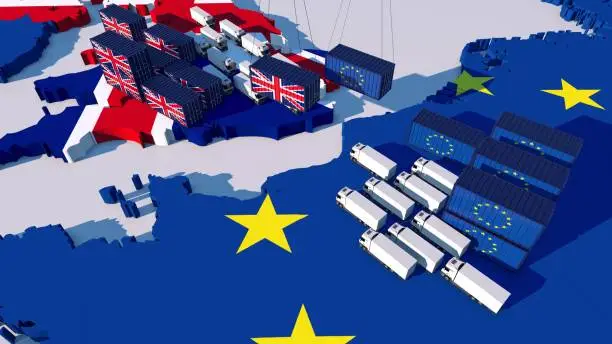
The United Kingdom is moving toward a more coordinated approach to regulating PFAS as the government seeks to reform UK REACH by December 2028 and bring its chemical controls closer to those of the European Union. The shift is significant for chemical manufacturers, importers, formulators and downstream users because it could reduce regulatory divergence between the UK and EU while increasing pressure to phase out non-essential PFAS uses.
The UK Government's first national PFAS Plan, published in February 2026 and updated in August, establishes a framework covering PFAS sources, environmental pathways and ongoing exposure. Rather than introducing a single blanket PFAS ban, the plan combines regulatory restrictions, monitoring, research and industry measures.
Why 2028 Matters
The UK's Environment Improvement Plan commits the government to reforming UK REACH so that chemical protections can be introduced more quickly, efficiently and in greater alignment with the UK's closest trading partners, particularly the EU, by December 2028. The government says it intends to use regulatory decisions from trusted jurisdictions as a starting point unless there are compelling reasons for the UK to diverge.
For PFAS, this creates an important opportunity to reduce the regulatory gap that emerged after Brexit. EU REACH restrictions can now develop independently from the UK's domestic chemical regime, creating additional compliance requirements for companies operating across both markets.
The new UK approach therefore appears less focused on copying every EU decision automatically and more focused on creating a faster mechanism for considering and potentially adopting comparable restrictions.
What the UK PFAS Plan Actually Says
The PFAS Plan identifies Action 2.2 as a key regulatory pathway. The government will consider additional UK REACH restrictions and specifically identifies existing EU REACH restrictions covering:
PFAS in firefighting foams
PFHxA and related PFAS uses, including certain consumer products
Certain perfluorocarboxylic acids already subject to international controls
The plan also commits the government to progressing additional PFAS substances onto the UK REACH Candidate List of substances of very high concern, subject to consultation.
This is important because it signals that the UK's PFAS strategy is likely to develop through multiple regulatory measures rather than one universal restriction covering every PFAS substance and application.
Firefighting Foams Could Move First
One of the clearest areas of potential regulatory convergence is firefighting foam.
The UK's Environmental Improvement Plan states that the government intends to make a decision in 2027 on a potential UK REACH restriction covering PFAS in firefighting foams. That decision is expected to follow an HSE proposal and consultation process.
This could become a major issue for airports, petrochemical facilities, military sites, emergency services and other users of fluorinated firefighting foams.
It could also accelerate demand for fluorine-free alternatives and create new opportunities for chemical suppliers developing replacement surfactants, foam stabilizers and other formulation components.
EU Alignment Does Not Mean Automatic Copying
The UK's approach should not be interpreted as an automatic adoption of EU REACH restrictions.
The PFAS Plan describes alignment with the EU as a strategic objective, but it also emphasizes a science-led and proportionate approach. The government intends to consider the UK's own evidence, economic impacts and regulatory circumstances when determining future restrictions.
This distinction matters for chemical companies. A substance restricted in the EU should be treated as a strong indicator of potential future UK regulatory action, but not necessarily as proof that an identical UK restriction will enter into force on the same timetable.
Companies will therefore need to monitor both EU REACH and UK REACH developments rather than assuming that compliance with one regime automatically guarantees compliance with the other.
Implications for Chemical Suppliers
For chemical manufacturers and distributors, the UK's direction creates several immediate priorities.
1. Review PFAS Portfolios
Companies should map products containing PFAS and identify the substances, concentrations, applications and customers affected. Products that are already facing restrictions in the EU may deserve particular attention.
2. Prepare for Greater Disclosure
As regulators improve PFAS monitoring and restrictions, customers are likely to demand more detailed information about chemical composition, impurities and potential alternatives.
3. Develop Alternatives
Suppliers that can offer technically viable non-PFAS alternatives could gain a competitive advantage as restrictions expand. This is particularly relevant in textiles, food-contact materials, firefighting, electronics and industrial applications.
4. Monitor UK and EU Rules Separately
Businesses selling into Great Britain must follow UK REACH developments, while EU REACH continues to apply in Northern Ireland under the Windsor Framework arrangements. This makes regulatory monitoring particularly important for companies serving the entire UK market.
A New Candidate-List Strategy
The UK has already taken steps toward changing how substances are added to its UK REACH Candidate List.
In February 2026, the government introduced a new strategic approach designed to make protections faster and more closely aligned with major trading partners, particularly the EU.
The PFAS Plan subsequently indicated that HSE would consult on relevant PFAS substances during 2026, with additions to the UK Candidate List expected to follow the established decision-making process.
For suppliers, Candidate List activity can serve as an early warning signal. Even before a full restriction is introduced, SVHC designation can increase information, supply-chain communication and compliance obligations.
The Business Impact
The UK's move toward greater regulatory alignment could ultimately reduce complexity for companies operating across European markets.
Today, businesses can face separate assessments, registrations, restrictions and reporting requirements under EU and UK chemical frameworks. Greater alignment could reduce duplication and make regulatory planning easier.
However, the transition period may initially increase compliance work. Companies will need to track consultations, candidate-list decisions and individual UK REACH restrictions while continuing to meet EU requirements.
For chemical producers with large PFAS portfolios, this creates a strong incentive to begin substitution planning before restrictions become legally binding.
Outlook
The UK's PFAS strategy is moving toward a more structured regulatory framework, but 2028 should be viewed as an alignment milestone rather than a single PFAS-ban deadline.
The government has already established a pathway for considering EU restrictions, advancing additional PFAS substances through UK REACH and evaluating specific applications such as firefighting foams.
For chemical-market participants, the direction of travel is becoming increasingly clear: PFAS regulation in the UK is likely to become more closely connected to developments in Europe, even if the UK retains its own decision-making process.
Companies that begin portfolio screening, customer communication and alternative-chemistry development now will be better positioned for the regulatory changes expected through 2027 and 2028. The biggest strategic shift may therefore not be the introduction of one new restriction, but the creation of a UK chemical-regulatory system that can respond more rapidly to PFAS risks and remain closer to the EU market.
Betaine Anhydrous

Found this useful?