
Titanium Dioxide: Applications and Procurement Considerations for Paint Manufacturers
Titanium dioxide remains one of the most important raw materials in paint manufacturing because it delivers the whiteness, opacity and light-scattering performance that many coating formulations require. For manufacturers, selecting the right titanium dioxide grade directly influences paint coverage, appearance, formulation costs and finished-product consistency.
However, not every grade performs equally across different coating systems. Differences in crystal structure, surface treatment, particle characteristics and dispersion behaviour can affect the final product. Paint manufacturers therefore need to evaluate more than the purchase price when sourcing this pigment. Understanding its applications and technical requirements helps procurement teams select suitable suppliers, maintain production quality and manage raw material costs.
Why Titanium Dioxide Is Essential in Paint Manufacturing
Titanium dioxide (TiO₂) is an inorganic white pigment produced commercially through sulfate and chloride manufacturing processes. Its high refractive index allows it to scatter visible light efficiently, making it particularly effective in applications that require strong hiding power and bright white finishes.
Unlike ordinary fillers, titanium dioxide contributes directly to a coating's optical performance. Manufacturers use it to control several important paint characteristics:
Opacity and hiding power: It reduces the visibility of the underlying surface, allowing paint to cover walls, metal and other substrates effectively.
Whiteness and brightness: It provides a clean white appearance and supports consistent colour development.
Tinting strength: It helps manufacturers achieve the required shade when combining white pigment with colourants.
Surface appearance: Appropriate grades support the desired finish, including gloss, semi-gloss and matt coatings.
Weather resistance: Suitable exterior-grade pigments help coatings maintain their appearance under sunlight and changing environmental conditions.
The efficiency of titanium dioxide also depends on how manufacturers incorporate and disperse it into their formulations. Even a high-quality pigment may deliver disappointing results if the formulation or processing conditions do not support proper dispersion.
Rutile vs Anatase: Choosing the Right Titanium Dioxide Grade
Paint manufacturers commonly encounter two major crystal forms of titanium dioxide: rutile and anatase. Although both provide white pigmentation, their optical and performance characteristics differ.
Rutile titanium dioxide generally offers stronger light-scattering performance because it has a higher refractive index than anatase. Manufacturers widely use it in architectural coatings, exterior paints and industrial finishes where opacity and durability matter.
Its main advantages include:
Higher refractive index and effective hiding power.
Strong opacity in demanding coating formulations.
Better suitability for many exterior paint applications.
Availability in surface-treated grades designed for improved durability and dispersion.
Anatase titanium dioxide offers useful whitening and pigmentation properties, particularly in selected applications where its characteristics meet the formulation requirements. However, its lower refractive index and greater photocatalytic activity can make it less suitable for many exterior coating systems.
The choice depends on the finished paint's intended application, performance requirements and formulation economics. Manufacturers producing premium exterior coatings generally favour suitable rutile grades, while selected interior and specialised formulations may consider anatase where its properties provide an appropriate balance.
Major Applications Across the Paint and Coatings Industry
Titanium dioxide supports a wide range of paint products, from everyday decorative coatings to specialised industrial finishes. Each application requires a different balance of opacity, colour stability, durability and processing performance.
1. Architectural and decorative paints
Architectural coatings represent an important application area for titanium dioxide. Manufacturers incorporate it into interior wall paints, ceiling coatings and exterior decorative products to achieve consistent whiteness and surface coverage.
Interior formulations often prioritise smooth application, brightness and hiding power. Exterior products require additional attention to weather resistance, sunlight exposure and long-term colour stability.
2. Industrial protective coatings
Industrial coatings protect metal structures, machinery, equipment and other surfaces exposed to demanding operating conditions. Titanium dioxide contributes to the required colour, opacity and appearance of these formulations.
Manufacturers must select grades compatible with the coating's binder system and expected service environment. Surface treatment and pigment dispersion become particularly important when developing specialised protective products.
3. Automotive coatings
Automotive manufacturers use titanium dioxide in selected white and light-coloured coating formulations. Consistent pigment quality supports uniform colour development, smooth finishes and the optical characteristics required for automotive applications.
These formulations often demand close control over particle dispersion and surface appearance.
4. Powder coatings
Powder coating manufacturers also use titanium dioxide to produce white and coloured finishes for appliances, furniture, metal components and industrial equipment. Suitable pigment grades help achieve consistent coverage and colour quality throughout production.
5. Marine and specialised coatings
Selected marine and specialised coating formulations incorporate titanium dioxide to achieve particular optical and protective coating requirements. Manufacturers must consider the complete formulation rather than assuming that every paint-grade pigment suits these demanding applications.
Technical Specifications Paint Manufacturers Should Evaluate
Selecting titanium dioxide requires a detailed understanding of its technical properties. Procurement teams should request a current technical data sheet (TDS) and batch-specific Certificate of Analysis (CoA) before approving a supplier or changing an existing pigment source.
The following parameters deserve particular attention.
TiO₂ content and crystal structure
Titanium dioxide content indicates the concentration of the principal pigment component. However, a higher percentage alone does not guarantee better coating performance.
Buyers should also confirm whether the product is rutile or anatase and whether its crystal structure matches the intended application.
Particle size and distribution
Particle characteristics influence light scattering, opacity and dispersion behaviour. Commercial pigment manufacturers carefully control particle size to support efficient optical performance.
Poor particle distribution or excessive agglomeration can reduce pigment efficiency and create formulation inconsistencies.
Tinting strength
Tinting strength measures the pigment's contribution to colour development when mixed with other pigments. Strong tinting performance can help manufacturers achieve the desired shade without unnecessarily increasing pigment loading.
Oil absorption
Oil absorption indicates how much liquid vehicle the pigment absorbs under a specified test method. Higher absorption can increase binder requirements and influence formulation viscosity.
Manufacturers should compare this parameter across competing grades, particularly when developing cost-sensitive or high-solids coatings.
pH and moisture content
The pH of an aqueous pigment suspension can influence compatibility with water-based coating systems. Excessive moisture may also create handling and dispersion difficulties.
Surface treatment
Manufacturers often use inorganic treatments such as alumina or silica, sometimes combined with organic treatments, to modify pigment performance. These treatments can improve dispersion, reduce unwanted photocatalytic activity and support compatibility with particular coating systems.
The appropriate treatment depends on whether the pigment will enter a waterborne, solvent-based or specialised coating formulation.
How Pigment Quality Influences Paint Performance
The relationship between pigment quality and finished paint performance extends beyond whiteness. Manufacturers must consider how titanium dioxide behaves throughout mixing, dispersion, storage and application.
One important consideration is pigment dispersion. During production, manufacturers need to break down pigment agglomerates and distribute particles evenly throughout the coating system. Inadequate dispersion can reduce hiding efficiency, affect gloss and produce inconsistent surface appearance.
Another consideration is pigment loading. Increasing titanium dioxide concentration does not always produce a proportional improvement in opacity. At excessive concentrations or unsuitable pigment volume levels, particle interactions can reduce light-scattering efficiency and affect other coating properties.
Manufacturers should therefore optimise pigment concentration alongside binder content, extender selection and processing conditions.
Batch consistency also matters. Changes in brightness, tinting strength, moisture or dispersion characteristics can create differences between production batches, increasing the need for reformulation and quality adjustments.
Procurement Challenges and Supplier Selection
Titanium dioxide procurement involves more than identifying a supplier with an attractive quotation. Paint manufacturers must balance product specifications, commercial terms, delivery reliability and quality consistency.
Several sourcing challenges deserve attention.
1. Price fluctuations and purchasing budgets
Titanium dioxide prices can respond to changes in production costs, raw material availability, energy expenses, manufacturing capacity and international freight rates.
These changes can affect paint manufacturers that operate on fixed product pricing or supply contracts. Procurement teams should monitor supplier quotations and evaluate purchasing commitments against their expected production requirements.
2. Grade differences between suppliers
Two suppliers may offer products described as rutile titanium dioxide for paint applications, yet their pigments may differ in surface treatment, particle characteristics and optical performance.
Buyers should avoid treating similar product descriptions as proof of technical equivalence. Laboratory evaluation and formulation trials provide a better basis for supplier approval.
3. International shipping and delivery schedules
Import-dependent manufacturers face additional challenges involving freight availability, port congestion, customs procedures and delivery lead times.
A delayed shipment can disrupt production planning, particularly when the manufacturer depends on a specific pigment grade.
4. Packaging and storage conditions
Titanium dioxide commonly arrives in industrial bags or larger bulk packaging. Buyers should inspect packaging integrity and confirm that suppliers maintain suitable storage and handling conditions.
Moisture exposure and damaged packaging can create unnecessary quality and material-handling problems.
5. Supplier documentation
Reliable suppliers should provide relevant technical and commercial documentation, including:
Technical Data Sheets describing product specifications and recommended applications.
Certificates of Analysis confirming individual batch characteristics.
Safety Data Sheets covering handling, storage and safety information.
Product origin and manufacturing details.
Packaging specifications and shipment documentation.
A consistent documentation process helps procurement teams compare suppliers and maintain traceability across incoming shipments.
Quality Control and Incoming Material Inspection
A supplier's technical documentation provides an important starting point, but paint manufacturers should also establish incoming quality-control procedures.
Before approving a shipment for production, quality teams can compare the supplied batch against the previously agreed specifications.
Important checks include:
Confirming the product grade and batch identification.
Reviewing TiO₂ content, brightness and tinting strength.
Checking moisture levels and relevant pH specifications.
Evaluating dispersion behaviour through laboratory testing.
Comparing colour and opacity against an approved reference sample.
Inspecting packaging for damage or signs of contamination.
Manufacturers should also conduct formulation trials when introducing a new supplier. A pigment that meets basic chemical specifications may still behave differently in a particular binder system.
Maintaining retained reference samples and batch records can help identify quality variations and support supplier performance reviews.
What Paint Manufacturers Should Prioritise When Sourcing Titanium Dioxide
An effective sourcing strategy connects technical requirements with commercial purchasing decisions. Instead of choosing products based only on price per metric tonne, procurement managers should evaluate the pigment's contribution to finished paint quality and overall formulation economics.
A practical supplier evaluation process should include the following steps:
Define the application: Identify whether the pigment will serve interior paints, exterior coatings, automotive finishes or industrial products.
Establish grade requirements: Specify the required crystal structure, surface treatment and optical properties.
Compare technical documentation: Review TDS and CoA information to identify differences between competing products.
Request representative samples: Test shortlisted grades using the manufacturer's existing formulation and production conditions.
Evaluate total formulation cost: Consider pigment loading, binder demand, dispersion requirements and finished coating performance rather than purchase price alone.
Assess supplier reliability: Review delivery schedules, production consistency, communication and documentation standards.
Develop alternative sourcing options: Qualify additional suppliers where possible to reduce dependence on a single source.
This approach helps manufacturers protect product quality while improving purchasing flexibility and supply continuity.
The Outlook for Titanium Dioxide Procurement in Paint Manufacturing
Demand from architectural coatings, infrastructure development, industrial maintenance and automotive production will continue to make titanium dioxide an important raw material for the coatings industry.
Manufacturers will also face increasing pressure to improve formulation efficiency, reduce production waste and maintain consistent product performance. These requirements will place greater emphasis on selecting pigments that deliver effective hiding power and dispersion without unnecessary increases in formulation costs.
For procurement managers, supplier diversification and technical qualification will remain important priorities. Maintaining relationships with multiple reliable suppliers can provide greater flexibility when market conditions change or individual shipments face delays.
The strongest purchasing decisions will combine competitive pricing with verified specifications, dependable delivery and consistent batch performance. By evaluating titanium dioxide as a performance-critical raw material rather than simply another white powder, paint manufacturers can strengthen quality control and improve long-term procurement efficiency.
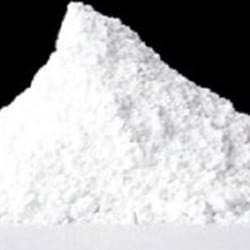
Titanium Dioxide
Found this useful?