TotalEnergies 2026 Strategy and Outlook: Energy Growth, Capex and Market Implications
TotalEnergies has set out a 2026 strategy that combines energy production growth, disciplined investment and stronger free cash flow generation. The company targets 4% annual energy production growth through 2030 while planning a $10 billion increase in free cash flow between 2025 and 2030 at the same price assumptions.
For chemical traders and industrial buyers, the strategy matters beyond the company's own operations. Oil, natural gas, LNG and electricity investment can influence feedstock availability, energy costs, logistics demand and purchasing conditions across energy-intensive industries.
The plan also sets net investment at $14 billion to $17 billion per year from 2027 through 2032, creating a sizeable investment pipeline across upstream production and power activities.
TotalEnergies Targets 4% Annual Energy Growth Through 2030
TotalEnergies plans to increase overall energy production by 4% annually through 2030. The growth covers oil, gas and electricity, giving the company a broad portfolio rather than relying on a single energy segment.
The company expects oil and gas production to grow by more than 3% annually between 2025 and 2030. At the same time, electricity generation is expected to expand by more than 20% per year, reaching 100 to 120 TWh annually by 2030.
This combination creates two distinct procurement signals. Traditional hydrocarbon demand remains important while power generation and electricity-related infrastructure receive a larger share of strategic attention.
For industrial buyers, that mix can affect the cost and availability of energy-intensive inputs. Producers of fertilizers, polymers, solvents and inorganic chemicals often monitor natural gas and electricity markets because energy represents a major operating cost in many production processes.
$10 Billion Free Cash Flow Growth Shapes the Investment Plan
A central element of the 2026 strategy is the targeted $10 billion increase in free cash flow from 2025 to 2030, using the same price assumptions. TotalEnergies expects production growth from new projects to contribute to this improvement.
The company plans to support future production with net investments of $14 billion to $17 billion annually from 2027 through 2032. This creates a long investment horizon that can support continued activity across engineering, construction, equipment, transportation and industrial supply chains.
For chemical traders, sustained capital spending can create indirect opportunities across several areas:
Industrial chemicals: Construction and maintenance activity can support demand for solvents, coatings, water-treatment chemicals and process chemicals.
Energy-intensive materials: Higher production and infrastructure activity can influence demand for polymers, additives and specialty materials.
Logistics: Large energy projects require storage, transportation and handling services for industrial materials throughout their development cycles.
Maintenance chemicals: Operating facilities require ongoing supplies for corrosion control, cleaning, water treatment and equipment maintenance.
The scale of planned investment therefore matters even when a chemical supplier does not sell directly to TotalEnergies.
LNG and Natural Gas Remain Central to the Strategy
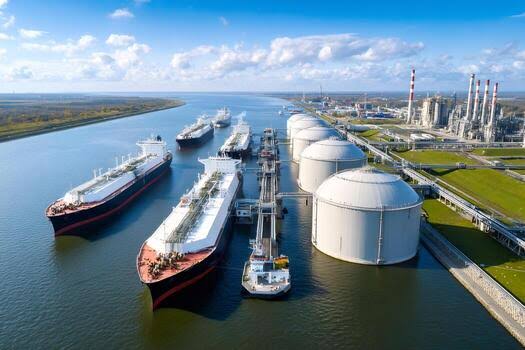
Natural gas and LNG remain important components of TotalEnergies' growth model. The company's 2026 strategy identifies more than 3% annual Oil & Gas production growth between 2025 and 2030, supported by projects already under execution.
This matters for chemical markets because natural gas plays several roles across the industrial economy. It provides energy for manufacturing while also serving as a feedstock for products such as hydrogen, ammonia, methanol and other downstream chemicals.
Greater gas availability can therefore affect both energy economics and chemical production economics. Conversely, tighter gas markets can raise production costs for manufacturers that depend heavily on gas or electricity.
For procurement teams, LNG developments should be monitored alongside conventional pipeline gas markets. The interaction between global LNG flows, regional gas balances and industrial demand can influence purchasing budgets well beyond the energy sector.
Electricity Growth Adds a Second Strategic Pillar
TotalEnergies expects electricity generation to grow by more than 20% annually and reach 100 to 120 TWh per year by 2030. The company says electricity could represent around 20% of its energy mix by that point.
The expansion has implications for industrial buyers because electricity increasingly affects the economics of chemical production. Processes such as electrolysis, chlor-alkali production, metal processing and other industrial operations can require substantial electricity inputs.
TotalEnergies expects its Integrated Power business to become free-cash-flow positive in 2027 after reaching balance in 2026. It also targets a 12% return on average capital employed for the business by 2030.
The broader trend suggests that procurement teams should assess electricity exposure alongside chemical feedstock costs. A competitive chemical price can quickly lose its advantage when energy, freight or storage costs move sharply higher.
Capital Spending Could Support Broader Industrial Supply Chains
The planned $14 billion to $17 billion annual investment envelope for 2027 to 2032 gives suppliers a long-term view of TotalEnergies' capital requirements. Large-scale energy projects typically require equipment, construction materials, process inputs and specialist services throughout development and operation.
Chemical suppliers can watch several categories that may benefit from sustained industrial activity:
Water-treatment materials can support industrial facilities, cooling systems and processing operations.
Polymers and additives can enter equipment, insulation, coatings and infrastructure applications.
Industrial gases and chemical feedstocks can support fabrication, processing and maintenance activities.
Corrosion-control products can help protect equipment operating in demanding environments.
The opportunity does not mean every chemical category will experience the same demand growth. Procurement managers should instead connect project activity with specific supply chains, regional infrastructure requirements and contract opportunities.
What the Strategy Means for Chemical Feedstock Buyers
Energy prices remain one of the most important variables for chemical manufacturers. TotalEnergies' strategy therefore provides a useful signal for companies that purchase products whose costs respond to oil, gas or electricity markets.
Buyers should monitor the relationship between upstream energy investment and downstream chemical pricing rather than viewing energy and chemical markets separately.
Several purchasing priorities stand out:
Track feedstock exposure. Buyers should identify which purchased chemicals have strong links to natural gas, crude oil or electricity costs.
Review regional sourcing. Energy infrastructure can alter local availability and delivered costs, making regional supplier comparisons increasingly important.
Build flexibility into contracts. Longer-term purchasing arrangements can provide supply visibility, but price mechanisms should reflect the underlying feedstock structure.
Monitor freight and terminal capacity. Growth in LNG and energy infrastructure can change shipping patterns, storage requirements and port utilization.
This approach can help procurement teams distinguish between temporary price movements and structural changes in supply economics.
The Broader Outlook for Energy-Linked Chemical Markets
TotalEnergies' strategy also points toward a continued overlap between conventional energy markets and lower-carbon power. The company expects electricity generation to become a larger component of its energy mix while maintaining significant oil and gas production growth.
For chemical traders, this creates a market environment where different feedstocks can compete or complement each other. Natural gas remains important for industrial energy and chemical production while electricity becomes increasingly significant for power-intensive processes.
The company's investment strategy also indicates that energy infrastructure will continue developing across multiple segments rather than shifting entirely from hydrocarbons to electricity in the near term.
That diversified approach can create demand across conventional chemical products, industrial materials and newer supply chains associated with electrification and lower-carbon technologies.
Dividend Growth and Buybacks Reinforce Capital Discipline
TotalEnergies' board has adopted a policy to increase dividends by more than 5% annually through 2030. The company also confirmed a shareholder return target of at least 40% of cash flow while maintaining a focus on balance-sheet strength.
The company expects its gearing ratio to fall below 10% by the end of 2026. It also authorized $2.5 billion in share buybacks for the fourth quarter of 2026 and between $2 billion and $2.5 billion for the first quarter of 2027.
For industrial suppliers, these financial policies provide context for how TotalEnergies intends to balance investment with shareholder distributions. The combination of capital spending and financial discipline suggests that project selection and capital efficiency will remain important considerations.
Suppliers competing for business in this environment may need to demonstrate more than product availability. Consistent quality, reliable delivery, competitive landed costs and dependable technical support can become important factors in procurement decisions.
What Buyers Should Watch Through 2027
The next stage of the strategy will provide clearer signals about how production growth and investment translate into actual market activity. Buyers should focus on project execution, energy prices, LNG availability and electricity generation growth.
Three indicators deserve particular attention:
Project start-ups: New oil, gas and power projects can influence regional feedstock availability and industrial demand.
Energy price movements: Oil, gas and electricity prices can quickly affect chemical production costs and purchasing budgets.
Investment execution: Actual capital deployment will show where supply-chain demand emerges and which regions may see stronger industrial activity.
For chemical importers and exporters, these indicators can support better timing of purchases and more informed supplier negotiations.
TotalEnergies' 2026 strategy presents a multi-year growth plan built around higher energy production, significant capital investment and stronger free cash flow. For chemical markets, its significance lies in the connections between energy supply, industrial costs, infrastructure development and feedstock economics.
Procurement teams can use these signals to reassess supplier exposure, monitor energy-linked costs and prepare for changing demand across regional chemical markets. Ready to source Methanol from verified global suppliers? Explore competitive offers on our platform today.

Methanol
Found this useful?