GEN-H to Build a 200–300 MW Zero-Emission Power Plant in Finland Using Methane Pyrolysis
GEN-H Energy and Finnish cleantech company Hycamite are planning a 200–300 MW balancing power facility in Kotka, Finland, based on methane pyrolysis technology. The companies have signed a memorandum of understanding to integrate Hycamite's methane-splitting equipment with a gas-fired power generation system.
The proposed facility would process natural gas into hydrogen and solid carbon before using the hydrogen to generate electricity. Unlike conventional natural gas combustion, the methane-splitting stage is designed to recover carbon in solid form rather than releasing it directly as carbon dioxide.
The project forms part of GEN-H's broader plans to develop a clean-energy and industrial hub around the former Sunila pulp mill area in Kotka.
A New Approach to Flexible Power Generation
The proposed facility is designed as a balancing power plant rather than a conventional baseload generator.
Balancing power becomes increasingly important as wind and solar generation expand. Renewable output can change rapidly depending on weather conditions, creating periods when additional dispatchable electricity is needed.
GEN-H plans to use hydrogen produced through methane pyrolysis as the fuel for electricity generation. The company says the hydrogen could be burned in a gas turbine when renewable generation declines, providing flexible power to the local industrial area or the national grid.
This configuration combines hydrogen production and power generation into one integrated system.
Hycamite's Methane Pyrolysis Technology
Hycamite's technology splits methane molecules into their component elements, hydrogen and solid carbon.
The process uses heat and proprietary recyclable catalysts to break down methane. Because the carbon is recovered as a solid material, the process does not require conventional carbon dioxide capture and storage.
The resulting hydrogen can then be used as an energy carrier.
The solid carbon is also potentially valuable as an industrial raw material. Hycamite is developing applications for carbon materials including synthetic graphite for battery applications.
This creates two potential product streams from the same methane feedstock.
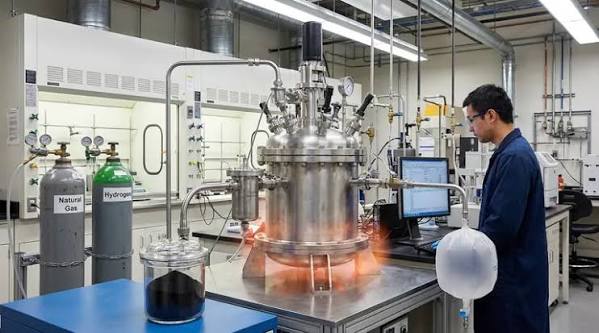
From Natural Gas to Hydrogen and Solid Carbon
The proposed process begins with natural gas entering the methane-splitting system.
Instead of directly combusting methane, Hycamite's process separates the methane into hydrogen and carbon. The hydrogen then becomes the fuel for electricity generation while the carbon remains available as a solid industrial material.
This approach changes the role of natural gas in the power-generation chain.
The natural gas becomes a feedstock for hydrogen production rather than simply being burned in the turbine. The process therefore aims to retain the carbon in a usable solid form instead of converting it into carbon dioxide during the initial conversion stage.
Existing Gas Infrastructure Supports the Project
The Sunila industrial area has an important infrastructure advantage.
The former pulp mill was historically a major energy consumer and remains connected to Finland's national natural gas network. The site has a gas connection with reported capacity of approximately 145–270 MW.
This existing infrastructure could support the proposed power project without requiring an entirely new gas connection from scratch.
The site also contains existing industrial power-generation infrastructure that GEN-H and its partners could potentially upgrade for the new energy system.
For project developers, reusing established industrial infrastructure can help reduce development requirements and connect new energy systems with existing industrial networks.
Supporting Finland's Renewable Energy System
Finland's power system is adding more renewable generation, particularly wind power.
As renewable capacity grows, the need for flexible generation can also increase. A balancing facility can operate when renewable electricity output falls and reduce its role when wind and solar generation are sufficient.
The proposed hydrogen-fired power plant is intended to provide this flexibility.
GEN-H says the system could respond rapidly to changes in renewable generation, including prolonged periods of low wind and solar output.
The project therefore combines methane conversion technology with dispatchable electricity generation.
The Role of Hydrogen in Power Generation
Hydrogen can be stored and converted back into electricity when required.
In the proposed Kotka configuration, hydrogen would be produced from methane through Hycamite's technology and then used directly in the power-generation system.
During combustion, hydrogen produces water vapour rather than carbon dioxide as the direct combustion product. The overall emissions profile of the system, however, depends on the complete lifecycle of the natural gas feedstock, methane handling and the management of the solid carbon produced by the process.
For energy buyers and industrial users, this distinction is important when evaluating the project's eventual carbon performance.
Solid Carbon Creates a Second Value Stream
One of the distinctive features of methane pyrolysis is the production of solid carbon.
Hycamite is developing carbon products for industrial applications and is also working toward synthetic graphite production. The company says its technology can produce solid carbon suitable for applications including battery materials.
This could create an additional commercial pathway beyond hydrogen and electricity.
Instead of treating the carbon from methane as a waste stream, the process is designed to recover it as a material that can potentially enter industrial supply chains.
For chemical traders, this creates interest in both hydrogen and carbon markets.
Hycamite Has an Industrial Reference Plant
The Kotka project builds on Hycamite's existing methane-splitting development work in Finland.
Hycamite's industrial-scale research, development and validation plant operates in Kokkola. The facility has been in operation since 2025 and is designed to validate the technology, process economics and carbon product quality at production scale.
Hycamite previously reported that its Customer Sample Facility was designed for nominal annual production of up to 2,000 tonnes of low-carbon hydrogen and 6,000 tonnes of high-quality carbon.
The Kokkola facility provides an important technology-development reference as the company works toward larger commercial deployments.
Sunila Could Become a Larger Clean Energy Hub
The proposed power plant is only one part of GEN-H's wider plans for the Sunila industrial area.
The broader development includes renewable energy generation, hydrogen-based energy systems, research and pilot activities and an industrial cluster focused on the green transition. A solar power plant of up to 100 MWp is also planned for the nearby Hietanen harbour area.
This creates the potential for multiple energy technologies to operate within the same industrial ecosystem.
Existing industrial infrastructure could therefore support new energy, hydrogen and manufacturing activities as the area is redeveloped.
Project Status and Next Steps
The 200–300 MW power plant remains a planned development.
GEN-H and Hycamite have signed an MoU, while planning and permitting activities for the broader Sunila redevelopment are underway. Legacy pulp mill equipment is also being dismantled as the site is prepared for future investment.
The existing gas connection and potential upgrades to the site's power-generation assets could support an accelerated feasibility assessment.
However, the project should not yet be treated as an operating power plant or confirmed commercial capacity. A final investment decision would need to follow further feasibility, planning, permitting and development work.
Opportunities for Chemical and Energy Traders
The project could create demand across several industrial supply chains.
Natural gas: Methane serves as the feedstock for Hycamite's hydrogen and carbon production process.
Hydrogen: Hydrogen becomes the primary fuel for the proposed flexible power-generation system.
Solid carbon: Recovered carbon could become an industrial raw material for applications such as carbon products and synthetic graphite.
Industrial gases: Hydrogen production and power-generation facilities require specialized gas handling, monitoring and safety systems.
Process chemicals: Methane pyrolysis and industrial energy facilities can generate demand for catalysts, treatment chemicals, maintenance materials and other industrial inputs.
Infrastructure: Pipelines, storage systems, compressors, turbines and electrical equipment will be required to integrate the different parts of the facility.
For traders, the project is therefore relevant beyond the electricity market alone.
Potential Role in Industrial Decarbonization
The Kotka project demonstrates how methane can be used differently within an industrial energy system.
Traditional gas-fired power generation converts methane directly into carbon dioxide and energy. Methane pyrolysis instead separates the carbon and hydrogen before the hydrogen is used for power generation.
The approach could reduce direct carbon emissions from natural-gas-based power generation if the process achieves the performance described by the developers and the solid carbon remains securely incorporated into products or otherwise managed.
Its commercial potential will depend on technology performance, natural gas costs, hydrogen utilization, carbon-product markets and overall project economics.
What Buyers Should Watch
Energy and chemical procurement teams should monitor several milestones as the Kotka project develops.
Feasibility assessment: Further engineering work will clarify the technical configuration and economics of the proposed plant.
Permitting: Regulatory approvals will determine how quickly construction can progress.
Final investment decision: FID will be a key indicator that the project is moving from planning toward execution.
Methane pyrolysis scale-up: The ability to deploy Hycamite's technology at the required scale will be important for project economics.
Hydrogen generation: Production performance will determine how much hydrogen can be supplied to the power-generation system.
Solid carbon markets: The availability of commercial applications for the recovered carbon could influence the project's overall economics.
Power-grid integration: The final configuration will determine how the plant contributes to Finland's balancing-power requirements.
Looking Ahead
GEN-H's proposed 200–300 MW Kotka project combines natural gas, methane pyrolysis, hydrogen and flexible electricity generation in a single industrial concept.
Hycamite's technology would split methane into hydrogen and solid carbon, with the hydrogen used to generate electricity and the solid carbon recovered as a potential industrial feedstock.
The project remains at the planning and feasibility stage following the MoU between GEN-H and Hycamite. If development advances through permitting, engineering and investment decisions, the facility could become part of a broader clean-energy hub at Sunila.
For chemical traders, the development is particularly relevant because it links emerging hydrogen demand with a potentially new source of industrial carbon materials.
Hydrogen Peroxide (35%) - Thailand
觉得有用吗?