Agricultural Adjuvants: Types, Applications and Selection
Agricultural Adjuvants: Types, Applications and Selection
Agricultural adjuvants play an important role in modern crop protection by improving the performance, handling and application characteristics of pesticides and other agricultural spray products. Farmers and agricultural professionals use these specialized additives to support spray coverage, improve droplet retention, manage water quality and address application challenges.
Adjuvants do not usually control weeds, insects or plant diseases independently. Instead, they support the performance of compatible crop protection products by modifying the physical or chemical properties of spray mixtures. Their effectiveness depends on the active ingredient, crop, application method, environmental conditions and product instructions.
For agricultural chemical manufacturers, distributors and buyers, understanding adjuvant categories and their applications helps identify suitable products for different crop protection requirements.
What Are Agricultural Adjuvants?
Agricultural adjuvants are substances added to pesticide formulations or spray mixtures to improve product performance or application characteristics. Manufacturers may incorporate them during formulation, while applicators may add separate adjuvant products to spray tanks when the pesticide label permits or recommends their use.
Adjuvants can influence how spray droplets interact with plant surfaces, how ingredients mix in water and how effectively a spray remains on its intended target. Depending on their formulation, they may improve wetting, spreading, penetration, adhesion, dispersion or spray stability.
Formulation Adjuvants and Spray Adjuvants
The industry generally distinguishes between two main categories:
Formulation adjuvants: Manufacturers incorporate these ingredients into pesticide products during production. They support formulation stability, handling, dispersion and application performance.
Spray adjuvants: Applicators add these products to spray mixtures before application to address specific requirements, such as improving coverage, conditioning water or reducing drift.
This distinction matters because a pesticide may already contain the additives required for its intended use. Adding another adjuvant without checking the product instructions may provide no benefit or create compatibility and crop-safety problems.
Major Types of Agricultural Adjuvants
Different adjuvants perform different functions. Selecting the correct category requires understanding the intended application and the properties of the crop protection product.
Surfactants and Wetting Agents
Surfactants, also called surface-active agents, reduce or modify surface tension. They help spray droplets spread across plant surfaces instead of forming isolated beads.
Non-ionic surfactants are widely used in agricultural spray applications. They can improve wetting, spreading and retention on leaves, especially when plant surfaces have waxy or water-repellent characteristics.
Common applications include herbicide, fungicide and insecticide sprays where the product label recommends improved surface coverage. However, excessive spreading or penetration can increase crop injury under certain conditions, so the correct product and application rate are essential.
Crop Oil Concentrates and Methylated Seed Oils
Oil-based adjuvants support the performance of selected pesticide applications by improving contact with plant surfaces and helping certain active ingredients penetrate leaf coatings.
Common categories include crop oil concentrates and methylated seed oils. Their formulations may contain petroleum-based or vegetable-derived oil components combined with emulsifiers or surfactants.
These products are often used with selected post-emergence herbicides and other crop protection formulations. Their suitability depends on the pesticide label, crop tolerance, weather conditions and application timing.
Stickers and Spreader-Stickers
Stickers help spray deposits remain on treated surfaces. They can support retention when rainfall, irrigation or other environmental conditions may remove deposited material.
Spreader-stickers combine spreading and adhesion functions. These products may be useful for applications requiring more uniform coverage and improved deposit retention.
Their use depends on the target crop, pesticide formulation and required application characteristics. Excessive retention or spreading is not automatically beneficial, particularly when it affects the intended distribution of the active ingredient.
Drift Control Agents
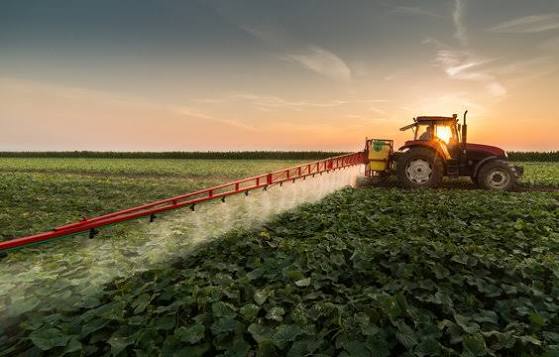
Drift control agents modify spray characteristics to help reduce the formation or movement of fine droplets that may travel away from the intended application area.
Some formulations increase spray mixture viscosity or influence droplet formation. Applicators may use them in suitable spraying operations where off-target movement presents a concern.
However, drift management requires more than an additive. Equipment calibration, nozzle selection, boom height, wind conditions and application technique remain important factors.
Water Conditioners and Buffering Agents
Spray water quality can influence pesticide performance. Water conditioners and buffering agents help manage certain water-related challenges, including hardness and unsuitable pH levels.
Some conditioning products bind or reduce the effects of dissolved minerals, while acidifiers and buffers adjust or stabilize spray-mixture pH.
These additives can be useful when a pesticide is sensitive to water conditions. Buyers should evaluate the water source, pesticide chemistry and product instructions before selecting a conditioning agent.
Compatibility Agents and Defoamers
Compatibility agents help support the physical stability of approved tank mixtures containing multiple agricultural products. They can reduce problems such as separation, clumping or uneven dispersion when used with compatible formulations.
Defoamers, also called antifoaming agents, control excessive foam during mixing and spraying. They can improve tank filling, agitation and handling, particularly when spray mixtures contain foam-forming ingredients.
Neither category makes an otherwise unsuitable pesticide combination safe or compatible. Applicators should always follow label instructions and conduct an appropriate compatibility assessment.
Applications of Agricultural Adjuvants
Agricultural adjuvants support several crop protection and spray-management activities. Their role varies according to the product category and the requirements of the application.
Herbicide Applications
Herbicide applications are a major area of adjuvant use. Selected surfactants, crop oils and nitrogen-based additives can improve the activity of certain herbicides by influencing wetting, retention or absorption.
For example, a suitable surfactant may improve contact between spray droplets and weed foliage. An oil-based adjuvant may support penetration when the herbicide label recommends that approach.
The correct selection depends on the herbicide's active ingredient, formulation, target weed and crop conditions. An unsuitable additive can increase crop injury or reduce application performance.
Fungicide and Insecticide Spraying
Fungicides and insecticides often require effective spray distribution across the intended treatment area. Wetting agents and spreaders can help improve coverage on suitable plant surfaces.
Stickers may support deposit retention where the product instructions identify a need for improved adhesion. Insecticide applications may also benefit from appropriate spray modifiers when the target pest occupies difficult-to-reach plant surfaces.
Adjuvant selection should account for the pesticide formulation and the biological target rather than relying on a single product for every application.
Nutrient and Foliar Spray Applications
Some agricultural spray programs involve foliar-applied nutrients and specialty plant-care products. Suitable wetting and spreading agents may help distribute spray mixtures across leaf surfaces.
However, compatibility and crop tolerance remain important. A product designed for pesticide tank mixtures should not automatically be assumed suitable for every foliar fertilizer or plant nutrition formulation.
Spray Drift and Application Management
Drift management products help applicators address the risk of off-target spray movement. They may support more controlled droplet formation when used with compatible spray systems.
Water conditioners, defoamers and compatibility agents also contribute to application management by addressing specific mixing and handling challenges.
These functions can improve operational consistency, but correct equipment settings and responsible application practices remain essential.
How to Select the Right Agricultural Adjuvant
Selecting an agricultural adjuvant requires more than comparing product descriptions. Buyers and applicators should evaluate the intended function, formulation compatibility and application conditions before choosing a product.
Identify the Required Function
Start by defining the problem the adjuvant needs to address. The requirement may involve improved wetting, spreading, retention, penetration, water conditioning, foam control or drift management.
Choosing a product based on its specific function helps avoid unnecessary additives and reduces the risk of unsuitable combinations.
Check Pesticide Label Requirements
The pesticide label should guide adjuvant selection. Some products require a specific adjuvant category, while others prohibit additional additives or already contain suitable formulation ingredients.
Applicators should follow the stated product instructions, including approved adjuvant types, mixing rates and application restrictions. They should not substitute products without confirming that the substitution is permitted.
Evaluate Compatibility and Crop Safety
Compatibility depends on the chemical properties of the pesticide, adjuvant and spray water. Buyers should review technical documentation and supplier guidance to understand the intended use and limitations.
Crop tolerance is equally important. Certain adjuvants can increase penetration or spreading and may contribute to phytotoxicity under unsuitable conditions.
A jar test can help identify visible physical incompatibility in a proposed tank mixture, but it does not establish biological safety or guarantee field performance.
Review Product Specifications
Commercial buyers should evaluate product specifications before procurement. Relevant information may include:
Active or functional ingredient composition
Surfactant type and concentration, where applicable
Physical form and appearance
pH and viscosity
Solubility or dispersibility
Storage and handling requirements
Recommended applications and use rates
Packaging options and shelf life
The required specifications vary by adjuvant category. Buyers should request a current technical data sheet (TDS), safety data sheet (SDS) and other relevant product documentation from the supplier.
Assess Supplier Reliability
Reliable sourcing helps maintain consistent product quality and supply continuity. Buyers should evaluate supplier experience, documentation, batch consistency, packaging standards and the ability to meet delivery requirements.
For international procurement, it is also important to review applicable agricultural chemical regulations, transport requirements and destination-market restrictions.
Quality, Safety and Storage Considerations
Agricultural adjuvants are chemical products and require appropriate handling. Their risk profiles vary according to their ingredients, concentration and formulation.
Users should review the safety data sheet before handling a product and follow the specified personal protective equipment requirements. Suitable ventilation, spill-control procedures and safe transfer practices help reduce exposure during storage and mixing.
Store products in their recommended conditions and keep containers properly closed. Avoid incompatible materials, excessive heat and contamination. Maintain clear product identification and follow the supplier's shelf-life and disposal instructions.
Quality management should include incoming-product checks, batch identification and verification of documentation. These practices help buyers maintain consistency across procurement and application operations.
Agricultural adjuvants support modern crop protection by addressing specific formulation and spray-application requirements. From surfactants and crop oils to water conditioners, stickers and drift control agents, each category serves a distinct purpose. Selecting the right product requires careful attention to pesticide labels, compatibility, crop safety, technical specifications and supplier reliability.
2-Ethyl Hexanol
Found this useful?