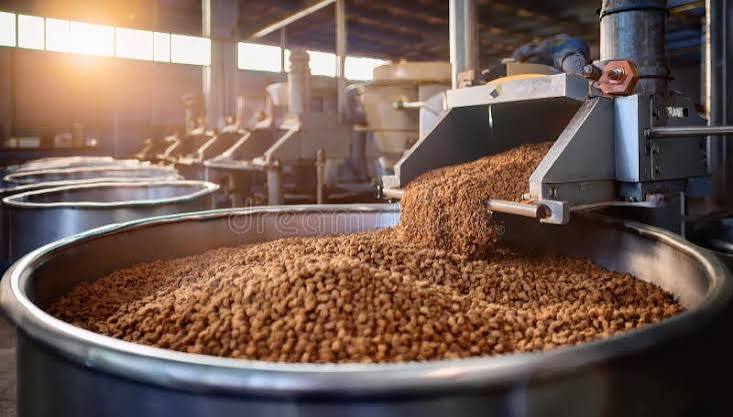
Fertilizer Additives: Uses in Manufacturing and Crop Nutrition
Fertilizer Additives: Uses in Manufacturing and Crop Nutrition
Fertilizer additives are important components in modern fertilizer production. Manufacturers use them to improve granule quality, reduce caking, control dust, support nutrient stability and develop products for specific agricultural requirements. Some additives also influence how nutrients become available to plants after application.
As fertilizer producers respond to changing crop nutrition needs, product consistency and efficient nutrient management have become important considerations. Additives help manufacturers adapt conventional fertilizer materials into products with improved handling properties or specialized agronomic functions.
Understanding the different additive categories helps fertilizer manufacturers, distributors and agricultural buyers select suitable materials for production and crop nutrition applications.
What Are Fertilizer Additives?
Fertilizer additives are substances incorporated into fertilizer products during manufacturing or applied to finished fertilizer granules to modify their physical, chemical or agronomic properties. Their functions depend on the material, formulation and intended fertilizer application.
Some additives primarily support manufacturing operations. They help granules maintain their physical condition during drying, cooling, storage, transportation and field application. Others influence nutrient release, reduce specific nutrient losses or supply additional elements required for plant growth.
Manufacturing Additives and Agronomic Additives
Fertilizer additives generally serve two broad purposes:
Manufacturing and physical-quality additives: These include anti-caking agents, granule coatings, dust suppressants, binders and conditioning agents. They improve product handling, storage stability and physical consistency.
Agronomic and nutrient-efficiency additives: These include urease inhibitors, nitrification inhibitors, micronutrients, chelating agents and controlled-release coatings. They help modify nutrient availability or supplement crop nutrition.
Some products perform more than one function. A coating, for example, may improve granule handling while also influencing the rate at which water enters the fertilizer particle.
Major Types of Fertilizer Additives
Manufacturers select additives according to fertilizer chemistry, production conditions, storage requirements and the intended agricultural use.
Anti-Caking Agents
Caking occurs when fertilizer particles stick together and form hard masses during storage or transportation. Moisture absorption, temperature changes, particle characteristics and chemical reactions can contribute to this problem.
Anti-caking agents help maintain free-flowing fertilizer by reducing moisture-related adhesion or modifying interactions between particles. Manufacturers may apply surface treatments or incorporate internal conditioners during production.
Common approaches include hydrophobic coatings, selected surfactants, oils, waxes and fine mineral powders. The appropriate treatment depends on the fertilizer grade and its physical properties.
Effective anti-caking performance supports easier bagging, bulk handling, storage and mechanical field application.
Granule Coating Agents
Coating agents form a layer around fertilizer particles. Manufacturers use coatings to improve surface properties, reduce moisture interaction, control dust or modify nutrient release.
Common coating materials include polymers, sulfur-based materials, waxes and selected oils. The coating composition and application process influence the final product's performance.
Some coatings serve mainly as physical protectants, while others create controlled-release fertilizer systems. In controlled-release products, the coating regulates water movement into the granule and the diffusion of dissolved nutrients into the surrounding soil.
Binders and Granulation Aids
Binders help fine fertilizer materials form stable granules during agglomeration or granulation. They improve particle formation and can contribute to granule strength.
Depending on the production process, manufacturers may use water, fertilizer solutions, inorganic materials or selected organic binders. The choice depends on raw material properties, equipment design and the desired granule characteristics.
Granulation aids support consistent production by influencing particle growth, moisture distribution and material handling. Manufacturers must evaluate their effect on nutrient composition and finished-product quality.
Dust Suppressants
Fertilizer dust can develop during granulation, drying, screening, conveying, bagging and transportation. Excessive dust may create housekeeping problems, product losses and handling concerns.
Dust suppressants help reduce the formation or release of fine particles. Liquid coatings and binding agents can improve particle cohesion and limit abrasion during handling.
The correct dust-control treatment should reduce fines without causing excessive moisture, sticky surfaces or unwanted changes to fertilizer flow properties.
Urease Inhibitors
Urease inhibitors temporarily reduce the activity of the urease enzyme, which breaks down urea in soil. This process can generate ammonia and increase the risk of nitrogen loss through volatilization under certain conditions.
One commonly used urease inhibitor is NBPT, which is applied to selected urea-based fertilizer products. By slowing urea hydrolysis, it can provide more time for rainfall or irrigation to move urea into the soil.
The benefits depend on soil conditions, weather, fertilizer placement and application practices. Urease inhibitors are not a substitute for appropriate fertilizer management.
Nitrification Inhibitors
Nitrification inhibitors slow the biological conversion of ammonium into nitrite and subsequently nitrate in soil. This can help retain nitrogen in ammonium form for a longer period.
Examples include dicyandiamide (DCD) and nitrapyrin, depending on the fertilizer system and permitted use. By slowing nitrification, these additives can help manage nitrogen losses associated with nitrate leaching and denitrification under suitable conditions.
Their effectiveness varies with soil temperature, moisture, microbial activity and the timing of fertilizer application.
Micronutrient Additives and Chelating Agents
Plants require micronutrients such as zinc, iron, manganese, copper, boron and molybdenum in relatively small quantities. Fertilizer manufacturers may incorporate these elements into granular, blended or liquid fertilizer products to address specific crop nutrition requirements.
Chelating agents help maintain selected metal micronutrients in forms that remain more available in solution. This is particularly relevant where chemical reactions with other fertilizer components or soil constituents could reduce micronutrient availability.
Common chelating agents include EDTA, DTPA and other suitable complexing materials. Selection depends on the micronutrient, fertilizer formulation, soil conditions and intended application.
Applications of Fertilizer Additives in Manufacturing and Crop Nutrition
Fertilizer additives support production operations and help manufacturers develop products for different crop and soil requirements.
Improving Fertilizer Granule Quality
Physical quality is important for fertilizer storage, transportation and application. Strong, uniform granules are easier to handle and can support more consistent distribution through agricultural spreading equipment.
Binders, granulation aids, coatings and anti-caking agents help manufacturers improve granule strength, reduce dust formation and maintain product flowability.
These properties are particularly important for bulk fertilizers that pass through multiple handling stages before reaching farms.
Supporting Nitrogen Management
Nitrogen fertilizers can undergo transformations that increase the potential for nutrient losses. Additives such as urease and nitrification inhibitors target different stages of the nitrogen cycle.
Urease inhibitors slow the breakdown of urea, while nitrification inhibitors slow the conversion of ammonium into nitrate. Their use may help improve nitrogen-use efficiency when the product and application conditions are suitable.
Coated and stabilized nitrogen fertilizers can also help align nutrient availability more closely with crop demand.
Enhancing Controlled Nutrient Release
Controlled-release fertilizers use coatings or other formulation approaches to regulate nutrient release after application. Water enters the coated granule, dissolves the fertilizer and allows nutrients to move gradually into the surrounding soil.
Sulfur and polymer coatings are among the materials used in these products. Release characteristics depend on coating composition, thickness, granule properties, soil temperature and moisture.
These products can be useful in selected agricultural and horticultural systems where a more extended nutrient supply is desirable.

Supplying Micronutrients for Crop Nutrition
Micronutrient-enriched fertilizers provide essential elements alongside primary nutrients such as nitrogen, phosphorus and potassium.
Manufacturers can add micronutrients through dry blending, granule coating or liquid formulation. The appropriate production method depends on the required nutrient concentration, product uniformity and compatibility with the fertilizer base.
Chelating agents may also help maintain the availability of selected micronutrients in liquid fertilizers and other suitable formulations.
The final nutrient combination should reflect crop requirements, soil conditions and appropriate agronomic recommendations.
Improving Storage and Distribution
Fertilizers may experience moisture exposure, temperature changes, vibration and mechanical handling during storage and distribution. These conditions can affect granule strength and flowability.
Anti-caking treatments, moisture-resistant coatings and dust suppressants help maintain product condition throughout the supply chain. Consistent product quality also supports reliable bagging, conveying and field spreading.
How to Select the Right Fertilizer Additive
Selecting an additive requires a clear understanding of the fertilizer formulation, manufacturing process and intended agronomic function.
Identify the Main Requirement
Start by identifying the issue or performance objective. A manufacturer may need to reduce caking, strengthen granules, control dust, improve micronutrient delivery or modify nitrogen release.
Matching the additive to the required function helps avoid unnecessary ingredients and reduces formulation complexity.
Check Chemical Compatibility
An additive must remain compatible with the fertilizer's raw materials and production conditions. Moisture, temperature, pH and chemical interactions can affect performance.
For example, a coating designed for one fertilizer grade may not perform equally well on another. Manufacturers should assess compatibility through appropriate laboratory and production-scale testing.
Review Technical Specifications
Buyers should request technical documentation and evaluate relevant parameters, including:
Chemical composition and active ingredient concentration
Physical form, appearance and particle characteristics
Moisture content, pH and solubility where relevant
Compatibility with the intended fertilizer grade
Recommended dosage and application method
Storage stability and shelf life
Packaging and handling requirements
A current technical data sheet (TDS) and safety data sheet (SDS) help buyers assess whether a product meets their production requirements.
Evaluate Performance and Supplier Reliability
Manufacturers should assess additive performance under actual production conditions. Relevant checks may include granule strength, dust generation, flowability, caking tendency, coating uniformity and nutrient-release characteristics.
Supplier reliability also matters. Buyers should review batch consistency, quality-control procedures, documentation, technical support and supply continuity.
Quality, Safety and Environmental Considerations
Fertilizer additives can have different handling and environmental profiles depending on their chemical composition. Manufacturers should review safety data sheets, workplace exposure controls and applicable regulatory requirements before using a material.
Production facilities should maintain suitable ventilation, dust-control systems, personal protective equipment and spill-management procedures. Storage conditions should follow supplier recommendations, with incompatible substances kept separate.
Environmental considerations are also important when selecting coatings and nutrient-stabilizing additives. Manufacturers should assess the fate of coating materials, potential residues, nutrient-loss impacts and relevant market requirements.
2-Ethyl Hexanol
Found this useful?