
FDA's Compressed Review Timeline for Tudriqev Signals a Shift in Regulatory Flexibility
On August 6, 2026, the FDA granted accelerated approval to Tudriqev, an oncolytic immunotherapy from Replimune, after two prior rejections and a regulatory fight that became a flashpoint in the biotech industry's relationship with the agency. What makes this approval notable beyond the drug itself is how it got there. Once former commissioner Marty Makary departed the FDA, Replimune negotiated a new path forward, submitted a revised application in June 2026, and received a commitment from the agency to review it on a compressed schedule.
For anyone supplying inputs into biologics manufacturing, that shift in regulatory posture is worth understanding, since faster approval pathways tend to translate into faster ramp-up demand for production materials.
What Happened With Tudriqev's Regulatory Path
Replimune's biologics license application for RP1, the genetically modified herpes simplex virus now marketed as Tudriqev, dates back to late 2024. The FDA issued its first complete response letter in July 2025, centered on concerns that the trial's single-arm design made it impossible to isolate how much of the treatment effect came from Tudriqev itself versus the accompanying drug nivolumab.
A resubmission accepted in October 2025 under a standard review timeline led to a second rejection on the same grounds in April 2026. That second denial became a public dispute, with Replimune's leadership directly criticizing what it called inconsistent agency communication.
Why Makary's Departure Changed the Calculus
The case had become something of a symbol for broader industry frustration with FDA decision-making during a period of significant staff turnover and leadership change at the agency. Several other biotech companies reported similarly shifting or contradictory feedback from reviewers during the same stretch.
Once Makary left the agency, Replimune returned with a third submission in June 2026. This time, the FDA classified it as a complete response eligible for a compressed review timeline, setting a PDUFA action date of August 2, 2026, just weeks after acceptance. An advisory committee then voted 10 to 3 in favor of the therapy on July 30, 2026, ahead of the final approval.
What a Faster Review Pathway Signals More Broadly
A single approval does not rewrite FDA policy on its own, but the pattern here is instructive. A therapy rejected twice under one leadership team found a workable path forward within months of a leadership change, without any alteration to the underlying clinical data package that had twice been deemed insufficient.
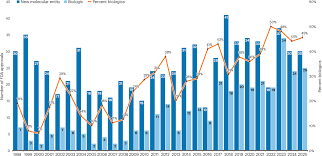
That suggests the agency's posture toward previously rejected biologics, particularly those built on strong efficacy signals but unconventional trial designs, may be loosening. A few signals point in that direction.
The compressed review timeline for a third resubmission is unusual and suggests active internal prioritization rather than a routine process.
The favorable advisory committee vote, despite dissent centered on the trial's lack of a placebo arm, indicates a willingness to weigh real-world clinical need alongside methodological concerns.
Industry commentary around the case has framed it as part of a broader pattern affecting multiple biotech developers during the same period, not an isolated dispute.
What This Means for Biomanufacturing Input Suppliers
Accelerated approvals for cell and gene therapy products carry direct consequences upstream. Tudriqev is manufactured through a viral vector production process, which depends on a steady supply of cell culture media, chromatography resins, buffers and other bioprocessing chemicals.
When a therapy clears approval and moves from clinical-scale to commercial-scale manufacturing, demand for these inputs typically scales sharply and quickly. Suppliers serving contract development and manufacturing organizations, known as CDMOs, along with in-house biologics manufacturers, should watch for a broader pickup in ordering activity if this signals a genuinely faster approval environment across the sector.
Buyers supplying bioprocessing reagents may see shorter lead times between approval announcements and volume order requests going forward.
A friendlier regulatory posture could pull forward capital investment decisions at manufacturing sites currently waiting on regulatory clarity before scaling up.
Suppliers with flexible capacity may be better positioned to capture demand from companies that previously delayed manufacturing scale-up due to regulatory uncertainty.
What Suppliers Should Watch Next
The Tudriqev approval is one data point, not confirmation of a permanent policy shift. Whether the FDA maintains this more flexible posture toward previously rejected biologics will depend on decisions still to come under current leadership, and on how consistently compressed review timelines get applied to other pending applications.
Suppliers of bioprocessing chemicals and reagents should treat this case as an early signal worth tracking rather than a settled trend, watching closely for whether other rejected or delayed biologics applications begin moving through the FDA on similarly accelerated timelines over the next several months.
2-Ethylhexyl Acrylate
Found this useful?