Foundry Chemicals: Applications in Metal Casting Operations
Foundry Chemicals: Applications in Metal Casting Operations
Foundry chemicals are essential materials used throughout metal casting operations. They support mould and core production, molten metal treatment, surface protection and finishing. By controlling the properties of moulding materials and molten metal, these chemicals help foundries manufacture components with the required strength, dimensional accuracy and surface quality.
Metal casting facilities work with different metals, including iron, steel, aluminium, copper and their alloys. Each material and casting process has specific requirements. Foundry chemicals therefore include several product categories, such as sand binders, catalysts, refractory coatings, fluxes, inoculants, release agents and die lubricants.
Selecting the correct chemical system helps manufacturers maintain consistent production, reduce casting defects and improve process efficiency.
What Are Foundry Chemicals?
Foundry chemicals are specialised materials used in metal casting to prepare moulds and cores, condition molten metal and support casting operations. They interact with sand, refractory materials, metal surfaces and other process inputs to achieve specific manufacturing results.
Their selection depends on the metal being cast, the moulding method, operating temperature and required casting quality.
Main Categories of Foundry Chemicals
Common foundry chemical categories include:
Sand binders: Hold sand grains together and provide mould and core strength.
Catalysts and hardeners: Control the curing or setting of chemical binder systems.
Mould and core coatings: Protect mould surfaces and help improve casting finish.
Fluxes: Support molten metal treatment by interacting with impurities and oxides.
Inoculants and nodularisers: Modify solidification behaviour and microstructure in selected cast iron processes.
Release agents and die lubricants: Support metal release and protect permanent mould surfaces.
Refractory materials: Provide resistance to high temperatures in moulds, furnaces and metal-handling equipment.
Not every foundry uses all these materials. Requirements vary according to the casting process and production environment.
Foundry Chemicals in Sand Mould and Core Production
Sand moulding is widely used in metal casting because it can produce components in different sizes and geometries. Foundries combine suitable sand with binders and other additives to create moulds and cores that maintain their shape during metal pouring.
The chemical system influences mould strength, gas generation, permeability, collapsibility and the final casting surface.
Sand Binders and Resin Systems
Sand binders provide cohesion between individual sand grains. They help moulds and cores withstand handling, assembly and contact with molten metal.
Common binder systems include:
Phenolic resins: Used in several chemically bonded sand systems to provide mould and core strength.
Furan resins: Used in processes such as acid-cured no-bake moulding and core production.
Phenolic-urethane systems: Used in cold-box processes where rapid core production and dimensional control are important.
Inorganic binders: Often based on silicate chemistry and used in selected applications where reduced organic emissions are a process objective.
Bentonite clay: Used as a binder in green-sand moulding systems, typically alongside water and other additives.
Each binder system requires specific mixing, curing and storage conditions. Foundries select the system based on production speed, casting geometry, required strength and sand reclamation requirements.
Catalysts and Hardening Agents
Catalysts and hardeners control the setting reaction of chemical binder systems. Their function depends on the resin chemistry and moulding process.
For example, acid catalysts are used in certain furan and phenolic no-bake systems. In cold-box processes, a gaseous catalyst helps harden the binder after the sand mixture enters the core box.
Correct catalyst selection and dosing are important. Insufficient curing may produce weak cores, while excessive or unsuitable additions can affect working time, gas generation and casting quality.
Mould and Core Additives
Foundries may add specialised materials to improve sand-system performance. Additives can influence hot strength, surface finish, resistance to metal penetration and other casting characteristics.
The correct combination depends on sand properties, binder type, casting temperature and the metal being poured.
Refractory Coatings and Casting Surface Protection
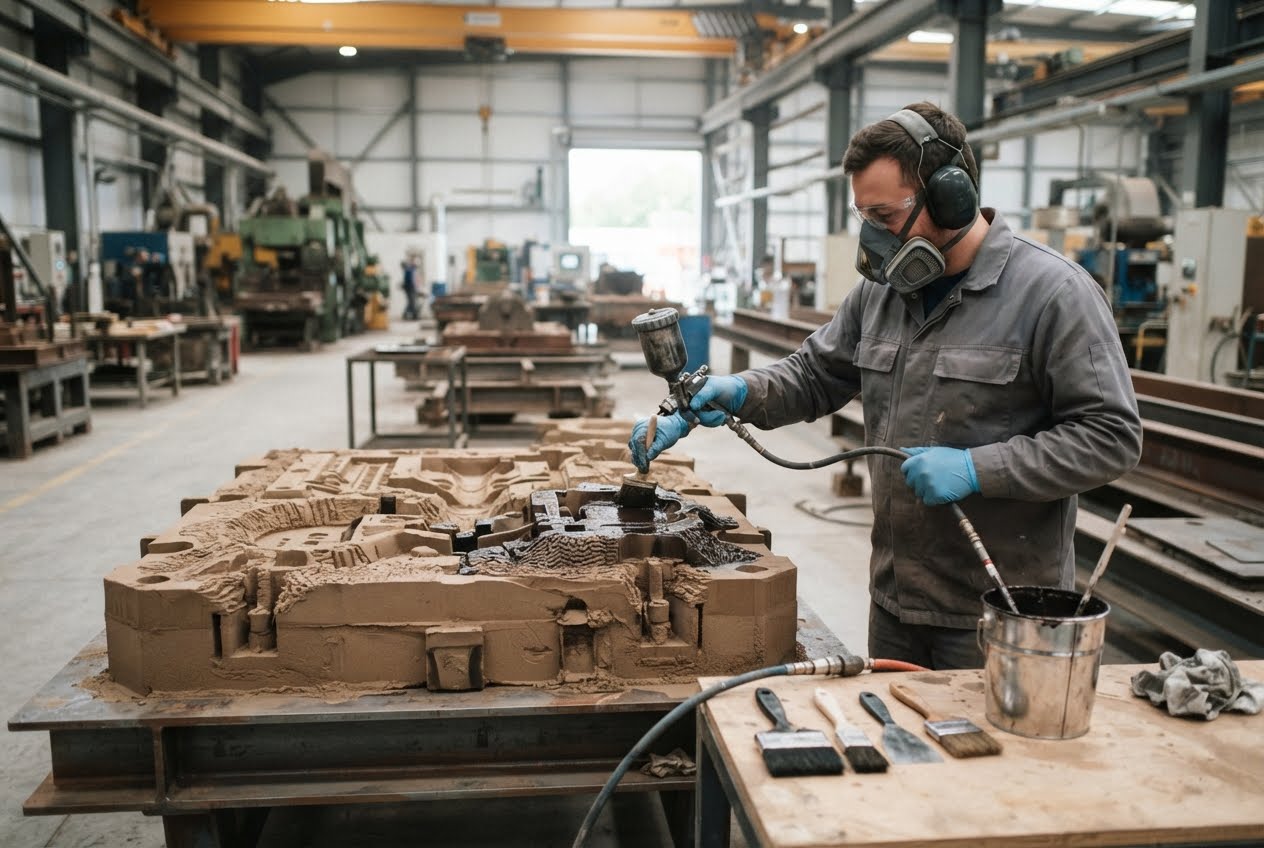
Mould and core coatings are applied to selected sand surfaces to create a protective refractory layer between the mould and molten metal. These coatings help control interactions at the metal-mould interface.
They are particularly useful in applications where surface finish, metal penetration or mould erosion presents a production challenge.
Functions of Refractory Coatings
Foundry coatings typically contain refractory fillers, liquid carriers and other formulation components. Depending on the product, they may provide several benefits:
Reduce direct interaction between molten metal and moulding sand.
Help minimise metal penetration into the mould surface.
Improve casting surface appearance.
Reduce certain sand-related surface defects.
Support consistent performance across mould and core surfaces.
Common refractory coating materials include zircon-based, alumina-based and other mineral formulations. The appropriate coating depends on the casting alloy, mould material and operating conditions.
Coatings for Permanent Mould and Die Casting
Permanent mould and die casting operations use specialised coatings and lubricants to manage the interaction between molten metal and metal tooling.
These products can help control die temperature, improve metal release and protect mould surfaces. Their formulation must match the alloy, tooling material and production cycle.
Foundries should follow supplier guidance for coating concentration, application method, drying requirements and operating temperature.
Chemicals Used in Molten Metal Treatment
Molten metal treatment is another important area where foundry chemicals support casting quality. Metal treatment materials help control impurities, oxidation, composition and solidification behaviour.
The exact products depend on the alloy and the metallurgical properties required in the finished component.
Fluxes for Metal Cleaning
Fluxes are used in selected melting and refining operations to interact with oxides and other unwanted materials. They can support slag formation, metal cleaning and process control.
Different flux formulations serve different metals and furnace conditions. For example, fluxes used in aluminium melting differ from those used in iron and steel production.
The selection should consider alloy composition, furnace type, treatment temperature and the required metal quality. Incorrect flux use can affect metal recovery, generate additional waste or create unwanted reactions.
Inoculants and Nodularisers
Inoculants are added to certain cast iron melts to influence graphite formation and solidification behaviour. They help control the microstructure and support the required mechanical properties.
Nodularising treatments, commonly involving magnesium-bearing alloys, are used in ductile iron production to promote the formation of spheroidal graphite.
These treatments require careful control of composition, addition method and treatment conditions. Foundries monitor the resulting metal properties to maintain consistent casting quality.
Release Agents, Die Lubricants and Process Additives
Not all foundry chemicals are used in sand moulding or molten metal treatment. Permanent mould and die casting operations also depend on products that support tooling performance and metal release.
Die Lubricants and Release Agents
Die lubricants and release agents help prevent cast metal from sticking to the die surface. They can also influence die temperature, surface finish and cycle consistency.
The formulation may contain lubricating components, water or other carriers and specialised additives. The correct product depends on the alloy, die material, application method and production conditions.
Quench and Cooling Additives
Some foundry operations use specialised quenching and cooling fluids during downstream heat treatment or related processing. These products help manage cooling behaviour and support the required material properties.
Their selection depends on the metal, heat-treatment process and equipment design. Foundries should monitor fluid condition and follow the supplier's operating recommendations.
Quality Requirements, Safety and Environmental Management
Foundry chemical performance depends on product consistency and correct process control. Buyers and production teams should review technical specifications before introducing a new chemical into an established operation.
Important Purchasing and Quality Parameters
Depending on the product category, relevant specifications may include:
Chemical composition and active content.
Viscosity, density and pH where applicable.
Moisture content and solid concentration.
Curing time and working life for binder systems.
Refractory properties and application characteristics for coatings.
Particle size and composition for powders and additives.
Storage stability and shelf life.
Compatibility with the intended sand, alloy or equipment.
A current technical data sheet and safety data sheet should accompany the product. Batch-specific certificates of analysis can also help buyers verify quality against agreed specifications.
Safe Handling and Environmental Considerations
Foundry chemicals may contain alkaline materials, acids, organic resins, solvents, catalysts or other substances that require specific handling controls. Some binder systems can release fumes or decomposition products when exposed to high temperatures.
Facilities should assess each product individually and follow its safety data sheet. Appropriate ventilation, dust extraction, protective gloves, eye protection and suitable respiratory controls may be required.
Environmental management is also important. Sand reclamation, waste segregation, emission control and wastewater treatment can help reduce the environmental impact of foundry operations. Foundries should monitor emissions and spent materials according to applicable environmental requirements.
Choosing a Reliable Foundry Chemicals Supplier
A reliable supplier helps foundries maintain consistent material quality and production performance. Buyers should evaluate suppliers based on product specifications, technical support, quality documentation and supply reliability.
Before purchasing, confirm that the chemical matches the casting process, metal type and production equipment. Request technical and safety documentation, review recommended dosage and storage conditions, and conduct controlled trials before making major process changes.
Foundry chemicals contribute to nearly every stage of metal casting, from sand preparation and mould formation to molten metal treatment and finishing. Choosing the right chemical system helps manufacturers improve process control, maintain casting quality and support efficient production.
2-Ethylhexyl Acrylate
Found this useful?