A scientific breakthrough can change the future of a supply chain without changing this year’s procurement reality.
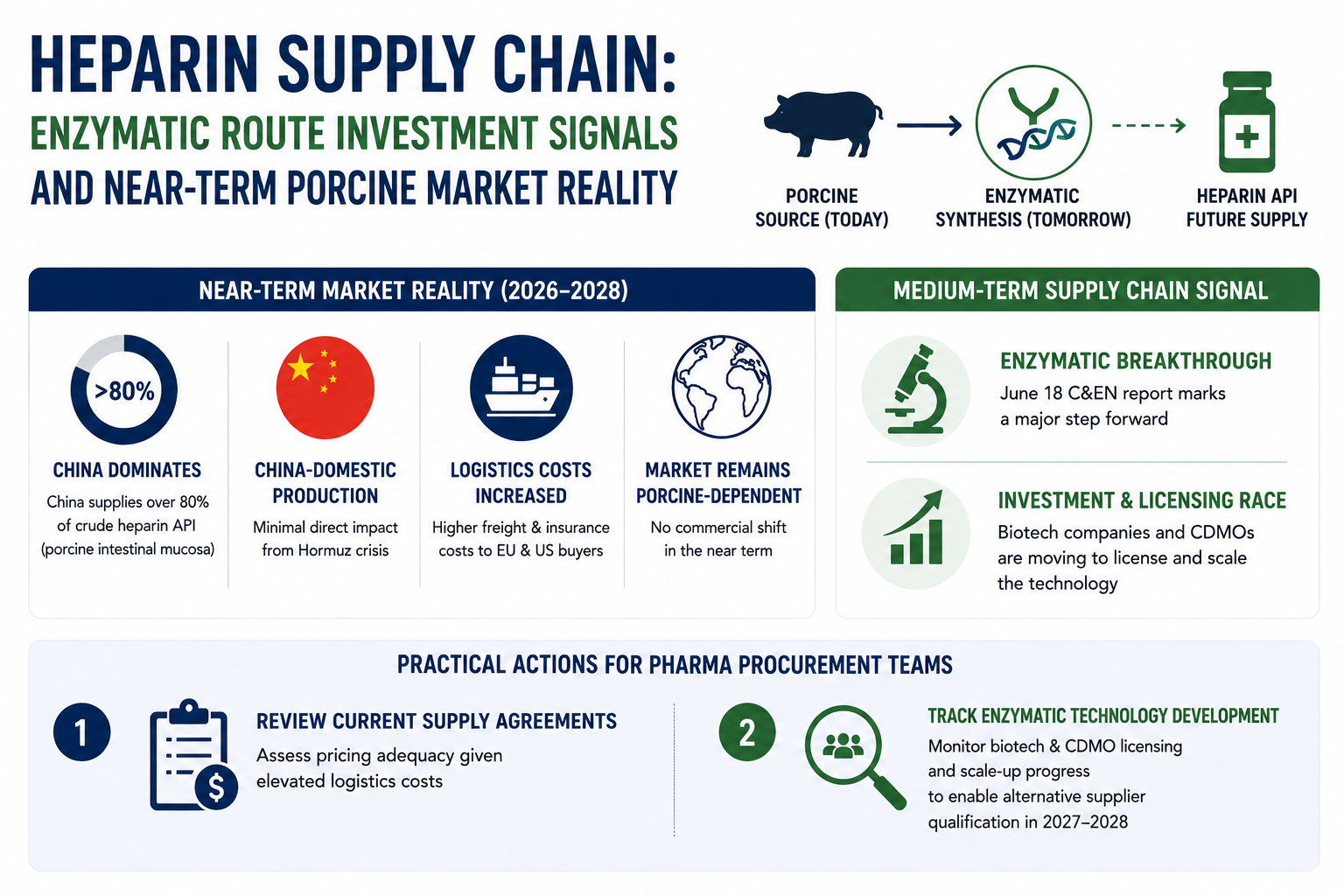
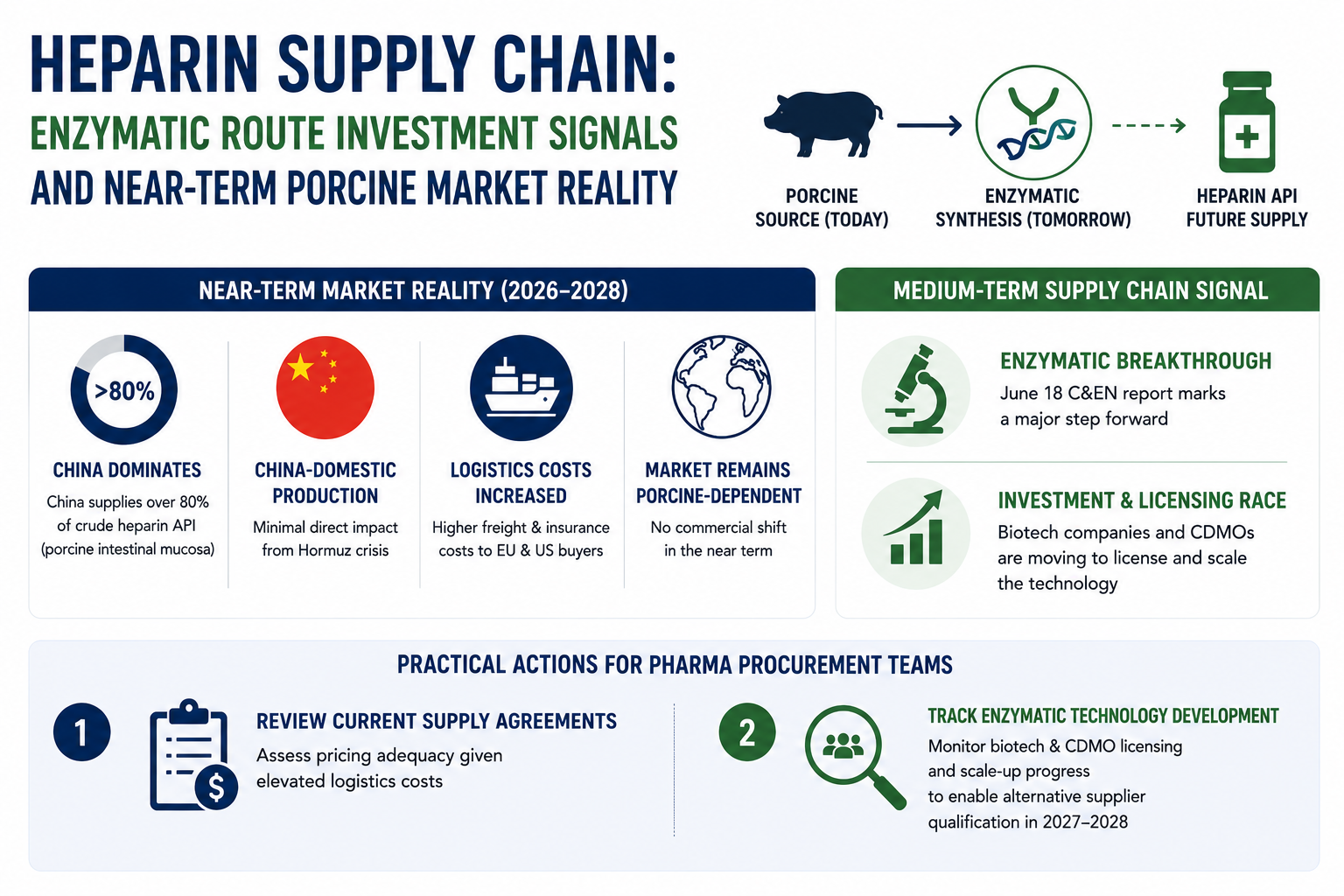
The June 18 C&EN enzymatic heparin synthesis breakthrough is an important signal for pharmaceutical buyers because it points toward a possible alternative to animal-derived heparin over the medium term. But for the 2026–2028 procurement window, the market remains overwhelmingly tied to one source: Chinese porcine intestinal mucosa.
China controls over 80% of crude heparin API supply, making the global heparin market one of the pharmaceutical sector’s most concentrated raw material chains.
What Pharma Buyers Should Do Before Alternative Routes Scale
The near-term supply picture remains clear.
Despite progress in enzymatic synthesis, commercial heparin supply will continue depending heavily on porcine-derived material from China. The Hormuz crisis has had limited direct impact on Chinese production because the key raw material chain is largely domestic to China, but it has increased logistics costs for distribution into European and US pharmaceutical markets.
For procurement teams, this creates two immediate priorities.
First, buyers should review current heparin supply agreements to ensure pricing terms properly reflect elevated freight and logistics costs. If contracts were negotiated before recent shipping cost increases, margins and landed costs may no longer reflect current market conditions.
Second, teams should begin tracking which biotech companies and CDMOs are licensing or investing in enzymatic heparin synthesis. This technology may not replace porcine supply immediately, but early visibility into scale-up progress will help buyers qualify alternative suppliers before competition intensifies.
Key signals to monitor include:
Licensing activity around enzymatic heparin synthesis
CDMO investment in non-porcine heparin production routes
Chinese crude heparin API export pricing
Freight cost changes into Europe and the United States
Supplier qualification timelines for 2027–2028 alternatives
The core takeaway is practical.
Porcine heparin remains the market reality today, while enzymatic synthesis represents the supply chain option buyers need to track for tomorrow.
Pharmaceutical procurement teams that manage both timelines at once will be better positioned: protecting current supply economics while preparing for future diversification.
Looking for pharmaceutical supply chain intelligence? Tracking both Chinese porcine heparin costs and enzymatic synthesis scale-up will be critical for proactive supplier qualification.
Featured Product
Ferrous Sulphate Heptahydrate (99.5%) - India
SKU: PRD-FSH9I-7782630CAS: 7782-63-0
MSG supply chainasia-tradeChemical Market, Global Trade TrendsASEAN Trade, Chemical Logisticsheparin