Industrial Desiccants: Types, Applications and Selection Guide
Moisture can create significant challenges across chemical manufacturing, pharmaceutical production, food processing and industrial storage. Even small amounts of unwanted water can affect product quality, accelerate corrosion, damage packaging and reduce the stability of sensitive materials.
Industrial desiccants help businesses manage these risks by absorbing or adsorbing moisture from surrounding environments, liquids and gases. Manufacturers use different desiccant materials depending on the required moisture level, operating temperature, product sensitivity and storage conditions.
For chemical traders, importers and procurement managers, understanding desiccant types is important when sourcing moisture-control materials. Selecting the correct product can protect valuable inventory, improve production reliability and reduce losses associated with humidity exposure.
What Are Industrial Desiccants and How Do They Work?
Industrial desiccants are moisture-control materials that remove water vapour or moisture from their surrounding environment. They work through absorption or adsorption, depending on their chemical composition and physical structure.
Absorption occurs when a material takes moisture into its internal structure. Adsorption occurs when water molecules attach to the surface of a material, including the surfaces of its internal pores.
Desiccants commonly contain porous structures or moisture-attracting chemical compounds. These characteristics allow them to capture water molecules and reduce humidity in enclosed spaces or industrial processes.
Why Moisture Control Matters
Uncontrolled moisture can affect industrial operations in several ways:
Chemical degradation: Water can react with moisture-sensitive chemicals and change their composition or performance.
Corrosion: Humidity can accelerate corrosion in metal equipment, storage tanks and industrial components.
Product contamination: Moisture can encourage microbial growth in susceptible materials and affect product quality.
Packaging damage: Excessive humidity can weaken packaging, create condensation and damage moisture-sensitive goods.
Equipment performance: Water vapour in compressed air and industrial gases can interfere with equipment and downstream processes.
Industrial desiccants help businesses maintain suitable moisture conditions and protect products throughout manufacturing, transportation and storage.
Major Types of Industrial Desiccants
Different desiccants offer different moisture capacities, adsorption characteristics and operating temperature ranges. Manufacturers select them according to the specific requirements of their applications.
Silica Gel
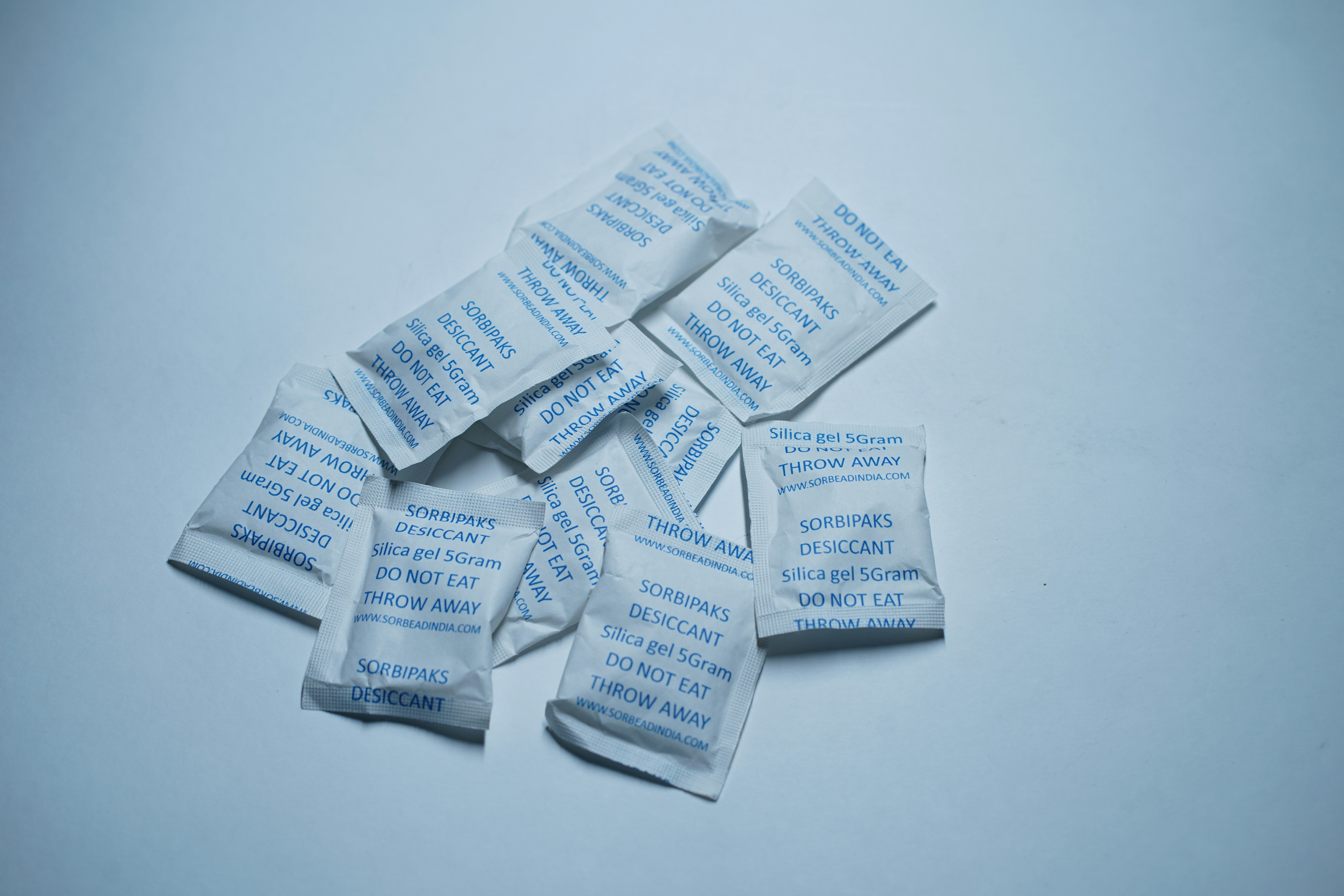
Silica gel is a porous form of silicon dioxide (SiO₂) widely used for moisture control. Its extensive internal surface area allows it to adsorb water vapour from surrounding air.
Silica gel commonly appears as small transparent, white or coloured beads. Manufacturers use it in packaging, storage containers, pharmaceutical products and electronic equipment.
Its main applications include:
Protecting pharmaceutical packaging from humidity.
Preventing moisture damage in electronic components.
Maintaining dry conditions inside shipping containers.
Protecting leather, footwear and textile products during storage.
Controlling humidity in industrial packaging.
Silica gel offers convenient handling and can be regenerated through controlled heating, depending on its grade and operating specifications.
Molecular Sieves
Molecular sieves are crystalline aluminosilicate materials with uniform pore structures. They selectively adsorb molecules according to their size and the properties of their pore openings.
Common molecular sieve types include 3A, 4A, 5A and 13X. Each type offers different adsorption characteristics and suits particular drying and separation requirements.
Their industrial applications include:
Natural gas processing: Removing water vapour to protect pipelines and processing equipment.
Petrochemical manufacturing: Drying process streams and selected hydrocarbon materials.
Air separation: Removing moisture and other impurities from feed gases.
Refrigeration systems: Drying refrigerants to reduce moisture-related operational problems.
Chemical processing: Maintaining low moisture levels in sensitive production systems.
Molecular sieves are particularly useful when industrial processes require very low moisture concentrations.
Activated Alumina
Activated alumina is a porous aluminium oxide material (Al₂O₃) with strong moisture adsorption properties. Manufacturers commonly use it in compressed air dryers, gas dehydration systems and industrial purification operations.
Its important characteristics include:
High surface area for moisture adsorption.
Mechanical strength suitable for industrial adsorption systems.
Resistance to thermal stress under appropriate operating conditions.
Regeneration potential through controlled heating.
Activated alumina is especially suitable for continuous drying operations where businesses require reliable moisture removal from air and gas streams.
Calcium Chloride
Calcium chloride (CaCl₂) is a hygroscopic salt that absorbs moisture from the surrounding environment. Unlike silica gel and molecular sieves, it can dissolve in the water it absorbs and form a concentrated brine.
Industrial buyers commonly use calcium chloride desiccants in shipping containers, storage spaces and moisture-control packaging.
Its applications include:
Moisture control during international shipping.
Protecting industrial goods in humid warehouses.
Reducing condensation inside enclosed storage areas.
Managing humidity in transport containers.
Calcium chloride offers substantial moisture absorption capacity under suitable conditions. However, users must consider brine formation, leakage prevention and compatibility with nearby materials.
Industrial Applications of Desiccants Across Different Sectors
Industrial desiccants support moisture management in industries where humidity can affect product quality, equipment reliability and production efficiency. Each sector selects materials according to its moisture-control requirements.
Chemical and Petrochemical Processing
Chemical and petrochemical plants use desiccants to remove water from gases, solvents and process streams. Moisture can interfere with chemical reactions, affect product purity and contribute to corrosion in processing equipment.
Molecular sieves are particularly useful for deep dehydration in natural gas processing and petrochemical operations. Activated alumina and silica gel also support gas drying and purification systems, depending on the required outlet moisture level.
Pharmaceutical Manufacturing
Pharmaceutical manufacturers use desiccants to protect moisture-sensitive ingredients, medicines and finished products. Excessive moisture can affect chemical stability, powder flow properties and product shelf life.
Silica gel sachets and other approved moisture-control materials commonly appear in pharmaceutical packaging. Manufacturers must ensure that the selected desiccant meets relevant packaging, safety and product compatibility requirements.
Food Processing and Packaging
Food manufacturers use desiccants to control humidity inside sealed packaging and storage environments. Moisture can cause caking, texture changes and quality deterioration in dry food products.
Common applications include:
Dry food packaging and powdered ingredients.
Nutritional supplements and food-grade powders.
Dried fruits and selected snack products.
Packaging of moisture-sensitive food ingredients.
The selected desiccant must meet applicable food-contact and packaging requirements. It must also remain physically separated from the food unless the application specifically permits direct contact.
Electronics and Electrical Equipment
Electronic components can suffer from moisture-related corrosion, electrical failures and reduced insulation performance. Desiccants help maintain dry conditions during transportation and storage.
Silica gel and molecular sieves are used in packaging for electronic components, optical equipment, transformers and sensitive electrical instruments. Their selection depends on packaging design, humidity exposure and the required protection period.
Compressed Air and Industrial Gas Drying
Compressed air systems require moisture control to prevent corrosion, condensation and operational problems in pneumatic equipment. Activated alumina, silica gel and molecular sieves serve different drying requirements.
Manufacturers select the material according to inlet humidity, operating pressure, temperature and required pressure dew point.

How to Select the Right Industrial Desiccant
Selecting a suitable desiccant requires an understanding of operating conditions, moisture levels and the required drying performance. A material that performs well in packaging may not provide sufficient protection for a continuous industrial gas-drying system.
Moisture Absorption Capacity
Moisture capacity indicates how much water a desiccant can capture under specific conditions. Buyers should evaluate this property alongside relative humidity, operating temperature and the expected moisture load.
A higher adsorption capacity does not automatically make a material suitable for every application. Molecular sieves, for example, can provide effective deep drying even when the surrounding gas contains relatively low concentrations of water vapour.
Operating Temperature and Pressure
Temperature and pressure influence adsorption performance. Increasing temperature generally reduces the equilibrium moisture capacity of many solid desiccants.
Industrial buyers should confirm that the selected material can operate within the process temperature and pressure range. They should also check regeneration requirements when the drying system uses reusable desiccant beds.
Required Dew Point
The dew point represents the temperature at which moisture in a gas begins to condense at a given pressure.
Applications requiring extremely dry gas conditions may need molecular sieves. Other applications, such as general compressed air drying or packaging protection, may use silica gel or activated alumina.
Particle Size and Mechanical Strength
Desiccant particle size affects airflow, pressure drop and moisture-contact efficiency in adsorption equipment. Buyers should select suitable bead or pellet dimensions according to the dryer design.
Mechanical strength also matters because weak particles can break down during loading, unloading and repeated regeneration. Excessive dust and fines may restrict equipment flow or contaminate downstream systems.
Regeneration and Reusability
Some desiccants can undergo regeneration through controlled heating or other drying methods. Others are designed for single-use moisture control.
Molecular sieves, silica gel and activated alumina can be regenerated under suitable conditions. Calcium chloride generally suits disposable moisture-control applications because it forms brine as it absorbs water.
Procurement, Storage and Quality Control Requirements
For chemical importers, distributors and industrial procurement teams, purchasing desiccants requires careful evaluation of technical specifications and supplier reliability. Product consistency directly affects moisture-control performance and the operating life of drying systems.
Important Specifications Buyers Should Check
Before purchasing industrial desiccants, procurement teams should review:
Chemical composition: Confirm the material type, grade and chemical specifications.
Moisture adsorption capacity: Check the supplier's stated capacity under defined test conditions.
Particle size: Ensure the bead, pellet or granule size suits the intended equipment.
Bulk density: Review bulk density when calculating the required quantity for industrial adsorption vessels.
Mechanical strength: Evaluate resistance to crushing and dust formation.
Moisture content: Check the initial moisture level before accepting shipments.
Packaging: Confirm moisture-resistant packaging that protects the product during transportation.
Technical documentation: Request a Certificate of Analysis (COA), Safety Data Sheet (SDS) and technical data sheet.
Supplier Selection and Bulk Purchasing
Industrial buyers should work with suppliers that can maintain consistent specifications across repeated orders. Differences in particle size, moisture content and adsorption performance can affect drying efficiency.
Procurement teams should also evaluate:
Manufacturing capacity and product availability.
Minimum order quantities and bulk pricing.
International shipping and delivery schedules.
Batch traceability and quality assurance procedures.
Technical support and product replacement policies.
Storage and Handling Practices
Desiccants can absorb atmospheric moisture even before reaching their intended application. Improper storage may reduce their effectiveness and increase material wastage.
Businesses should follow these practices:
Keep desiccants in sealed, moisture-resistant packaging.
Store products in dry, ventilated warehouses.
Avoid unnecessary exposure to humid air during handling.
Maintain proper batch identification and inventory rotation.
Follow supplier instructions for regeneration and reuse.
Use suitable protective equipment when handling dusty or chemically reactive materials.
Industrial Desiccant Market Outlook and Future Requirements
Industrial demand for moisture-control materials connects closely with manufacturing activity, international trade and the expansion of industries that depend on dry processing environments.
Pharmaceutical production, electronics manufacturing, natural gas processing and specialty chemical production continue to create applications for different desiccant technologies.
Several developments are shaping future purchasing requirements.
Advanced moisture-control materials: Manufacturers are exploring composite desiccants and engineered porous materials that offer improved adsorption characteristics and regeneration performance.
Energy-efficient drying systems: Industrial facilities increasingly consider regeneration energy, operating costs and equipment efficiency when selecting desiccants.
Product-specific solutions: Buyers are moving towards materials designed for particular gas compositions, temperature ranges and moisture specifications rather than relying on general-purpose drying products.
Sustainable material management: Regenerable desiccants can reduce replacement frequency when operating conditions and regeneration practices support repeated use.
For international chemical buyers, these developments make technical evaluation and supplier qualification increasingly important. The best purchasing decision considers total operating performance rather than the initial cost per kilogram.
Industrial desiccants remain essential for protecting materials, maintaining product quality and supporting reliable manufacturing operations. Understanding the differences between silica gel, molecular sieves, activated alumina and calcium chloride helps procurement professionals match moisture-control materials to their actual requirements.
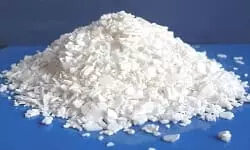
Calcium Chloride (E509)
Found this useful?