Intelligence Check: What Does Ludwigshafen's Contraction Signal for BASF's Broader German Footprint?
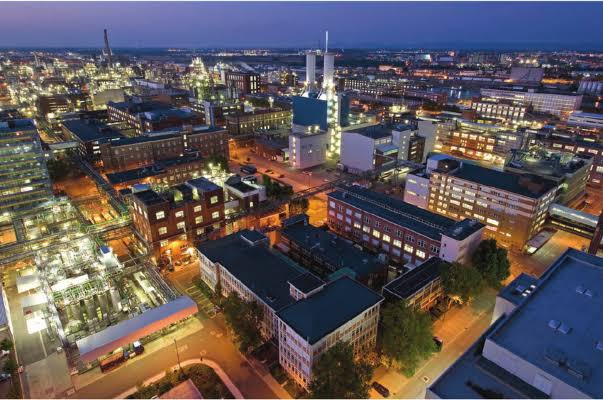
BASF's workforce contraction at its Ludwigshafen headquarters has become an important indicator for understanding how the company's broader German manufacturing footprint could evolve. In May 2026, full-time employment at Ludwigshafen fell below 30,000 for the first time since 1954, highlighting the scale of restructuring at BASF's most important European site.
The milestone does not necessarily mean similar reductions will occur at every BASF facility in Germany. However, it raises an important industry question: Is Ludwigshafen an isolated restructuring case, or an early signal of a broader shift in BASF's German operating model?
For chemical investors, suppliers, traders and procurement teams, that distinction matters because changes across Germany could influence production capacity, employment, sourcing patterns and future investment.
Why Ludwigshafen Is the Key Benchmark
Ludwigshafen is BASF's largest integrated chemical complex and historically one of the company's most important production and research locations. The site contains around 125 production plants and has traditionally employed roughly a third of BASF's global workforce.
That makes its contraction particularly significant.
If restructuring can reach a site of this scale, other German locations may also face pressure to demonstrate:
Cost competitiveness
Strong utilization
Efficient production
Strategic importance
Attractive returns on capital
The Contraction Is Part of a Wider Cost Program
The Ludwigshafen workforce decline is not occurring independently.
BASF has been pursuing cost reductions, portfolio adjustments and restructuring across the group. Between January 2024 and the end of June 2026, BASF reduced its global workforce by approximately 7,000 positions.
The pace accelerated during the first half of 2026, when more jobs were eliminated than during the previous two years combined.
This makes Ludwigshafen an important data point within a broader corporate transformation.
Does This Mean Other German Sites Will Shrink?
Not necessarily.
BASF's German sites have different products, customers, technologies and cost structures.
A facility producing highly differentiated materials may face very different economics from a site exposed to globally traded commodity chemicals.
The more useful question is therefore:
Which German assets are competitive enough to justify continued investment?
Commodity Assets Face Greater Pressure
Commodity chemical production is particularly exposed to global cost differences.
Producers compete on:
Feedstock costs
Energy prices
Plant scale
Capacity utilization
Logistics
Labor costs
If European production becomes structurally more expensive than alternative regions, BASF may have greater incentives to reduce or relocate selected commodity production.
Specialty Production Could Be More Resilient
Specialty chemicals can provide a different economic profile.
Products with:
Customer qualification requirements
Technical differentiation
Higher switching costs
Intellectual property
Application-specific performance
may be less vulnerable to simple cost-based competition.
This could encourage BASF to maintain or expand selected higher-value German operations even while reducing less competitive activities.
The New Site Agreement Provides an Important Signal
BASF and employee representatives agreed on a new site agreement covering Ludwigshafen from January 2026 through December 2028, with an additional two-year extension possible if profitability targets are achieved.
The agreement includes a commitment to refrain from compulsory redundancies during the initial period.
This is important because it suggests BASF is attempting to restructure the site while maintaining a path toward long-term competitiveness rather than simply abandoning German operations.
Investment and Contraction Can Happen Together
A shrinking workforce does not automatically mean declining investment.
BASF continues to position Ludwigshafen as a strategically important site while restructuring its operations.
This creates a potentially important model:
Lower structural costs + More competitive assets + Targeted investment
Rather than:
Lower workforce + Broad withdrawal from Germany
That distinction is critical when assessing BASF's future German footprint.
Relocation Is Another Indicator to Watch
Workforce restructuring can occur through more than direct job elimination.
Companies may also:
Relocate functions
Outsource services
Move production
Consolidate facilities
Shift sourcing
Transfer activities to lower-cost regions
Recent reporting has highlighted BASF plans to relocate thousands of internal service jobs from Germany to India, showing that geographic reallocation is also part of the company's restructuring debate.
What This Could Mean for Other German Sites
The most likely outcome may not be identical cuts across every location.
Instead, BASF could increasingly differentiate its German footprint.
Some sites may receive:
New investment
Modernization
Capacity expansion
while others could experience:
Capacity reductions
Function consolidation
Asset sales
Production relocation
This would create a more selective German manufacturing network.
Why Investors Should Track Site-Level Data
Company-wide workforce numbers can hide important differences.
Investors should therefore monitor:
Employment
Which locations are gaining or losing workers?
Capacity
Which production units are being expanded or reduced?
Capital Spending
Where is BASF directing new investment?
Utilization
Which plants are operating efficiently?
Portfolio Strategy
Which businesses are being retained or divested?
These indicators can reveal the direction of BASF's German footprint more clearly than consolidated results alone.
Procurement Teams Face a Similar Intelligence Challenge
Chemical buyers should also avoid treating BASF Germany as one homogeneous supply source.
A customer dependent on a particular BASF facility should understand:
Site-specific production
Capacity utilization
Planned restructuring
Alternative manufacturing locations
Lead times
Potential supply concentration
This becomes especially important for products with limited alternative suppliers.
The Global Footprint Is Changing the Equation
BASF's German operations increasingly compete within a global production network.
The company has expanded significantly outside Europe, including major investments in China and other regions.
This gives BASF more options when deciding where future capacity and investment should be located.
For German facilities, the strategic question becomes whether local production provides enough value to justify its cost relative to international alternatives.
The Rhine and Infrastructure Still Matter
Ludwigshafen also benefits from its location within Germany's industrial and logistics network.
BASF is investing in logistics infrastructure, including a combined transport terminal designed to improve the use of road and rail alongside river transport. BASF says around 40% of Ludwigshafen production is transported via the Rhine, making logistics resilience strategically important.
This infrastructure advantage could help preserve the site's long-term strategic role even as its workforce becomes smaller.
What Would Confirm a Broader Contraction?
Several signals would make the broader-footprint hypothesis stronger.
Watch for:
Additional German plant closures
Repeated workforce reductions
Production relocation
Lower German capital expenditure
Capacity transfers overseas
More outsourcing of corporate functions
If several of these trends appear simultaneously, Ludwigshafen would look less like an isolated case and more like part of a structural German footprint reduction.
What Would Indicate Stabilization?
The opposite signals would suggest BASF is moving toward a more selective but stable German footprint.
These could include:
New investment announcements
Higher plant utilization
Capacity modernization
New specialty-chemical projects
Improved margins
Stable employment at strategic sites
This would indicate that BASF is restructuring rather than broadly withdrawing.
Looking Ahead
Ludwigshafen's contraction should therefore be viewed as an intelligence signal, not a definitive forecast for every BASF site in Germany.
The fall below 30,000 employees is historically significant, but BASF is simultaneously working to improve utilization, reduce costs and concentrate production around more competitive assets.
For investors, the key question is whether cost reductions translate into sustainable returns.
For chemical traders, the focus should be on potential changes in production and regional supply.
For procurement teams, the priority is understanding which individual German facilities remain strategically important and which may face greater restructuring pressure.
The broader direction appears increasingly clear:
BASF's German footprint may not simply become smaller—it may become more selective.
The winners within that footprint are likely to be sites combining competitive production economics, strategic products, strong infrastructure and long-term investment potential.
Key Takeaways
Ludwigshafen's workforce fell below 30,000 in 2026, marking a historic contraction.
BASF reduced its global workforce by around 7,000 positions between January 2024 and June 2026.
The Ludwigshafen trend does not automatically mean identical cuts across all German sites.
Commodity production is likely to face greater cost pressure than highly differentiated specialty operations.
BASF's German footprint could become more selective, with investment concentrated in strategically competitive assets.
Workforce relocation and outsourcing are additional indicators of broader restructuring.
The Ludwigshafen site agreement through 2028 provides some protection against compulsory redundancies while profitability targets are pursued.
Procurement teams should evaluate BASF supply risk at the individual site and product level.
Investors should track employment, utilization, capacity, capital spending and production relocation.
The key intelligence question is whether Ludwigshafen represents broader German contraction or the restructuring of one flagship site.

Methanol
Found this useful?