Kaolin Clay: Applications in Ceramics, Paper and Coating Industries
Understanding Kaolin Clay and Its Industrial Properties
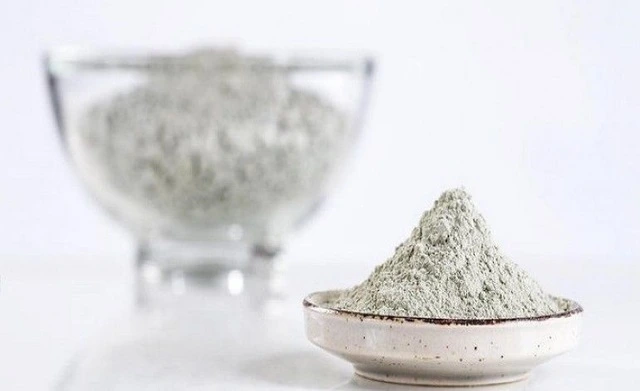
Kaolin clay, also known as China clay, is a naturally occurring industrial mineral composed mainly of kaolinite, a hydrated aluminium silicate with the chemical formula Al₂Si₂O₅(OH)₄. Its fine particle structure, natural whiteness, low abrasiveness and chemical stability make it valuable in several manufacturing processes.
Unlike general-purpose clay, industrial kaolin undergoes processing to meet specific requirements for brightness, particle size, purity and performance. Producers may wash, classify, bleach, dry or calcine the material depending on its intended application. These processing steps help manufacturers obtain consistent grades for ceramics, paper production and paints and coatings.
IMA Europe+1
Kaolin's commercial value comes from its ability to perform different functions across industries. It can act as a primary raw material in ceramic bodies, a filler or coating pigment in paper and a functional extender in paint formulations.
Applications of Kaolin Clay in the Ceramics Industry
Ceramics represent one of the established industrial applications of kaolin. Manufacturers use it in porcelain, tableware, sanitaryware, ceramic tiles, electrical insulators and other white ceramic products.
In ceramic formulations, kaolin supplies alumina and contributes to plasticity, workability and the strength of the unfired body. These properties help manufacturers shape ceramic products and maintain their structure before firing. During firing, kaolin undergoes mineralogical changes and contributes to the formation of the final ceramic structure.
The quality of kaolin directly affects the appearance and performance of finished products. Manufacturers producing white porcelain and sanitaryware often require low levels of iron and titanium impurities because these contaminants can influence the fired colour. Fired whiteness therefore becomes an important purchasing specification for high-quality ceramic applications.
Kaolin also supports the preparation of ceramic slips used in casting processes. Its particle characteristics influence suspension behaviour, viscosity and water release. These factors affect casting speed, mould performance and production consistency.
For ceramic manufacturers, important purchasing considerations include:
Kaolinite content: Mineral composition influences the contribution of kaolin to the ceramic body.
Iron and titanium levels: Lower impurity levels can support a cleaner fired colour.
Plasticity and workability: These properties influence shaping and forming operations.
Fired whiteness: Important for porcelain, tableware and sanitaryware.
Particle size: Affects dispersion, casting behaviour and the finished product.
Shrinkage and firing behaviour: Help manufacturers control dimensional changes during production.
Buyers should test kaolin in their actual ceramic formulation rather than selecting a grade based only on its colour or general product description. Firing temperature, other clay components and production conditions can influence the final result.
Essential Minerals Association+2
Kaolin in Paper Manufacturing and Surface Coating
The paper industry uses kaolin as both a filler and a coating pigment. These two functions support different stages of paper production and help manufacturers control the optical and surface properties of finished paper.
As a filler, kaolin becomes part of the paper sheet and occupies spaces between cellulose fibres. This can improve opacity, brightness and print performance while helping manufacturers manage the proportion of wood pulp in the formulation.
As a coating pigment, kaolin forms part of a surface layer applied to paper or paperboard. Its fine, plate-like particles help create a smoother surface with improved gloss and printing characteristics. These properties are valuable in applications such as magazines, brochures, packaging cartons and other printed materials.
Paper manufacturers select kaolin according to the performance requirements of the finished product. A grade suitable for general paper filling may not deliver the brightness, particle fineness or coating behaviour required for premium coated paper.
Key specifications for paper-grade kaolin include brightness, particle size distribution, viscosity, residue or grit content and dispersion behaviour. Coating operations also require consistent slurry performance because variations in viscosity can affect coating application and production efficiency.
Procurement teams should consider whether the supplier offers a dedicated filler grade or coating grade. They should also request technical data and production samples to confirm that the material performs consistently in the mill's process.
Uses of Kaolin in Paints and Coatings
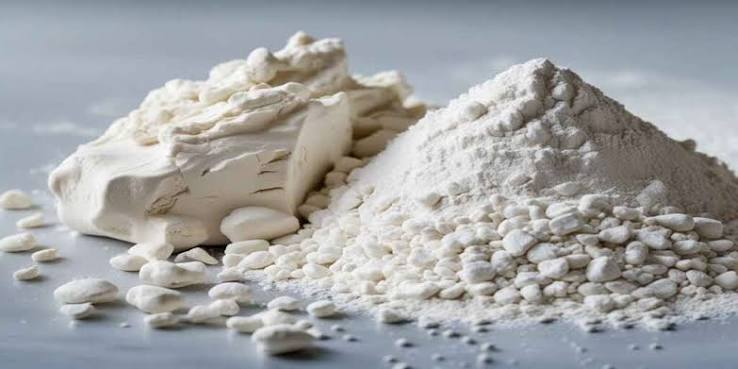
Paint and coating manufacturers use kaolin as a functional filler and extender pigment. It can influence opacity, surface appearance, viscosity, suspension stability and the overall performance of a coating formulation.
Hydrous kaolin is commonly used in different paint systems, while calcined kaolin offers additional optical properties that can benefit selected formulations. Depending on particle size and grade, kaolin can contribute to matte, satin or other surface finishes.
One important function is its ability to extend more expensive pigments. In certain formulations, kaolin can partially replace titanium dioxide while helping maintain selected optical properties. However, it does not provide identical performance to titanium dioxide, so formulators must assess the required opacity, whiteness and coverage before changing pigment proportions.
Particle size plays an important role in coating performance. Fine kaolin grades can support smoother finishes and specific gloss requirements, while coarser grades may suit applications where manufacturers want a flatter appearance. The correct grade depends on the formulation, binder system and final coating specification.
Paint buyers and formulators should assess:
Brightness and whiteness: Influence the appearance of white and light-coloured coatings.
Particle size: Affects surface finish, opacity and dispersion.
Oil absorption: Influences binder demand and formulation costs.
pH: Helps determine compatibility with other formulation ingredients.
Viscosity contribution: Affects flow, application and storage behaviour.
Dispersion quality: Supports uniform distribution throughout the paint.
Moisture content: Helps maintain formulation consistency and storage stability.
Kaolin can also support the development of primers, interior wall paints and selected industrial coatings. Manufacturers should compare hydrous and calcined grades through formulation trials because processing differences can produce different results.
Essential Minerals Association+2
Major Quality Specifications Buyers Should Evaluate
Industrial kaolin does not have one universal specification. A ceramic manufacturer, paper mill and paint producer may require different mineral characteristics even when they purchase the same basic mineral.
Buyers should begin by defining the intended application and identifying the technical properties that influence production performance. They should then compare supplier specifications using consistent test methods.
Chemical composition and mineral purity
Kaolinite content helps buyers understand the mineral composition of the material. Aluminium oxide and silica levels provide additional information about its chemical profile. Iron oxide and titanium dioxide deserve particular attention in applications where fired colour or high brightness matters.
Brightness and whiteness
Brightness is especially important in paper and coating grades. Ceramic buyers should also examine fired whiteness because the natural colour of the supplied powder does not necessarily predict its appearance after firing.
Particle size distribution
Particle size affects dispersion, coating quality, surface finish and ceramic processing behaviour. Buyers should request a particle size distribution rather than relying only on a general description such as fine powder. Depending on the application, suppliers may report values such as D50, D90 or the percentage of particles below a specified micron size.
Moisture and residue
Moisture content influences storage, handling and formulation calculations. Coarse particles and unwanted grit can affect surface quality, processing equipment and final product consistency.
Viscosity and oil absorption
Paper coating and ceramic slip operations require suitable flow characteristics. Paint manufacturers may also evaluate oil absorption because it influences binder requirements and formulation economics.
Processing type
Hydrous and calcined kaolin grades have different physical characteristics. Buyers should confirm which processing type the supplier offers and whether it meets the performance needs of their manufacturing process.
A complete technical evaluation should include a Certificate of Analysis (COA), Technical Data Sheet (TDS) and Safety Data Sheet (SDS). Where the application demands tighter controls, buyers should request independent laboratory testing or conduct their own production trials.
Global Supply, Processing and Procurement Considerations
Kaolin supply depends on the location and quality of mineral deposits, processing capacity and access to industrial customers. Producers process raw material to remove unwanted minerals and improve characteristics such as brightness, purity and particle size.
Processing can involve washing, classification, separation, bleaching and drying. Some producers also calcine kaolin to create grades with different optical and functional properties. These processes affect the final product's performance and cost.
For international buyers, supplier selection should involve more than comparing quoted prices. A lower-priced grade may create additional costs if it has inconsistent moisture, unsuitable particle size or variable brightness. Manufacturers should consider the full delivered cost, including freight, packaging, handling, import duties and quality testing.
Bulk shipments may suit large paper mills and ceramic plants with suitable storage facilities. Smaller buyers may prefer bags or other packaged formats that simplify warehouse handling and inventory control.
Procurement teams should also review the supplier's ability to maintain consistent specifications across shipments. A reliable supplier should provide clear product documentation, traceable batch information and representative samples before large-volume orders.
Market Opportunities and Future Demand for Industrial Kaolin
Demand for kaolin is connected to activity in ceramics, paper, packaging, paints and other manufacturing sectors. Growth in construction and housing can support demand for ceramic tiles and sanitaryware, while packaging and printing requirements influence the need for suitable paper-grade materials.
Manufacturers also continue to evaluate kaolin as a functional mineral filler in formulations where its optical and physical properties can improve product performance. In paints and coatings, for example, formulators may assess kaolin for pigment extension, finish control and selected rheological benefits.
Product development increasingly focuses on more consistent particle size, improved brightness and application-specific processing. Suppliers that can provide customised grades and reliable technical support may gain an advantage with industrial buyers.
However, market demand does not translate automatically into higher consumption across every application. Changes in paper production, alternative fillers, manufacturing costs and customer specifications can influence purchasing decisions. Buyers should monitor supplier availability and grade-specific pricing rather than treating kaolin as a single uniform commodity.
Building a Reliable Kaolin Sourcing Strategy
A strong sourcing strategy begins with a clear technical specification. Buyers should identify whether they need ceramic, paper filler, paper coating, hydrous paint-grade or calcined kaolin before requesting quotations.
They should then compare supplier documentation, samples and quality test results. Trial orders can help confirm whether the material meets production requirements before the buyer commits to larger volumes.
For recurring procurement, manufacturers should establish acceptable ranges for critical parameters such as brightness, particle size, moisture and chemical composition. They should also agree on packaging, delivery schedules, batch documentation and procedures for handling off-specification material.
Supplier reliability matters because inconsistent raw materials can disrupt production and affect finished-product quality. Buyers who evaluate technical performance, documentation, logistics and total cost can make more informed sourcing decisions.
Kaolin remains an important industrial mineral because it serves different functional roles across ceramics, paper manufacturing and coatings. Selecting the right grade requires a clear understanding of the production process and the specifications that determine final product performance.
Kaolin
Found this useful?