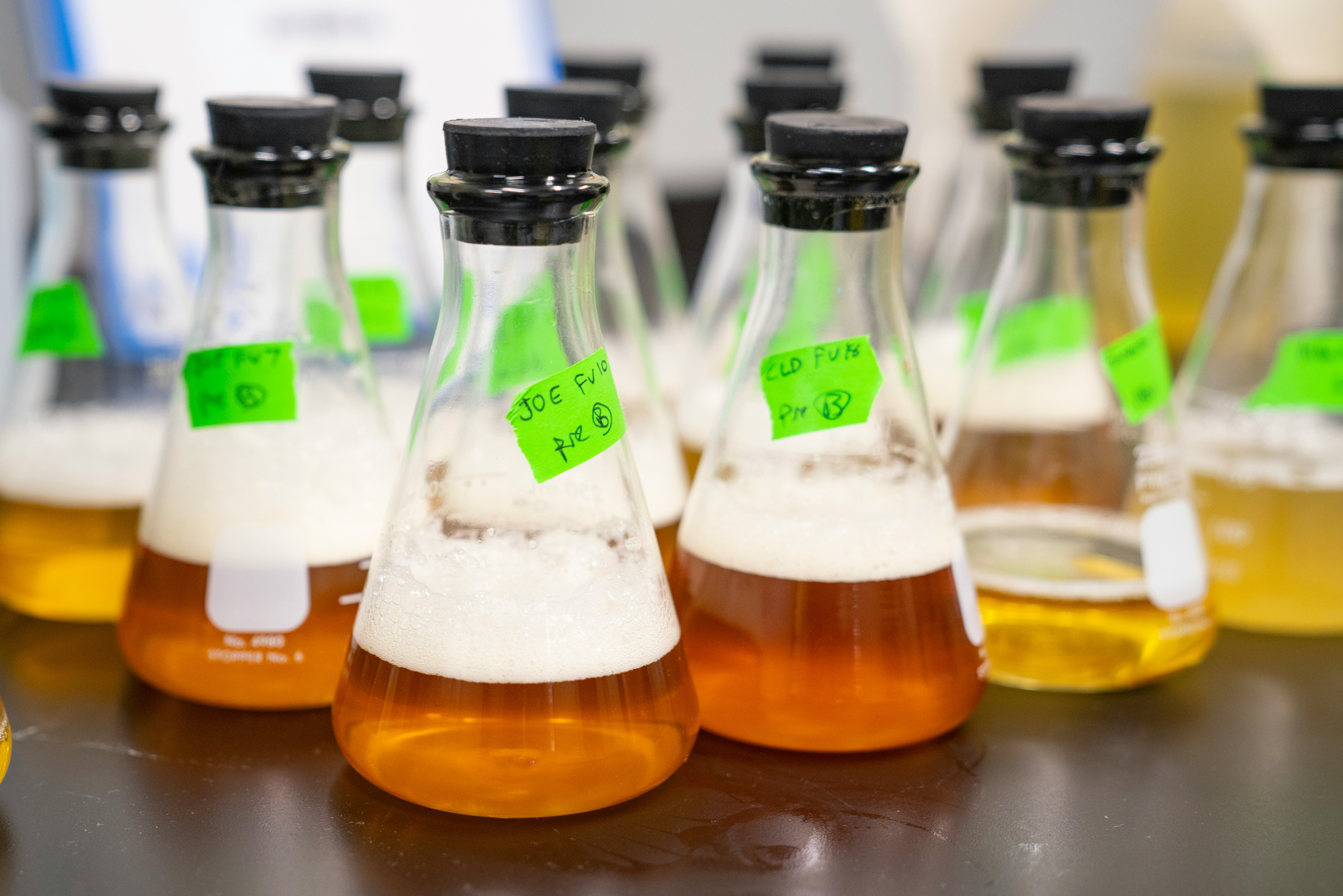
Optical Brightening Agents: Applications in Textiles, Paper and Detergents
White textiles, premium paper and modern laundry detergents rely on more than conventional bleaching to achieve their bright appearance. Optical brightening agents (OBAs) play an important role in this process by improving perceived whiteness through fluorescence, helping manufacturers produce materials that look cleaner, brighter and more visually appealing.
These specialty chemicals serve three major industrial markets: textiles, paper manufacturing and household detergents. Their ability to enhance whiteness without relying entirely on stronger bleaching treatments makes them valuable additives for manufacturers seeking consistent product appearance and efficient processing.
For chemical traders, importers and procurement managers, understanding OBA applications, chemical compatibility and product specifications helps identify suitable grades and maintain reliable supply relationships.
What Are Optical Brightening Agents and How Do They Work?
Optical brightening agents, also known as fluorescent whitening agents (FWAs) or fluorescent brightening agents (FBAs), are organic compounds that improve the apparent whiteness of materials through a fluorescent reaction. Unlike conventional bleaching chemicals, they do not primarily remove colored impurities or chemically destroy yellow compounds.
Instead, OBAs absorb ultraviolet radiation and re-emit part of that energy as visible blue light. This blue fluorescence compensates for the yellowish appearance commonly found in natural fibres, paper pulp and other industrial materials.
The process creates an optical effect that makes treated surfaces appear whiter and brighter under suitable lighting conditions. The effect depends on the chemical structure, concentration, substrate and amount of ultraviolet light available.
Several chemical families contribute to commercial optical brightener formulations:
Stilbene derivatives: Widely used in textile, paper and detergent formulations because of their effective fluorescent properties and adaptability.
Coumarin derivatives: Used in selected applications requiring specific fluorescence characteristics.
Benzoxazole derivatives: Commonly associated with synthetic materials and certain specialty applications.
Pyrazoline derivatives: Used in particular formulations where manufacturers require specific optical performance.
The manufacturer selects a chemical structure according to its affinity for the material, solubility, processing conditions and required brightness level.
Optical Brightening Agents in Textile Manufacturing
Textile applications represent one of the most established markets for optical brightening agents.
Manufacturers use OBAs to improve the appearance of cotton, polyester, nylon and other textile materials. Natural fibres often retain a slight yellowish undertone even after conventional bleaching, while synthetic fibres can require specialized treatments to achieve the desired white shade.
Optical brighteners help textile processors achieve a more uniform and visually appealing finish. They also support manufacturers producing white fabrics for applications where appearance and cleanliness strongly influence purchasing decisions.
Common textile applications include:
Cotton and linen processing: Manufacturers apply suitable brighteners during bleaching or finishing to improve the whiteness of natural cellulose fibres.
Polyester fabrics: Specialized formulations improve the brightness of synthetic materials used in clothing, upholstery and home textiles.
Nylon and polyamide products: Compatible OBAs enhance the appearance of synthetic fibres used in garments, carpets and technical textiles.
Hotel and hospital linen: Textile processors use optical brighteners to achieve the clean white appearance expected from towels, sheets and institutional fabrics.
Garment finishing: Washing and finishing facilities incorporate suitable brighteners to improve the visual appearance of finished clothing.
Application methods vary according to the textile type and manufacturing process. Manufacturers may introduce OBAs during bleaching, dyeing, padding, exhaust treatment or final finishing.
Chemical compatibility remains essential throughout these operations. Factors such as temperature, pH, water hardness and interaction with bleaching agents can influence the final whitening performance.
Applications of Optical Brightening Agents in Paper Manufacturing
The paper industry uses optical brightening agents to improve the brightness and visual quality of finished paper products. Natural wood pulp contains components that contribute to a yellowish appearance, while recycled fibres can introduce additional variations in colour and brightness.
Conventional bleaching helps reduce these unwanted colour characteristics. However, manufacturers often require further optical enhancement to achieve the brightness standards expected in commercial printing, packaging and consumer paper products.
OBAs provide this additional improvement by increasing the amount of blue light emitted from treated paper surfaces.
Important applications include:
Printing and writing paper: Manufacturers use OBAs to improve the appearance of office paper, notebooks, books and commercial printing grades.
Coated paper: Brighteners support the production of visually appealing surfaces used in magazines, catalogues and premium printed materials.
Tissue products: Selected formulations enhance the whiteness of facial tissues, toilet paper and paper towels.
Paperboard and packaging: Optical brighteners help improve the appearance of selected paperboard grades used in consumer packaging.
Specialty papers: Manufacturers incorporate suitable brighteners into products requiring specific brightness and visual consistency.
Paper manufacturers generally introduce OBAs through two main processing routes.
Wet-end application involves adding the brightener directly to the pulp suspension during papermaking. This approach allows the chemical to interact with fibres before the sheet forms.
Surface application introduces the brightener through coating or surface-sizing formulations. This method helps manufacturers improve the optical characteristics of the finished paper surface.
The selection depends on pulp composition, retention efficiency, coating formulation and the desired brightness level. Manufacturers must also consider interactions with fillers, sizing agents and other papermaking additives.
How Detergent Manufacturers Use Optical Brighteners
Laundry detergents represent another major application area for fluorescent whitening agents.
Detergent manufacturers incorporate optical brighteners into washing powders and liquid laundry formulations to improve the appearance of washed fabrics. During washing, compatible brightening agents deposit onto textile surfaces and provide a fluorescent whitening effect.
This process helps maintain the visual brightness of white garments and household fabrics. It also supports the appearance of cleanliness that consumers associate with effective laundry products.
Common detergent applications include:
Powder detergents: Manufacturers add compatible OBAs to improve the whiteness of fabrics during regular washing.
Liquid detergents: Selected water-compatible formulations provide optical brightening performance in liquid cleaning products.
Commercial laundry chemicals: Industrial laundry operators use suitable formulations for institutional linen, uniforms and large-scale fabric washing.
Specialized fabric care products: Certain formulations target white garments and materials that require additional brightness maintenance.
Detergent manufacturers must select OBAs that remain stable within the complete formulation. Surfactants, builders, enzymes, fragrances and other ingredients can influence chemical compatibility and storage stability.
Water temperature, washing conditions and fabric composition also affect how effectively the brightener deposits onto textile surfaces. Formulators therefore evaluate the chemical under realistic washing conditions rather than relying exclusively on laboratory solution performance.

Factors That Influence Optical Brightener Selection
Choosing the right optical brightening agent requires more than comparing product prices. Each industrial application has different chemical requirements and processing conditions, so buyers should evaluate performance characteristics before placing bulk orders.
The following factors deserve particular attention:
1. Substrate compatibility
An OBA suitable for cotton may not deliver the same results on polyester or paper. Buyers should confirm that the selected formulation matches the intended material and application process.
2. Solubility and dispersion
Manufacturers need brighteners that dissolve or disperse effectively within their production systems. Poor dispersion can create uneven whitening, processing difficulties and inconsistent product quality.
3. Fluorescence performance
The strength and colour characteristics of fluorescence influence the final appearance. Excessive dosage may create an unwanted bluish cast rather than the desired neutral white finish.
4. Light and washing fastness
Textile manufacturers should evaluate how well the brightening effect withstands exposure to sunlight, repeated washing and normal product use. Paper manufacturers may prioritize brightness retention under their intended storage and lighting conditions.
5. Processing compatibility
Temperature, pH, water hardness and other formulation ingredients can affect performance. Buyers should request technical guidance for the specific production conditions in which they intend to use the chemical.
6. Concentration and dosage requirements
Different commercial grades may have different active concentrations and application recommendations. Comparing products on an equivalent active-content basis provides a more meaningful purchasing decision.
Quality Control, Environmental Considerations and Compliance
Optical brightener quality directly influences the appearance and consistency of finished products. Manufacturers and chemical buyers should establish clear specifications before approving a supplier or introducing a new grade into production.
Important quality-control parameters include:
Active content and product concentration.
Appearance, colour and physical form.
Solubility or dispersion characteristics.
Fluorescence intensity and shade.
Compatibility with the intended substrate.
Storage stability and shelf life.
Batch-to-batch consistency.
Suppliers should provide relevant technical data sheets, safety data sheets and certificates of analysis. These documents help procurement teams assess product characteristics, establish handling requirements and maintain consistent purchasing standards.
Environmental performance also deserves attention. Some optical brighteners can persist in wastewater or show limited biodegradability, depending on their chemical structure and formulation.
Textile finishing facilities, paper mills and detergent manufacturers should consider wastewater treatment requirements and the environmental profile of their selected products. Buyers supplying regulated markets should also review applicable chemical restrictions, customer requirements and ecolabel criteria.
Global Sourcing and Procurement Challenges
Optical brightening agents form part of the specialty chemical supply chain, where product performance and technical consistency often matter as much as purchase price.
Manufacturers typically source these chemicals through specialized chemical producers, distributors and international trading companies. The availability of particular grades can vary according to production capacity, regional demand and the supplier's product portfolio.
Procurement teams commonly face several sourcing challenges:
Grade availability: Textile, paper and detergent manufacturers require different formulations, which can limit the number of suitable suppliers.
Quality consistency: Variations between batches can affect whiteness, fluorescence and production results.
Technical documentation: Missing or incomplete specifications can delay supplier approval and product qualification.
Import logistics: International shipments require appropriate packaging, transport arrangements and customs documentation.
Cost management: Buyers must consider active concentration, dosage requirements, freight expenses and total production costs rather than focusing only on the quoted price.
A reliable sourcing strategy begins with clearly defined technical requirements. Buyers should communicate the intended application, required product form, concentration and expected order volume before requesting quotations.
Supplier evaluation should also include production capabilities, export experience, documentation standards and the ability to maintain regular deliveries. Where possible, manufacturers should test samples before committing to large commercial shipments.
Market Opportunities Across Textiles, Paper and Detergents
Demand for optical brightening agents connects closely with the manufacturing activity of three large industrial sectors.
The textile industry continues to require consistent whitening performance for apparel, home furnishings and institutional fabrics. Meanwhile, paper manufacturers use specialty additives to achieve the optical properties expected in printing, tissue and selected packaging grades.
The detergent sector creates another important area of demand through the production of household and commercial laundry formulations.
Several developments create opportunities for chemical suppliers and international traders:
Higher product quality expectations: Manufacturers increasingly focus on consistent whiteness and visual appearance across production batches.
Specialty formulation requirements: Different substrates and manufacturing processes create demand for application-specific brightener grades.
Industrial efficiency: Buyers seek products that deliver reliable performance at appropriate dosage levels.
Environmental considerations: Manufacturers show growing interest in chemical formulations with improved environmental profiles and compatibility with wastewater management systems.
International supply relationships: Importers and distributors can support manufacturers by providing dependable access to suitable specialty chemicals.
For chemical traders, understanding these application differences creates opportunities to serve customers across multiple manufacturing industries. A supplier who can match the right product grade with the buyer's processing requirements offers more value than one who competes exclusively on price.
What Procurement Teams Should Prioritize When Buying Optical Brightening Agents
Procurement managers should approach OBA purchasing as a technical sourcing decision rather than a routine chemical purchase. A low-cost product may create additional expenses if it requires higher dosage, produces inconsistent results or causes compatibility problems during manufacturing.
Before finalizing an order, buyers should:
Define the end application: Specify whether the product will serve textile finishing, paper manufacturing or detergent formulation.
Confirm the required grade: Request the chemical's technical specifications, active concentration and recommended application conditions.
Evaluate samples: Conduct application trials to assess brightness, shade and compatibility with existing production materials.
Review supplier documentation: Obtain safety data sheets, technical data sheets and batch-specific quality certificates.
Compare landed costs: Include product concentration, dosage, packaging, shipping and import-related expenses.
Establish supply continuity: Work with suppliers who can support repeat orders and maintain consistent product specifications.
Buyers should also discuss minimum order quantities, packaging options, lead times and shipment terms before confirming a purchase. These details help prevent supply interruptions and support better inventory planning.
Building Reliable Optical Brightener Supply Chains
The performance of optical brightening agents affects the final quality of products across textiles, paper and detergents. Their ability to enhance perceived whiteness makes them important specialty chemicals for manufacturers serving both industrial and consumer markets.
For procurement professionals, the strongest purchasing decisions combine technical suitability, consistent quality and dependable supplier relationships. Understanding the differences between application-specific grades also helps buyers reduce formulation risks and identify more competitive sourcing opportunities.
As manufacturers continue to prioritize product appearance and processing efficiency, reliable access to suitable optical brightening agents will remain important across these industries. Ready to source optical brightening agents from verified global suppliers? Explore competitive offers on our platform today.
Sources:
Sodium Lauryl Ether Sulfate (1EO 70%)
Found this useful?