Polyethylene Price Forecast: Key Factors Affecting Global Resin Markets
Polyethylene Price Forecast: Key Factors Affecting Global Resin Markets
Global Resin Market Outlook
Heading into final two months of 2026, prices for five commodity resins expected to be flat with some downward momentum for polypropylene PP, polyvinyl chloride PVC and polyethylene terephthalate PET and possibly polyethylene PE and polystyrene PS. That flat-to-down trajectory follows volatile first half driven by crude oil and feedstock spikes.
Polymers market outlook Q4 2026 base case is soft-to-stable PE and PP with slightly firmer floor than mid-year lows, and capped PVC under continued low-cost Chinese supply. ICIS reported HDPE injection-grade values rising by roughly 188 dollars per tonne in March over February, further 129 dollars per tonne in April, then only about 5 dollars per tonne in May as impulse faded. That pattern shows how quickly feedstock-driven spikes fade when demand weak.
Supply demand imbalances, generally lower feedstock costs, and scheduled and potential unscheduled plant maintenance during early part of first quarter likely to keep most resin prices flat to down, though in some instances uptick likely. For two highest volume commodity resins, 2025 appeared to end with demand increase of 1-2% for polyethylene PE, while polypropylene PP likely flat versus 2024.
Westlake reported polyethylene prices in North America fell sequentially in third quarter of 2026, with second-quarter gains moderating following onset of Iran conflict. IEA sharply lowered its 2026 global oil demand outlook, citing escalating Mideast conflict and elevated energy prices.
Feedstock Costs – Crude Oil And Ethylene Linkage
Volatility of crude oil prices and some derivative feedstocks due to US-Iran and extended Middle East conflict has been key factor in price increase attempts as has been increase in demand for exports. Suffice to say prices of nearly all volume resins will see upward trajectory at uncertain time, depending on duration of conflict, with rising per barrel crude oil prices to reach triple digits and natural gas prices to nearly double.
Oil prices will drive global PE price up, with increasing oil prices likely to support higher export prices, pressing domestic off-grade and contract prime prices upward. Export demand coupled with higher export prices supports domestic pricing. Burns notes that dynamic explains why PE prices can remain firm in US even when domestic demand soft, as export pull tightens supply.
Ethylene is world's most widely produced petrochemical building block, manufactured by steam cracking either ethane cheap in North America and Middle East, or naphtha dominant in Europe and Asia. Globally average fell from 745 dollars per MT in Q1 to 711.50 in Q2, a 4.5% retreat. For H2 2026, global average of 680 to 800 dollars per MT expected, with wide regional gap between low-cost ethane crackers and naphtha-exposed producers likely to persist.
Naphtha feedstock price volatility due to crude oil disruptions affects ethylene production costs globally. When crude prices high relative to natural gas, US producers gain massive competitive advantage, as feedstock costs remain low while global product prices set by naphtha-based marginal producers remain high. That explains why polyethylene prices can diverge regionally even when crude moves uniformly.
Low Density Polyethylene LDPE emerged as top-performing plastics commodity during previous month, delivering average month-on-month growth of 12.4% across top three geographies under stable volatility levels. Polyethylene terephthalate PET benchmark pricing in China stood 10.6% higher on monthly basis mid-month, supported by purified terephthalic acid PTA and polyester-chain costs.
Supply Availability And New Capacity
Argus reports around 4 million tonnes per year of new PE capacity scheduled to start, weighing on pricing outlook. That new capacity, combined with soft demand, keeps market well-supplied despite plant maintenance.
Prices of PE were expected to drop further in July as much as 10 cents per lb, after falling 15 cents per lb in June, according to Barry, Greenberg, Burns and Mekaru. August PE prices appeared to rollover, despite suppliers previously nominated hikes of 5-10 cents per lb for month. Spot prices flat-to-lower, indicating ample supply and cautious buying.
Prices of PE in November and December were likely to be flat, with potential for 2 cents per lb decrease as spot prices had dropped by at least that amount. That flat-to-down pattern repeated in October 2026, with prices for nearly all volume resins trending flat-to-down with exception of polystyrene and nylons, increases attributed to spikes in feedstock costs and industry consolidation and despite lackluster demand and well-supplied markets.
High-Density Polyethylene HDPE market experiencing significant price volatility and regional divergence, driven by geopolitical events, fluctuating feedstock costs, and varied supply-demand dynamics across globe. Market primarily driven by increasing demand for lightweight, durable, and cost-efficient polymer materials in packaging, construction, automotive, healthcare, agriculture, and consumer goods industries.
Recycled HDPE price trend moved higher across major global markets during Q2 2026, with recycled high-density polyethylene prices increasing between 13% and 33%, movement supported by higher virgin HDPE replacement costs, tighter recycled feedstock availability, stronger demand from packaging manufacturers, and growing pressure to use recycled plastic. That premium for recycled grades supports virgin pricing floor.
Regional Variations And Trade Flows
North America benefits from low-cost ethane feedstock, with ethane-based cracker utilization in US Gulf Coast reaching 94% in 2023 up from 81% in 2019, showing shift toward low-cost feedstock. US ethane prices a bit on rise as well, but still low versus naphtha. That advantage allows US to export PE even when domestic demand weak, supporting domestic prices through export demand.
Europe faces elevated operating expenses including energy and gas, similar to acetyls units idling at Hull in UK. German naphtha-based ethylene prices reversed hard falling 11.3% to 1,020 dollars per MT after Hormuz-driven spike to 1,150, showing volatility. European PE pricing pressured by energy costs but capped by low-cost Chinese supply for PVC, similar dynamic affects PE.
Asia Pacific sees restricted import arrivals and elevated feedstock costs triggering significant price increases for primary intermediates earlier in year, but then correction as supply recovered. China EXW polyethylene pricing reflects domestic oversupply from new capacity, with 4 million tonnes new capacity scheduled, many in Asia.
Global ethylene market prices currently range between 800 and 1,450 dollars per metric ton, reflecting variations driven by feedstock costs, regional supply-demand balances, delivered cost expected to continue rising modestly across forecast period driven primarily by feedstock and energy components.
Impact On Food-Grade Packaging And Buyer Strategies
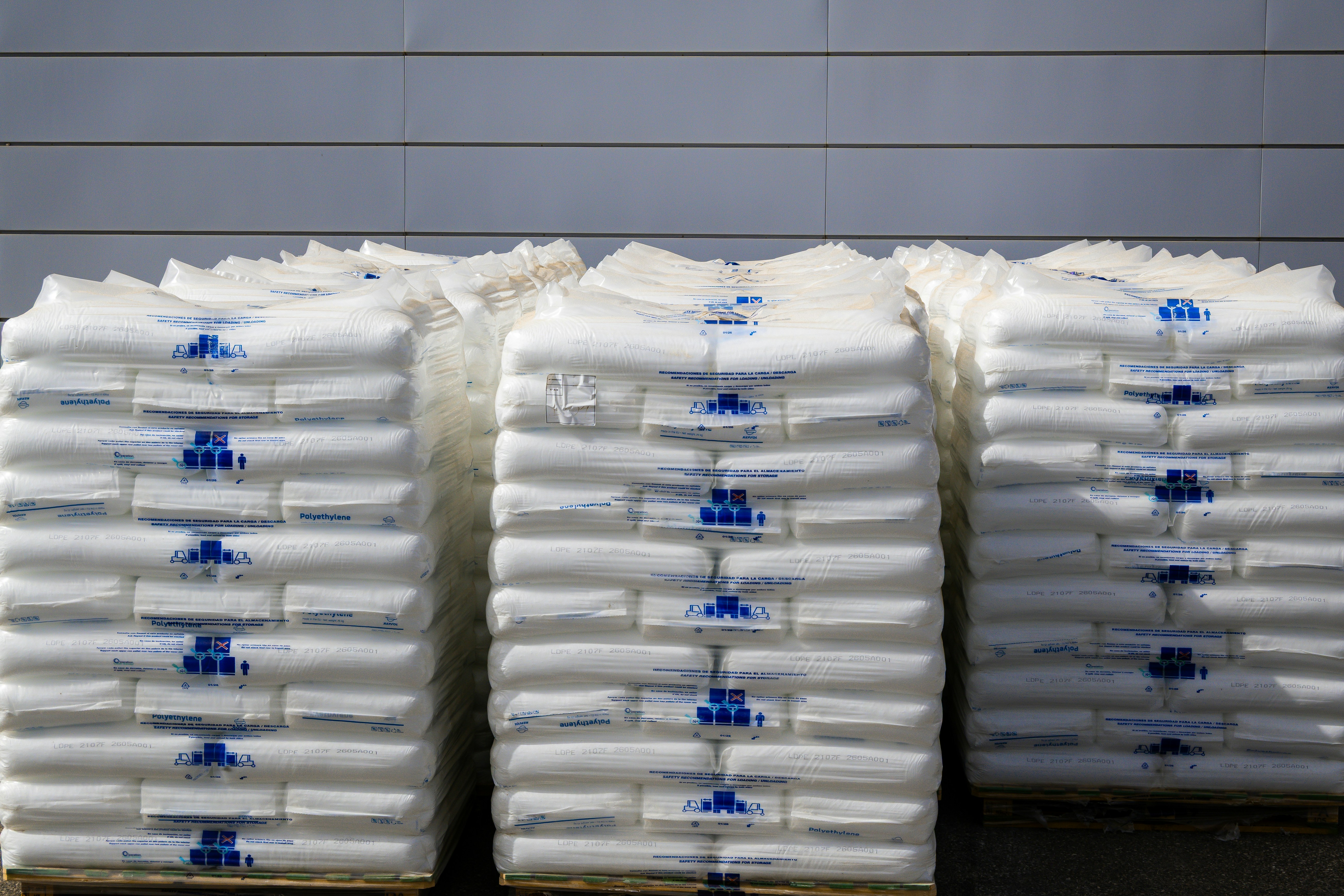
For buyers of food-grade minerals and premixes, polyethylene price forecast directly affects packaging costs. PE used for 25 kg multiwall bags with PE liner, jumbo bags, and inner liners for vitamins. When PE prices drop 15 cents per lb in June as observed, packaging costs ease, reducing delivered cost per kilo of elemental zinc or calcium. When LDPE delivers 12.4% month-on-month growth, packaging costs spike quickly.
Food and beverage segment expected to have highest CAGR during forecast period, driving demand for food-grade packaging. Lightweight, durable, cost-efficient polymer materials in packaging remain primary demand driver for polyethylene.
Practical strategies include tracking crude oil and ethylene as leading indicators for PE pricing, monitoring export demand as support for domestic prices, and separating raw material trend from conversion trend. Build tiered budgets with base, pressure, and disruption cases. Require landed-cost comparison not ex-works only, as freight and fuel surcharges have become revenue lever for carriers, with LTL rate per pound index expected to reach 82.5% above January 2018 baseline.
Focus on four decision signals: input trend, lead-time movement, supplier capacity discipline, and compliance friction. When three move same direction for 6 to 8 weeks, probability of sustained price pressure rises. Suppliers mentioning allocation, maintenance shutdowns, packaging shortages, or shortened quotation validity signal uncertainty.
Market will experience accelerated adoption of digital and sustainable technologies, with notable shift toward bio-based and circular chemicals, including recycled HDPE increasing 13% to 33% in Q2 2026 due to pressure to use recycled plastic. That shift supports longer-term pricing floor for virgin PE as recycled content mandates increase.
Sources:
November 2026 Flat-to-Down Price Trajectory for Five Commodity Resins – PT Online – prices flat with downward momentum for PP PVC PET and possibly PE PS – volatility of crude oil prices and derivative feedstocks due to US-Iran conflict key factor – https://ptonline.com
Polymers Market Outlook Q4 2026 – Arian Holding – base case soft-to-stable PE and PP with firmer floor – HDPE injection-grade values rising 188 tonne March – Argus 4 million tonnes new PE capacity – https://arianholding.com
Polyethylene PE Price Trend August 2026 – Procurement Resource – Westlake reported PE prices in North America fell sequentially Q3 2026 – IEA lowered 2026 oil demand outlook – https://procurementresource.com

Alkyd Resin - Long Oil
Found this useful?