Polyurethane Chemistry: MDI, TDI, and Polyols Explained | ChemicalsBlog.com
Price Trends
schedule4 Min Read
Polyurethane Chemistry: MDI, TDI, and Polyols Explained
terminal
prodchem
Jul 7, 2026
Polyurethane Chemistry: MDI, TDI, and Polyols Explained
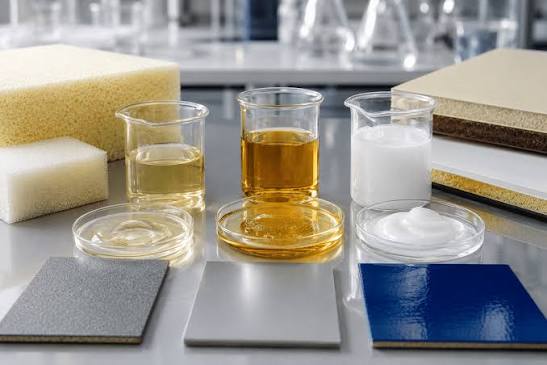
Polyurethane is one of the world's most versatile materials, found in products ranging from building insulation and refrigeration panels to furniture cushions, mattresses, automotive seating, footwear, coatings, adhesives, and industrial components. Although polyurethane is often discussed as a single material, it is actually produced through a chemical reaction between two main groups of raw materials: isocyanates and polyols. The specific combination of these components determines whether the final product becomes a rigid insulation panel, a soft furniture cushion, an elastomer, or a protective coating. For procurement professionals, understanding these upstream building blocks is valuable because polyurethane supply chains are driven by the availability of these raw materials rather than by polyurethane demand alone. Market reports frequently refer to Methylene diphenyl diisocyanate (MDI), Toluene diisocyanate (TDI), and Polyols, and each follows its own production economics, demand drivers, and global supply chain. Understanding the role of each component helps buyers interpret price movements and supplier dynamics more accurately.
The two principal isocyanates used in polyurethane production serve different applications. MDI is most commonly associated with rigid polyurethane foams, structural insulation, construction panels, appliance insulation, pipe insulation, composite wood products, and a variety of industrial applications requiring strength and dimensional stability. Its chemical characteristics make it well suited to producing dense, rigid materials with excellent thermal insulation performance. TDI, by contrast, is used primarily in flexible polyurethane foams such as mattresses, upholstered furniture, automotive seating, and cushioning products where softness, elasticity, and resilience are required. Although both belong to the isocyanate family and participate in polyurethane chemistry, they are designed for different performance characteristics and therefore support different downstream industries. The second major component, polyols, reacts with the chosen isocyanate to form polyurethane. Polyols are available in many different formulations, and their composition plays a major role in determining the hardness, flexibility, density, durability, and overall physical properties of the finished material. By selecting different combinations of isocyanates and polyols, manufacturers can engineer polyurethane products for an exceptionally wide range of commercial applications.
Why MDI and TDI Are Not Interchangeable in Procurement Planning
A common misconception is that MDI and TDI can be substituted whenever supply conditions change. In practice, this is rarely possible because each material is designed for distinct manufacturing processes and end-product performance requirements. A manufacturer producing rigid insulation panels cannot generally replace MDI with TDI without fundamentally changing product properties and processing behaviour. Likewise, producers of flexible foam products cannot simply substitute MDI for TDI while expecting equivalent comfort, resilience, or manufacturing performance. Although specialised polyurethane technologies exist for certain niche applications, the two isocyanates serve largely separate commercial markets. Their supply chains also differ because production facilities, regional manufacturing capacity, customer bases, and demand patterns are not identical. As a result, market disruptions affecting MDI do not necessarily produce the same commercial response in TDI markets, and vice versa. Procurement professionals should therefore analyse these materials as separate commodity groups rather than treating them as interchangeable polyurethane feedstocks.
For buyers, understanding polyurethane chemistry improves both supplier evaluation and market forecasting. Procurement decisions should consider not only polyurethane demand but also developments affecting upstream isocyanate production, polyol availability, feedstock costs, planned maintenance, and downstream industry demand. Construction activity and energy-efficient building projects often influence MDI consumption through rigid insulation demand, while furniture production, bedding markets, and automotive manufacturing have greater influence on TDI demand. Polyol markets, meanwhile, respond to broader polyurethane production across multiple industries. Effective sourcing therefore requires visibility across the entire polyurethane value chain rather than focusing solely on finished products. Buyers who understand how isocyanates and polyols interact can interpret supplier quotations more effectively, anticipate market movements earlier, and build sourcing strategies that reflect the distinct commercial realities of each raw material. Polyurethane may appear to be a single product category, but its supply chain is built on several specialised chemical markets whose individual dynamics ultimately determine availability, pricing, and long-term procurement risk.
Looking for polyurethane procurement intelligence or industrial chemical market insights? Understanding the different roles of MDI, TDI, and polyols provides the foundation for interpreting polyurethane market trends, evaluating suppliers, and making more informed sourcing decisions.
Featured Product
Corn Gluten Meal (60% Min Protein) - United States