Ranking 2026's Notable Illicit Drug Market Enforcement Actions: Retatrutide Joins the List
The growing market for unauthorized and unapproved medicines has become an increasingly important enforcement issue for pharmaceutical companies and regulators in 2026.
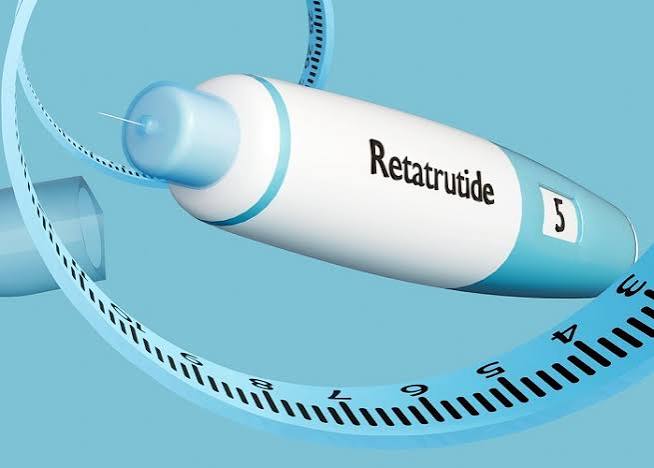
Eli Lilly's campaign against unauthorized retatrutide sellers provides one of the year's most notable examples. Retatrutide remains an investigational medicine and has not been approved by the FDA or any other regulator. Nevertheless, unauthorized versions have appeared through online sellers, medical spas, peptide vendors, and other channels. The FDA has specifically stated that retatrutide cannot legally be used in compounding.
The broader intelligence question is how Lilly's actions compare with other pharmaceutical-company and regulatory efforts to disrupt unauthorized drug markets.
For the industry, this is no longer simply an intellectual-property issue. It increasingly involves patient safety, counterfeit products, regulatory compliance, online distribution, payment networks, shipping channels, and brand protection.
Why Illicit Drug Markets Matter
Unauthorized pharmaceutical markets can develop rapidly when demand for a new therapy outpaces legal availability.
These markets can involve:
Unapproved medicines
Counterfeit products
Unauthorized compounded versions
Illicit APIs
Research-use-only products marketed for human consumption
Online pharmaceutical sellers
Medical spas and wellness clinics
Social-media promotion
The risks extend beyond lost revenue.
Unverified products can contain:
Incorrect active ingredients
Contaminants
Impurities
Incorrect concentrations
Poorly stored materials
Unknown manufacturing inputs
The FDA has warned specifically about these risks for unapproved GLP-1 products.
2026 Enforcement Ranking
A useful ranking can distinguish enforcement actions by scale, legal escalation, regulatory involvement, and market reach rather than treating every warning letter or seizure as equivalent.
#1 — Eli Lilly / Retatrutide
Lilly's retatrutide campaign stands out because it combines corporate litigation with referrals to regulators and law enforcement and pressure on the wider infrastructure supporting unauthorized sales.
Lilly has reported referring more than 200 individuals and entities to federal and state authorities, including the FDA, Department of Justice, state attorneys general, law-enforcement agencies, and professional licensing boards.
The company has also called on:
Social-media platforms
E-commerce platforms
Payment processors
Credit-card companies
Shipping companies
Regulators
to help disrupt the unauthorized market.
That makes the campaign broader than conventional patent litigation.
Retatrutide's Unique Enforcement Challenge
Retatrutide presents an unusual situation because the unauthorized market has developed before regulatory approval.
The compound remains in Phase 3 clinical development and is not approved for human use. The FDA has explicitly stated that retatrutide cannot be used in compounding.
Yet demand has already created an online market.
This produces a particularly unusual enforcement equation:
High consumer demand + promising clinical data + no approved product + unauthorized supply
The commercial incentive for illicit sellers can therefore become substantial before the legitimate pharmaceutical product even reaches the market.
#2 — Novo Nordisk and the GLP-1 Compounding Market
Novo Nordisk's enforcement efforts around unauthorized or compounded GLP-1 products provide an important comparison.
The company has faced persistent competition from unauthorized and compounded versions of its obesity medicines as demand for GLP-1 therapies surged.
This demonstrates that the problem is not unique to retatrutide.
The broader GLP-1 market has created incentives for:
Compounding pharmacies
Telehealth companies
Wellness clinics
Online sellers
API distributors
to develop alternative supply channels.
The difference is that Novo's enforcement environment has often involved approved medicines and shortages, whereas Lilly's retatrutide campaign concerns an investigational compound that has not yet been approved.
#3 — FDA Enforcement Against Retatrutide Sellers and Distributors
The FDA itself has been building an enforcement response around the unauthorized GLP-1 ecosystem.
The agency has warned:
Telehealth companies marketing unapproved retatrutide
API distributors selling retatrutide to compounders
Outsourcing facilities repackaging retatrutide
The FDA has also stated that retatrutide and cagrilintide cannot be used in compounding under federal law.
This makes the regulatory response broader than simply pursuing the final seller.
It addresses multiple points in the supply chain.
#4 — UK MHRA's Large-Scale Unlicensed Weight-Loss Drug Seizure
The UK's Medicines and Healthcare products Regulatory Agency provides another major 2026 benchmark.
In May, the MHRA announced its largest-ever seizure of unlicensed weight-loss medicines, recovering approximately 12,000 doses during a raid near Northampton. Two people were arrested.
The operation targeted what authorities believed was a large-scale manufacturing and distribution facility for unlicensed weight-loss medicines, including retatrutide and tirzepatide.
This is significant because it demonstrates that enforcement is increasingly moving upstream toward manufacturing and distribution infrastructure, rather than focusing exclusively on retail sellers.
#5 — International Regulatory Warnings and Market Withdrawals
Authorities outside the United States and United Kingdom have also been responding to unauthorized retatrutide distribution.
For example, Malta's public-health authorities and Medicines Authority warned consumers in June about unauthorized products claiming to contain retatrutide.
Authorities said the products were being distributed through:
Online platforms
Social media
Informal sellers
and warned that their origin, quality, storage and composition could not be verified.
These actions illustrate how the unauthorized market has become an international regulatory issue rather than a purely U.S. enforcement problem.
The Enforcement Stack
The 2026 response can be understood as a layered enforcement system.
Layer 1 — Regulatory Warnings
Authorities identify illegal marketing or distribution and notify companies.
Layer 2 — Seizures
Law-enforcement agencies remove unauthorized products from circulation.
Layer 3 — Corporate Litigation
Pharmaceutical companies pursue sellers through civil lawsuits.
Layer 4 — Supply-Chain Intervention
Authorities and companies target APIs, manufacturers, distributors, logistics providers and payment networks.
Layer 5 — Platform Enforcement
Social-media and e-commerce platforms can remove listings and advertising.
The trend toward multiple layers makes illicit-market disruption increasingly sophisticated.
Why Lilly's Campaign Is Particularly Significant
Lilly's response is notable because the company is targeting the ecosystem surrounding unauthorized retatrutide, not merely individual sellers.
The company has identified businesses allegedly marketing products through:
Websites
Social media
Medical-spa channels
Compounding pharmacies
Online peptide businesses
Lilly's six lawsuits target Aesthetic Envy Cosmetic Centers, Astra LLC, Legendary Peptides, Striker Pharmacy, Texas Peptides, and Lone Star Peptide Co.
The significance lies in the breadth of channels rather than the number of defendants alone.
A Growing Enforcement Model: Follow the Market Infrastructure
The retatrutide case illustrates a broader shift.
Traditional pharmaceutical enforcement often focused on:
Manufacturer → Distributor → Retailer
Digital illicit markets create a more complicated structure:
API supplier → Unauthorized manufacturer → Online seller → Social platform → Payment processor → Shipping provider → Consumer
Disrupting the market therefore requires attention to the entire chain.
This is why Lilly's requests to payment companies, social platforms and logistics providers are strategically important.
The Role of "Research Use Only" Marketing
One recurring issue is the use of "research use only" language to market compounds that are allegedly intended for human consumption.
Lilly has argued that some sellers use this terminology while simultaneously promoting retatrutide for weight loss.
That creates an enforcement challenge because the marketing language may attempt to distinguish the product's stated purpose from its actual commercial use.
Regulators therefore increasingly examine:
Website claims
Social-media advertising
Customer instructions
Product labeling
Distribution patterns
Intended-use evidence
rather than relying solely on the wording printed on the package.
Competitive Intelligence Framework
Pharmaceutical companies tracking unauthorized markets should monitor several indicators.
1. Product Availability
Is an unauthorized version appearing before or shortly after regulatory approval?
2. Online Search Activity
Are social-media and search trends accelerating?
3. Seller Density
How many independent sellers are entering the market?
4. API Availability
Can unauthorized manufacturers easily obtain the relevant active ingredient?
5. Manufacturing Geography
Where are unauthorized products being produced?
6. Distribution Channels
Are products moving through pharmacies, medical spas, telehealth companies or direct-to-consumer websites?
7. Payment and Logistics
Which payment processors and shipping networks are facilitating transactions?
These indicators can help companies identify emerging illicit markets before they reach significant scale.
The Economics Behind Enforcement
Enforcement becomes particularly important when the underlying legitimate medicine has substantial commercial potential.
Retatrutide is a high-profile example because clinical results have generated significant interest in its potential as a next-generation obesity treatment.
That creates an unusual situation in which market demand itself can become an enforcement risk.
If consumers are willing to purchase a product before approval, unauthorized sellers can capture demand that would otherwise belong to the future legitimate product.
This can affect:
Brand trust
Launch strategy
Pricing
Patient safety
Regulatory relationships
Intellectual-property protection
Patient Safety Versus Commercial Protection
Pharmaceutical companies have a commercial interest in protecting their products.
But unauthorized medicine enforcement also has a strong public-health rationale.
The FDA emphasizes that unapproved drugs are not evaluated for safety, effectiveness or quality before marketing.
That creates two overlapping objectives:
Commercial objective: protect the value of the legitimate pharmaceutical product.
Public-health objective: prevent consumers from receiving products whose identity, purity, strength and manufacturing quality cannot be verified.
The strongest enforcement campaigns therefore tend to combine both arguments.
Implications for Pharmaceutical Companies
The 2026 enforcement trend suggests companies may increasingly need dedicated strategies for unauthorized-market monitoring.
Potential measures include:
Digital-market surveillance
Seller identification
Regulatory referrals
Civil litigation
Trademark monitoring
Supply-chain investigations
API-channel monitoring
Platform relationships
Payment-network engagement
The objective is increasingly to disrupt the market before unauthorized distribution becomes normalized.
Implications for Pharmaceutical Suppliers
The growth of unauthorized drug markets also creates risks for legitimate suppliers of:
APIs
Pharmaceutical intermediates
Excipients
Peptides
Solvents
Packaging materials
Supplier qualification and traceability become increasingly important when high-value pharmaceutical compounds attract unauthorized manufacturing activity.
Companies should maintain:
Customer verification
End-use controls
Documentation
Batch traceability
Regulatory compliance
Distribution records
These measures can help distinguish legitimate pharmaceutical supply chains from unauthorized channels.
What Makes 2026 Different?
Several trends are converging.
Digital Distribution
Social media makes it easier for unauthorized sellers to reach consumers.
Consumer Demand
Weight-loss drugs have created unusually strong demand for new therapeutic compounds.
Global Supply Chains
APIs and peptide materials can move internationally before being marketed domestically.
Fast-Moving Wellness Markets
Medical spas and wellness businesses can become distribution channels for pharmaceutical-like products.
Regulatory Coordination
Companies increasingly work with regulators, law enforcement, payment companies and platforms simultaneously.
Together, these factors are producing a more complex enforcement environment than traditional counterfeit-drug cases.
Looking Ahead
Retatrutide is likely to remain one of the most closely watched unauthorized-drug enforcement cases of 2026.
The key question is whether Lilly's approach becomes a model for other pharmaceutical companies facing illicit markets around highly anticipated medicines.
The emerging pattern suggests that enforcement is moving from product-by-product policing toward ecosystem disruption.
Companies may increasingly target not only sellers but also:
Manufacturers
API suppliers
Marketing channels
Payment providers
Logistics networks
Online platforms
That approach could become particularly important for high-demand medicines whose commercial markets emerge rapidly.
The broader lesson is that pharmaceutical companies may need to treat illicit-market monitoring as part of commercial strategy, regulatory affairs, patient safety, and supply-chain risk management simultaneously.
Key Takeaways
Retatrutide has become one of 2026's most visible unauthorized-drug enforcement cases.
Lilly's campaign combines civil litigation, regulatory referrals and pressure on digital and logistics infrastructure.
The FDA has explicitly stated that retatrutide cannot legally be used in compounding.
The UK's MHRA has separately seized approximately 12,000 doses of unlicensed weight-loss medicines, including retatrutide and tirzepatide.
International authorities are also warning consumers about unauthorized retatrutide products.
The enforcement model increasingly targets entire illicit-market ecosystems rather than individual sellers.
Pharmaceutical companies may need stronger digital surveillance, supply-chain controls and regulatory coordination as unauthorized markets expand.
Propylene Oxide
Found this useful?