Ranking Superresolution Imaging Breakthroughs Against 2026's Analytical Chemistry Advances
Analytical chemistry continues to expand beyond traditional spectroscopy, chromatography and microscopy as researchers develop faster, more precise and increasingly instrument-independent methods.
One of the notable 2026 developments is a fluorescence-free, electrochemically powered superresolution imaging approach, which offers a new direction for achieving nanoscale imaging without relying on conventional fluorescent labeling.
For chemical companies, research laboratories, materials scientists and analytical-instrument manufacturers, the development is worth watching because advances in imaging technology can eventually influence how researchers characterize materials, surfaces, biological systems and chemical reactions.
Why Superresolution Imaging Matters
Conventional optical microscopy is limited by the diffraction of light.
Superresolution techniques attempt to overcome this limitation, allowing researchers to observe structures that would otherwise appear blurred together.
This can provide valuable information about:
Nanostructures
Interfaces
Molecular organization
Materials defects
Surface chemistry
Biological structures
The ability to visualize these features can improve understanding of how materials behave at very small scales.
A Different Approach to Superresolution
Traditional superresolution imaging often depends on fluorescence.
Fluorescent molecules provide the optical signals required to distinguish structures at resolutions beyond conventional microscopy.
The new approach is notable because it replaces that requirement with an electrochemical mechanism.
Instead of depending entirely on optical excitation and fluorescent labels, the method uses electrochemical control to generate the imaging signal.
That creates a potentially different pathway toward high-resolution imaging.
Why Fluorescence-Free Imaging Could Matter
Removing fluorescent labeling could offer several advantages.
Researchers may be able to study systems where fluorescent tags are:
Difficult to introduce
Chemically disruptive
Unstable
Expensive
Unsuitable for certain materials
A fluorescence-free approach could therefore broaden the range of samples that can be analyzed.
For materials scientists, this could be particularly relevant because many inorganic and synthetic materials do not naturally provide fluorescent signals.
Electrochemistry Adds Another Dimension
Electrochemical control is already widely used in analytical chemistry.
It supports measurements involving:
Redox reactions
Surface interactions
Ion transport
Corrosion
Sensors
Electrocatalysis
Combining electrochemical control with superresolution imaging creates an opportunity to observe chemical behavior while simultaneously controlling the local environment.
This could eventually provide information that conventional microscopy cannot easily capture.
The Materials-Science Opportunity
Advanced materials often contain features that exist at nanometer scales.
Examples include:
Thin films
Nanoparticles
Catalysts
Battery materials
Semiconductor interfaces
Polymer structures
Superresolution imaging can potentially help researchers understand how these structures influence performance.
For chemical manufacturers developing advanced materials, better characterization can translate into faster product-development cycles.
Analytical Chemistry Is Becoming More Multidisciplinary
The development also illustrates a broader trend in analytical chemistry.
Modern analytical techniques increasingly combine:
Chemistry + physics + materials science + electronics + computation.
Superresolution imaging is a strong example of this convergence.
The result is an analytical platform that may eventually provide both spatial information and chemical information.
Potential Applications in Catalysis
Catalysts operate through surface interactions that can occur at extremely small length scales.
Understanding where reactions occur and how active sites behave can help researchers design more efficient catalysts.
High-resolution imaging could potentially assist in studying:
Catalyst surfaces
Reaction sites
Nanoparticle distribution
Surface restructuring
Electrochemical reactions
This could be relevant to both commodity and specialty-chemical manufacturing.
Battery Research Could Also Benefit
Battery performance depends heavily on microscopic and nanoscale structures.
Researchers need to understand:
Electrode surfaces
Interfaces
Degradation
Ion movement
Material defects
An electrochemically controlled imaging technique could be particularly interesting for these applications because electrochemical reactions are central to battery operation.
Semiconductor and Electronic Materials
Electronic materials are another potential application area.
Modern semiconductor devices increasingly depend on extremely small structures and precisely controlled interfaces.
Advanced imaging can help researchers identify:
Defects
Interfaces
Material distributions
Surface structures
Nanoscale changes
This makes superresolution imaging relevant to the growing electronic-chemicals market.
Potential Impact on Instrumentation
The most important commercial question is whether this research can move from laboratory demonstrations into practical instrumentation.
Successful commercialization would require:
Reproducible results
Reliable hardware
User-friendly software
Stable operating conditions
Reasonable acquisition times
Competitive costs
Laboratory breakthroughs can be scientifically important without becoming commercially successful.
The next stage is therefore instrument engineering.
Computational Analysis Will Be Important
Modern microscopy increasingly depends on software.
Advanced algorithms can help:
Reconstruct images
Remove noise
Identify features
Improve resolution
Quantify spatial changes
Electrochemical superresolution could similarly benefit from computational processing.
This creates another point of convergence between analytical chemistry and artificial intelligence.
How It Compares With Existing Superresolution Methods
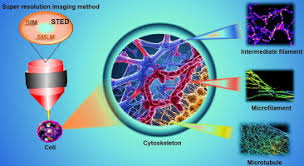
Existing superresolution approaches include techniques based on:
Structured illumination
Single-molecule localization
Stimulated emission depletion
Photoactivated localization
These methods have already demonstrated powerful imaging capabilities.
The new electrochemical approach therefore does not automatically replace established technologies.
Its potential advantage is offering a different mechanism that may expand the range of samples and environments suitable for superresolution analysis.
Commercial Adoption Will Depend on Practicality
Researchers and laboratories will ultimately evaluate the technology based on practical performance.
Important criteria will include:
Resolution
How small a feature can be reliably observed?
Speed
How quickly can images be produced?
Sample Compatibility
What materials can be analyzed?
Reproducibility
Can different laboratories obtain consistent results?
Cost
Can the system compete with established instruments?
Ease of Use
Can non-specialist laboratories operate it effectively?
Chemical Companies Could Become Early Users
Large chemical companies already operate sophisticated analytical laboratories.
They use advanced characterization techniques for:
R&D
Quality control
Failure analysis
Product development
Process optimization
If fluorescence-free superresolution becomes sufficiently robust, chemical companies could potentially use it to analyze advanced materials and surface chemistry.
Procurement Implications
For procurement teams, emerging analytical technologies create a different type of sourcing challenge.
Instead of simply purchasing established laboratory instruments, buyers may eventually need to evaluate:
New instrument manufacturers
Technology licensing
Software platforms
Specialized components
Service agreements
Technical support
Early adoption can create competitive advantages, but it also introduces technology and supplier risk.
The Broader 2026 Analytical Chemistry Trend
The superresolution breakthrough fits into a broader movement toward analytical tools that are:
More sensitive
More selective
Faster
Label-free
Miniaturized
Automated
Computationally enhanced
These trends are changing how chemical information is collected and interpreted.
Looking Ahead
The fluorescence-free, electrochemically powered superresolution approach represents an interesting addition to the rapidly evolving analytical chemistry landscape.
Its importance lies not only in achieving high-resolution imaging, but in demonstrating that electrochemistry can provide an alternative mechanism for nanoscale visualization.
If researchers can demonstrate strong reproducibility, broad sample compatibility and practical instrumentation, the technology could eventually move beyond academic research into commercial analytical platforms.
For chemical R&D teams, that could mean new ways to investigate catalysts, polymers, batteries, electronic materials and surface chemistry.
For instrument manufacturers, it represents a potential new market.
For procurement professionals, it is another emerging analytical technology worth monitoring before the next generation of laboratory platforms reaches wider commercial adoption.
Key Takeaways
A fluorescence-free, electrochemically powered superresolution method represents a notable 2026 analytical chemistry development.
The approach offers an alternative to fluorescence-dependent superresolution techniques.
Label-free imaging could expand the range of materials that can be studied.
Potential applications include catalysts, batteries, semiconductor materials and advanced polymers.
Commercial success will depend on resolution, speed, reproducibility, cost and ease of use.
Computational image processing could further enhance the technology.
Chemical R&D laboratories could become important users if practical instruments reach the market.
The development reflects the broader convergence of chemistry, electrochemistry, materials science, electronics and computation.
The technology is best viewed as a potential complement to established superresolution methods rather than an immediate replacement.
Instrument commercialization will be the key milestone to watch next.

Isopropyl Palmitate
Found this useful?