
REACH PFAS and Microplastics Compliance in 2026: What Chemical Buyers Need to Track
What Chemical Buyers Need to Track
REACH compliance obligations are moving faster than most procurement calendars in 2026. Two developments matter most this year: continued expansion of the Substances of Very High Concern list and new Annex XVII PFAS restrictions carrying enforceable milestones. For chemical buyers sourcing into the EU, these are not distant policy signals. They are dates on a compliance calendar that is already ticking.
What Changed on the SVHC Candidate List
The Candidate List of Substances of Very High Concern grew to 253 entries in February 2026, with n-hexane and Bisphenol AF added during that update. ECHA typically refreshes the list in January and June, and each addition can trigger immediate obligations. Article suppliers face new disclosure duties, SCIP database notifications and customer communication requirements the moment a substance lands on the list.
For traders, this means SVHC status cannot be checked once and forgotten. It needs revisiting at every list update, particularly for products moving through multiple intermediaries before reaching an EU importer.
The Annex XVII PFAS Restriction Timeline
Per- and polyfluoroalkyl substances, commonly known as PFAS, are the biggest structural change working through REACH right now. The proposed restriction is class based, covering more than 10,000 individual substances rather than targeting one chemical at a time. That scope alone separates it from any previous Annex XVII entry.
The procedural path has moved steadily through 2026:
The Risk Assessment Committee adopted its opinion on the restriction proposal in early March 2026, completing its evaluation of PFAS hazards and exposure routes.
The Socio-Economic Analysis Committee agreed a draft opinion in mid March 2026, followed by a 60 day public consultation running through late May 2026.
SEAC is expected to finalise its opinion by the end of 2026, after which the European Commission drafts the formal amendment to Annex XVII in consultation with member states.
A full class-wide ban is unlikely to become law before 2027 at the earliest. That said, narrower PFAS actions are already confirmed and moving faster. A restriction on PFAS use in firefighting foams was added to Annex XVII as one of the headline 2026 updates, and a separate restriction on PFHxA and its salts takes effect in October 2026.

Microplastics Restriction Is Already Enforceable
Unlike the broad PFAS proposal, the intentionally added microplastics restriction under REACH is already in force. This limits synthetic polymer microparticles added deliberately to products such as cosmetics, detergents and agricultural formulations. Rinse-off cosmetics carry a further deadline in 2027, giving formulators a narrowing window to reformulate.
Buyers sourcing surfactants, polymers or specialty additives for personal care and household formulations should confirm supplier documentation now rather than waiting for the 2027 deadline to force the conversation.
Why This Matters for Sourcing Decisions
Regulatory tightening changes how buyers evaluate suppliers, not just what they buy. A few practical shifts are already visible in the market:
Reformulation lead times are long. Material substitution in sectors like electronics, automotive and coatings typically requires two to five years of development and qualification, so waiting for a final restriction text before acting leaves little margin.
Supplier documentation is becoming a sourcing criterion. Full material declarations and substance-level traceability are increasingly requested at the RFQ stage, not just at audit time.
Derogations will matter more than blanket bans. Early drafts of the PFAS restriction include sector specific exemptions and transition periods, meaning the practical impact will vary widely by application.
Applications Feeling the Most Pressure
PFAS chemistry shows up across a wide range of industrial uses, which is part of why the proposed restriction is so consequential. Coatings, textile finishing, surfactants and processing aids all rely on PFAS properties such as heat resistance and surface repellency. Buyers in these categories are the ones most likely to see supplier price and availability shifts as the restriction moves closer to adoption.
Some producers are already positioning PFAS-free alternatives ahead of the final ruling. Fatty alcohol ethoxylates and related non-fluorinated surfactants are gaining attention as functional substitutes in formulations that previously relied on PFAS-based wetting agents.
What Buyers Should Do Now
Waiting for the final Annex XVII text is not a sourcing strategy. Compliance teams that treat 2026 as a preparation year, rather than a waiting year, will be better positioned when enforcement dates arrive.
A few steps are worth prioritising immediately:
Map PFAS exposure across current bills of materials and supplier tiers, not just finished products.
Request updated SVHC and Candidate List disclosures from suppliers at every list refresh.
Start supplier conversations about PFAS-free alternatives for high-risk applications such as coatings and textile treatments.
Track the PFHxA restriction's October 2026 effective date separately from the broader class-based proposal, since it applies sooner.
None of this requires a finalised restriction to begin. The documentation habits, supplier questions and reformulation timelines built now will matter regardless of exactly where the final Annex XVII text lands.
Ready to source PFAS-free alternatives from verified global suppliers? Explore competitive offers on our platform today.
Reference Link
https://blog.sourceintelligence.com/eu-reach-compliance
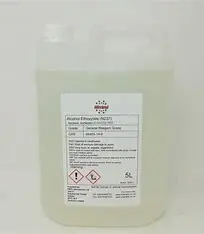
Fatty Alcohol Ethoxylate - India
Found this useful?