Titanium Dioxide Price Trends: Global Supply, Demand and Cost Analysis
Titanium Dioxide Price Trends: Global Supply, Demand and Cost Analysis
Global Supply – Capacity Tightening After Closures
Around 600,000 tonnes of titanium dioxide capacity has closed permanently, while global demand is forecast to increase by 4 to 6% in 2026. That structural tightening is central to current price trends.
TiPMC analysis indicates that current shortage is capacity-driven, reflecting reduced nameplate capacity, effective capacity reductions, planned mothballing, low plant reliability, and limited producer inventory. Price increases announced for Q2 and Q3 2026 by multinational producers are being implemented, supported by tight supply, low inventories at producer and customer sites, longer lead times, and renewed safety-stock building by customers.
Titanium dioxide price trend analysis 2026 shows supply demand analysis with mixed pricing in Q3 2026, falling in China on high inventories while some markets firmed as capacity closures and trade measures tightened supply. According to Procurement Resource, TiO2 prices may stabilise in China as peak-season demand clears stock.
Top 6 selling titanium dioxide products in China market trends 2025 show rutile grade TiO2 for architectural coatings at 1,500 to 1,600 dollars per ton, anatase at 2,800 dollars per ton for interior coatings. Nano-grade products show highest value-per-kg ratio despite elevated costs, reflecting demand in high-margin sectors like renewable energy coatings where performance justifies expense.
Global titanium dioxide market valued at 22.40 billion dollars in 2025, projected to reach 23.92 billion in 2026, and forecast to grow to 46.19 billion by 2036, registering CAGR of 6.8%. Leading region Asia Pacific. Market size 2026 at 23.92 billion, projected to reach 26.32 billion by 2031 from 21.82 billion in 2026 at CAGR 3.
Global Demand – Rebound Across Key Industries
Global titanium dioxide demand rebounds 4 to 6% in 2026. According to market analysis published by PCI Magazine, demand projected to rise year-on-year in 2026, driven by rebound in U.S. housing activity, renewed infrastructure investment across Southeast Asia, and aggressive inventory restocking by paint, plastics, and paper manufacturers.
Titanium dioxide price witnessed varied movements across major global markets during first quarter of 2026, reflecting regional differences in supply chains, feedstock availability, industrial demand, and international trade dynamics. Pricing trends influenced by steady downstream demand from coatings and plastics industries in China, South Korea, and Japan.
US titanium dioxide market growing with strong demand across industries. Around 41% of demand comes from coatings used in construction and infrastructure. Nearly 22% growth seen in automotive coatings due to rising vehicle production. About 18% demand comes from plastics and packaging applications. Sustainability trends influence nearly 35% of manufacturers to adopt eco-friendly processes.
Saudi Arabia's titanium dioxide pigments market forecast to grow at compound annual growth rate of 4 to 6% over period 2026-2035, with demand expanding by approximately 40 to 70% compared to 2026 levels, driven by Vision 2030 giga-projects requiring substantial volumes of paint, coatings, and construction materials.
Photocatalysis titanium dioxide self-cleaning coating market projected CAGR 11.51% from 2025-2032, increasingly propelled by escalating requirement for sustainable building materials. That specialty nano-grade segment commands premium pricing despite elevated costs.
Production Costs – Ore, Acid, Energy, And Process Type
Costs come from ilmenite and rutile ore, sulphuric acid and energy, and in Euro regions, compliance costs. European producers continued facing elevated operating expenses including energy and gas. That explains regional price divergence.
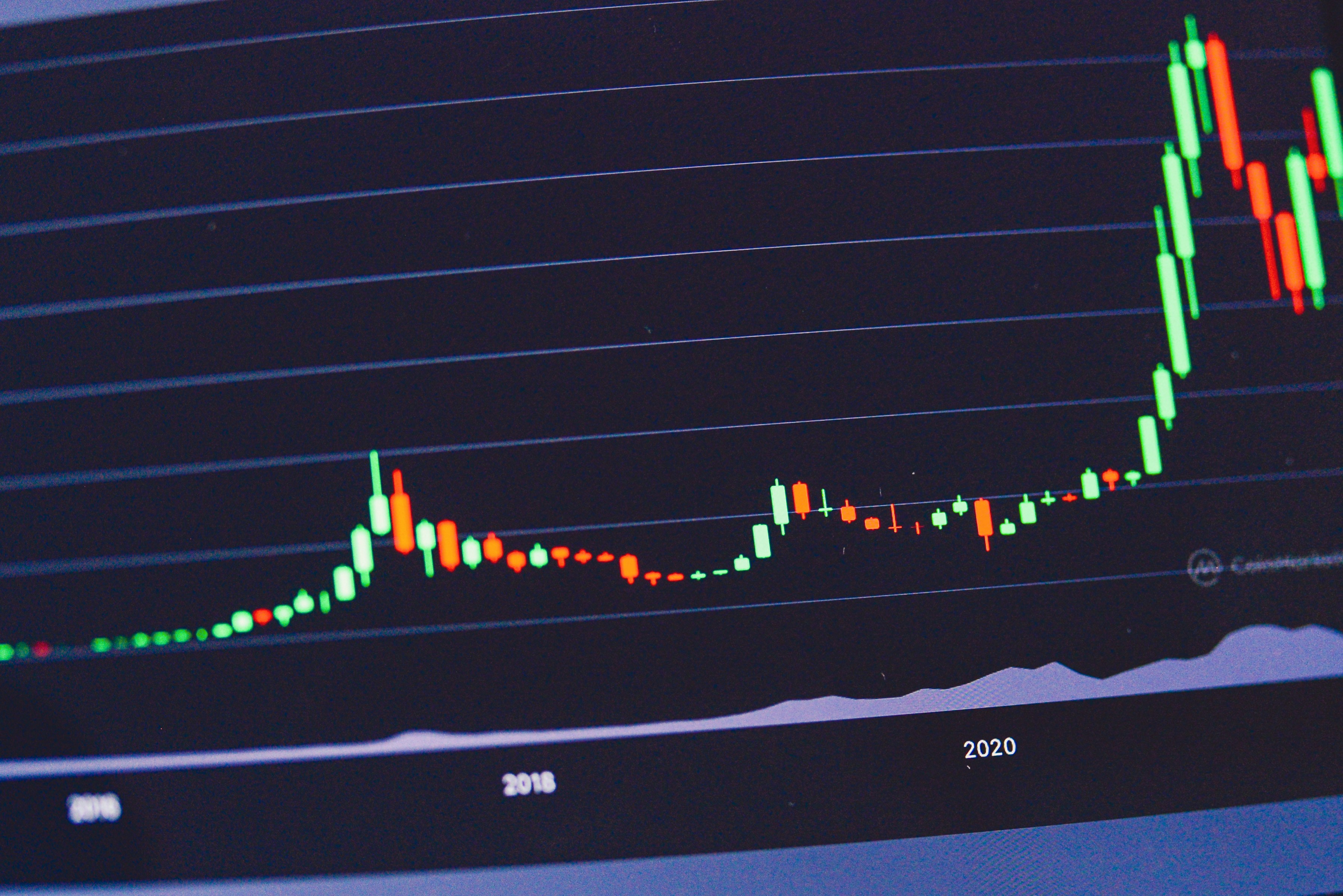
Titanium dioxide price trend 2026 forecast and analysis – prices rose 3.1% in first half, 3,540 dollars per MT in Q1 to 3,650 dollars per MT in Q2 in Europe, helped by European anti-dumping duties on imported material and modest pickup in coatings demand. Global average recovered too, 2,940 dollars per MT to 3,020 dollars per MT, about 2.7%. For rest of 2026 we see 2,950 to 3,200 dollars per MT band, with producer price increases, firmer titanium ore, and steadier paints and coatings demand behind it.
Titanium dioxide price trend August 2026 analysis shows China EXW 2,003 dollars per MT August 2026. Q2 2026 prices tracked at US 3,270 dollars MT, China 2,490 dollars MT, Germany 3,650 dollars MT, India 2,960 dollars MT, on ore and coatings demand.
Feedstocks differ in titanium dioxide content. Natural rutile contains at least 95% TiO2 and feeds chloride process, cleaner pigment-making route that needs high-grade input, as well as aerospace titanium metal. Ilmenite contains lower TiO2 and feeds sulfate process that requires sulphuric acid. Sulphuric acid price surged more than 130% since early 2026 due to sulfur tightness from oil supply decline of 5.2%, directly raising sulfate process costs.
Higher production costs also influence market. Producers must manage expenses linked to raw materials, energy, logistics and plant operations, making it more difficult to maintain older low-price levels when margins remain under pressure. Tronox reported that pricing actions announced during first half of 2026 were taking effect.
Process solvents pricing 2026 cost drivers show energy and utilities including steam, electricity, nitrogen, and cooling costs remain uneven by region, with distillation-heavy and purity-sensitive solvents carrying higher conversion cost. Same applies to TiO2 calcination and finishing.
Trade Dynamics And Regional Price Variations
Global supplier transactions, export activity, and price benchmarks for titanium dioxide show 108 supplier-linked transactions across top 16 countries, with monthly unit-price benchmarks tracking export competitiveness. Top year-on-year shifts Mexico minus 96.4%, United Kingdom minus 89.5%, France minus 87.7%, showing how trade flows are shifting.
Asia Pacific held 50.0% of global titanium dioxide pigment value in 2025 and grows at 4.6% a year to 2034. China dominates both supply and demand, holding 6,000,000 tonnes of 9,900,000 tonnes of world pigment capacity at end of 2025, and LB Group alone operates 1.51 million tonnes a year. India is next demand engine, and its trade remedies authority recommended in July 2026 anti-dumping duty of 460 dollars to 1,000 dollars range.
Titanium dioxide price index increased by 4.32% in some regions, with Northeast Asia 2.08 down 7.1%, Europe 2.98 up 3.1%, North America 2.56 down 0.8%, showing regional divergence.
Cameroon has no commercially meaningful mining or pigment-grade refining capacity, so virtually all supply arrives as finished pigment through ports of Douala and Kribi, import dependence near-total. That pattern repeats across Africa and Middle East, making TiO2 a globally traded commodity where freight, duties, and currency depreciation raise landed costs.
Titanium dioxide price forecasts and market foresight Q3 2026 expect prices to remain under moderate downward pressure during Q3 2026 as adequate global supply, competitive export offers, and comfortable producer inventories continue to influence sentiment. Feedstock costs for ilmenite and titanium slag expected to remain relatively stable, limiting production cost volatility. However, that forecast contrasts with tighter supply view from TiPMC, illustrating split between commodity rutile grades and premium chloride grades.
Cost Analysis For Buyers And Outlook
Commodity pricing for standard rutile remains sensitive to ore and energy, but premium grades maintain stronger margin protection. Titanium dioxide price trend moved noticeably higher during second quarter of 2026, as higher energy expenses, rising freight costs, geopolitical uncertainty, and steady demand from major consuming industries combined to support market. China recorded strongest increase at approximately 23%, followed by United States at around 6% and India at about 5%.
For buyers of food-grade minerals evaluating TiO2-free alternatives, rising TiO2 prices support substitution with precipitated calcium carbonate PCC, calcium phosphate, and starch-based opacifiers. PCC at 800 to 1,500 dollars MT becomes more attractive versus TiO2 at 3,650 dollars MT Germany when whiteness requirements moderate. Lifecycle assessments show GCC emits 28 to 35% less CO2 per ton compared to synthetic calcium sources, adding sustainability advantage.
Practical procurement strategies include tracking building cycle and ore costs, watching trade measures on imports, and timing contracts around producer price-increase announcements. Build tiered budgets with base, pressure, and disruption cases. Separate strategic high-opacity rutile grades for exterior coatings from standard anatase for interior. Require landed-cost comparison, not ex-works only, as freight and fuel surcharges have become revenue lever for carriers, with LTL rate per pound index expected to reach 82.5% above January 2018 baseline.
Ultimately, global supply tightening with 600,000 tonnes closed, demand rebound 4 to 6%, production costs from ilmenite, rutile, sulphuric acid, and energy, and trade remedies shaping regional prices will keep TiO2 market firm in many regions despite Chinese overcapacity. Buyers managing global sourcing should monitor producer inventory levels, lead times, and safety-stock building signals to anticipate next price increase cycle.
Sources:
Titanium Dioxide Price Trend 2026 Forecast – prices rose 3.1% first half 3540 to 3650 MT in Q2 helped by European anti-dumping duties – global average 2940 to 3020 – rest of 2026 band 2950-3200 – costs from ilmenite rutile sulphuric acid energy – https://expertmarketresearch.com
Titanium Dioxide CAS Market Rebounds 2026 – Global demand rebounds 4–6% in 2026 – driven by US housing – https://furuidachem.com
TiO2 Outlook & Pricing Forecast 2026-2031 – TiPMC – price increases announced Q2 Q3 2026 implemented – shortage capacity-driven – https://tipmcconsulting.com
Titanium Dioxide Price Hike Cycle – 600000 tonnes capacity closed permanently – higher production costs raw materials energy logistics – https://chemicalsblog.com
Polyaluminium Chloride
Found this useful?