Top 10 Market Intelligence Data Points for July 1, 2026 | ChemicalsBlog.com
Price Trends
schedulenull Min Read
Top 10 Market Intelligence Data Points for July 1, 2026
terminal
prodchem
Jul 1, 2026
Top 10 Market Intelligence Data Points for July 1, 2026
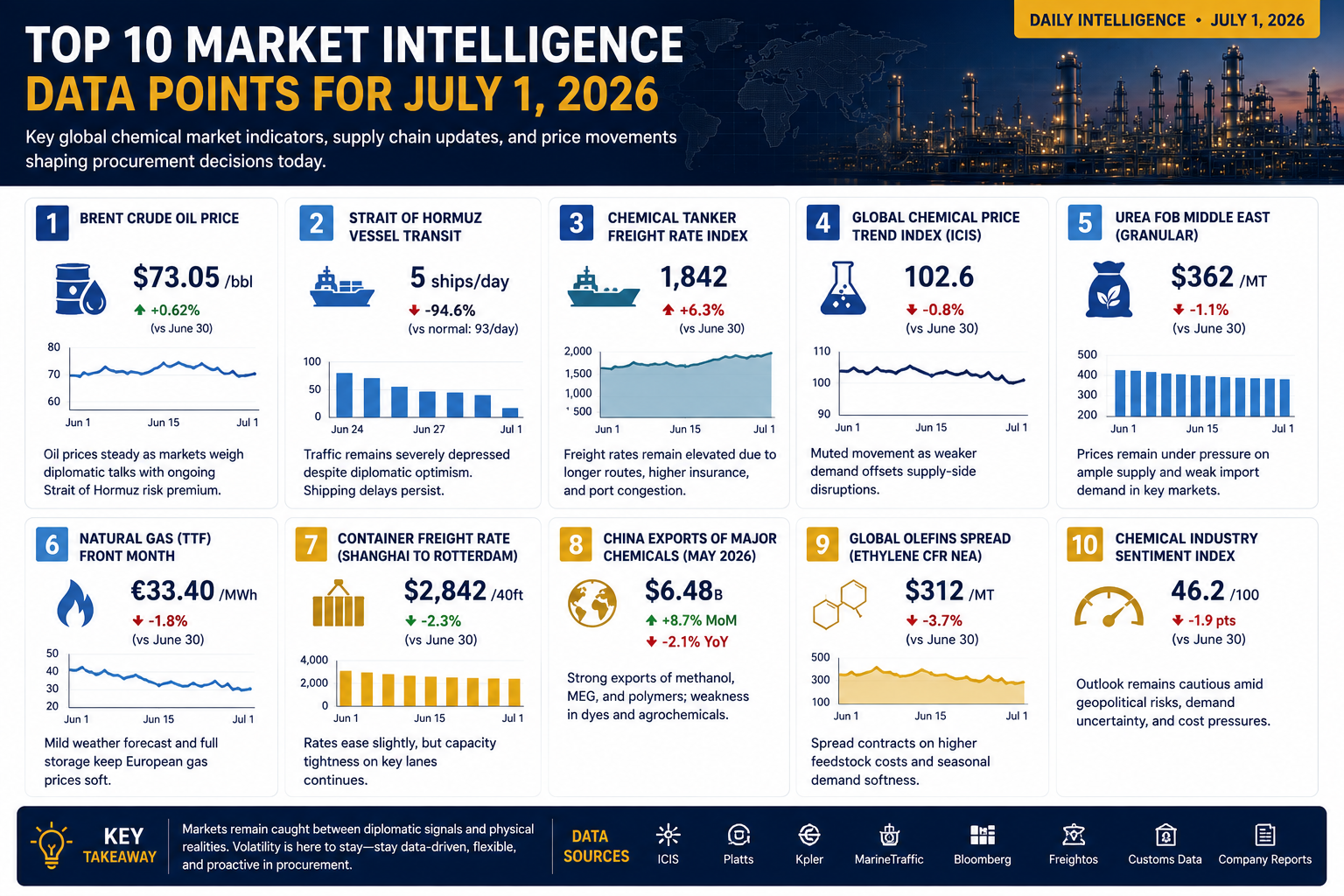
The first day of H2 2026 opens with one of the most unusual market environments chemical procurement professionals have faced all year. On the surface, diplomatic signals suggest the Hormuz crisis is gradually moving toward resolution. Oil markets remain calm, crude prices have stabilized, and Gulf producers are beginning to discuss export recovery. Yet underneath those headlines, the physical supply chain remains deeply constrained, insurance markets continue pricing extreme risk, new regulatory deadlines are activating across major jurisdictions, and several corporate and infrastructure developments are quietly reshaping the second-half outlook for the global chemical industry. For procurement teams beginning the new quarter, the challenge is no longer simply reacting to crisis conditions. The challenge is understanding which signals genuinely matter and which developments will quietly influence supply costs, supplier behavior, regulatory exposure, and sourcing strategy over the coming months.
The data entering July 1 paints a market still operating far from normal conditions. Physical shipping through Hormuz remains severely restricted, with only five ships currently transiting daily compared to approximately ninety-three vessels under pre-crisis conditions, confirming supply recovery remains far weaker than diplomatic headlines imply. Brent crude at $73.05 remains stable and below pre-war levels, improving feedstock and freight economics, but insurance markets continue telling a far more cautious story. War risk insurance remains nearly eight times higher than pre-crisis pricing while six major P&I marine insurance clubs continue withholding coverage, signaling that insurers still expect significant tail risk despite improving political sentiment. Adding further complexity, approximately 485 vessels remain anchored across Gulf shipping lanes, meaning physical supply normalization will likely take months even if diplomatic conditions improve immediately. India has now officially entered its first day without the temporary duty waiver covering forty petrochemical products, restoring full import costs for procurement teams sourcing into one of the world’s fastest-growing chemical markets.
Why July 1 Creates the New Decision Framework for Chemical Procurement Teams
Beyond the immediate Hormuz situation, several developments quietly reshape H2 strategy beginning today. **Dow Inc. officially begins its leadership transition as Karen Carter takes over as CEO, making Dow’s late July earnings release one of the most important strategic signals the global chemical sector will receive this quarter. At the same time, Tropical Storm Arthur reaching the Texas coast creates immediate uncertainty around Houston Ship Channel operations, forcing procurement teams dependent on US Gulf Coast exports to monitor possible short-term logistics disruption. Regulatory pressure is also intensifying globally. Connecticut PFAS labeling requirements and Minnesota’s PRISM chemical disclosure regulations both become active today, creating new compliance obligations for companies managing specialty chemical portfolios exposed to US regulatory scrutiny. Across Europe and global electronics supply chains, RoHS Directive 2025/2456 formally applies beginning July 1, creating immediate compliance implications for chemical producers supplying electronics, coatings, industrial additives, and component manufacturing sectors.
Longer-term supply markets are shifting as well. Brazil has now officially board-approved the UFN III urea project, a major fertilizer investment expected to deliver approximately 3,600 tonnes per day of domestic production capacity by 2029, a development with long-term implications for Latin American fertilizer import dependency and future nitrogen trade flows. When viewed together, these signals reveal a highly contradictory market environment entering the second half of the year. Energy markets suggest stability, diplomacy suggests progress, but shipping infrastructure, insurance markets, regulatory systems, and physical supply chains all continue signaling elevated operational complexity. For procurement professionals, the lesson remains unchanged from H1 2026. The companies that outperform in H2 will not be those reacting to headlines alone. They will be the teams capable of tracking operational data, regulatory shifts, supplier positioning, and physical logistics conditions simultaneously. July 1 does not mark the return of normal market conditions. It marks the beginning of a more complex and intelligence-driven procurement environment where better decisions will increasingly depend on better information.
Looking for chemical procurement intelligence or strategic sourcing insights? July 1 opens H2 2026 with one clear message — market volatility may be easing, but operational complexity across global chemical supply chains remains higher than ever.