
Article
Jun 18, 2026schedule5 Min Read
US-China Chemical Trade: Where Things Stand and What's Next
Full Reportarrow_forward

prodchem
Jun 18, 2026
Vietnam has steadily moved from being a low-cost manufacturing alternative to becoming a strategically important node in global chemical supply chains. Once mainly an importer of chemical inputs for its textile, electronics, and consumer goods industries, the country is now also developing its own chemical production capabilities. This dual role—both consumer and producer—is making Vietnam increasingly relevant in regional and global chemical trade flows.
As supply chains continue to diversify away from overdependence on single markets, Vietnam stands out as one of the most attractive emerging chemical hubs in Southeast Asia.
Vietnam’s chemical sector sits at the intersection of two major trends: rapid industrialization and supply chain relocation.
On one side, its expanding manufacturing base—especially in electronics, garments, plastics, and packaging—creates strong demand for chemical inputs such as polymers, solvents, coatings, and industrial additives. On the other side, foreign investment is gradually building local capacity for producing selected chemical categories domestically.
This creates a hybrid structure:
Importer of bulk and intermediate chemicals
Emerging producer of specialty and downstream chemicals
Re-export hub for selected processed goods
As a result, Vietnam is no longer just a downstream consumer but is becoming an active participant in regional chemical value chains.
Several structural factors are pushing Vietnam’s chemical industry forward.
Vietnam’s broader manufacturing boom is the primary driver of chemical demand. Industries such as:
Electronics assembly
Automotive components
Textiles and footwear
Packaging and plastics
all rely heavily on chemical inputs, creating a strong and consistent domestic market.
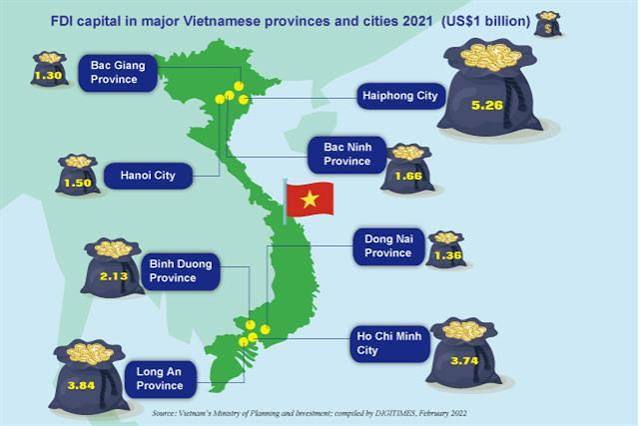
Vietnam has become a preferred destination for multinational companies shifting production out of China. Chemical producers and downstream manufacturers are investing in:
Industrial chemical blending facilities
Polymer processing plants
Paints, coatings, and adhesives production units
FDI brings not only capital but also technology transfer, improving local chemical manufacturing capabilities.
Vietnam offers relatively low labor costs combined with improving infrastructure and logistics networks. For chemical companies, this means:
Lower production and operating costs
Competitive export pricing
Attractive margins for export-oriented production
Vietnam’s participation in multiple free trade agreements (FTAs) has strengthened its access to global markets. This makes it easier for chemical producers to export to:
ASEAN countries
European markets
North America (under specific compliance frameworks)
This trade openness increases Vietnam’s attractiveness as a production base.
The government has heavily invested in industrial parks and economic zones designed specifically for manufacturing and chemicals. These zones offer:
Infrastructure-ready land
Utilities and logistics integration
Regulatory simplification for investors
Vietnam’s chemical industry is not uniform; certain segments are growing faster than others.
These include coatings, adhesives, construction chemicals, and performance additives. They are in high demand due to construction growth and manufacturing expansion.
Driven by packaging, consumer goods, and electronics industries, plastics remain one of the strongest chemical demand segments.
Vietnam’s agricultural sector still plays a major role in the economy, supporting demand for fertilizers and crop protection chemicals.
Solvents, cleaning agents, and processing chemicals are increasingly being sourced locally as domestic production expands.
Vietnam is becoming more than just a production location—it is evolving into a supply chain node connecting multiple global flows.
It now plays three important roles:
Inbound hub for chemical raw materials and intermediates
Processing base for converting inputs into higher-value products
Export platform for regional and global distribution
This makes Vietnam strategically important for companies looking to build diversified and resilient supply chains in Asia.
For international chemical suppliers, Vietnam presents both opportunities and challenges.
Rapidly growing demand for imported chemicals
Increasing number of local manufacturing partners
Strong long-term industrial growth outlook
Expanding downstream industries requiring specialized inputs
Fragmented distribution networks
Regulatory complexity across chemical categories
Need for strong local partnerships and agents
Price sensitivity in commodity chemical segments
Success in Vietnam often depends on building strong local relationships and understanding industry-specific regulations.
For international buyers sourcing from Vietnam, several factors are important:
As the market grows quickly, supplier quality can vary. Buyers need strong due diligence processes for:
Production capability
Quality certifications
Export experience
Infrastructure is improving, but regional logistics can still vary in efficiency. Planning inventory buffers is often necessary.
Because Vietnam imports many raw materials, local chemical pricing can be influenced by global commodity fluctuations.
Export-oriented suppliers are increasingly aligned with international standards, but verification remains important, especially for specialty chemicals.
Vietnam’s chemical manufacturing sector is expected to continue growing as global supply chains diversify further. Over the next decade, the country is likely to:
Increase domestic production of specialty chemicals
Strengthen its role in ASEAN chemical trade
Attract more high-value chemical investments
Develop deeper integration with global supply chains
While it may not replace traditional chemical giants, Vietnam is steadily becoming a critical supporting hub in the global chemical ecosystem.
Vietnam’s rise in chemical manufacturing supply chains reflects a broader transformation in global trade patterns. Driven by manufacturing growth, foreign investment, and trade integration, the country is evolving from a chemical importer into a hybrid producer–consumer hub.
For global suppliers, Vietnam offers expanding market access and long-term growth potential. For buyers, it provides a growing alternative sourcing base in an increasingly diversified and resilient global chemical supply chain.
As industrial development continues, Vietnam’s role in the chemical sector is set to become even more significant in the years ahead.
Found this useful?
Continue Reading
India’s polypropylene market is facing supply pressure as feedstock restrictions affect around 80% of domestic PP capacity. Buyers are evaluating imports, alternative suppliers and pricing strategies before further market changes.