Waterproofing Chemicals: Industrial Uses and Product Selection
Waterproofing chemicals help protect buildings, industrial facilities and infrastructure from water penetration and moisture-related deterioration. These products create protective barriers, reduce concrete permeability or seal vulnerable areas where water can enter. Manufacturers offer different formulations for roofs, basements, foundations, water-retaining structures, tunnels and other construction applications.
Selecting the right waterproofing chemical requires an understanding of the surface, exposure conditions and expected performance. A product suitable for a basement wall may not provide the flexibility or weather resistance required for an exposed roof. Buyers must therefore evaluate product chemistry, application methods, compatibility and technical specifications before making procurement decisions.
1. What Are Waterproofing Chemicals?
Waterproofing chemicals are construction materials designed to limit water penetration through concrete, masonry, roofs and other building surfaces. They work through different mechanisms, including forming surface membranes, reducing the movement of water through concrete pores and sealing cracks or construction joints.
Some products are applied directly to existing surfaces, while others are incorporated into concrete or mortar during production. The appropriate method depends on the structure and the source of water exposure.
Waterproofing products generally fall into several categories:
Cementitious coatings: Cement-based formulations used on concrete and masonry surfaces.
Liquid-applied membranes: Flexible coatings that cure into continuous protective layers.
Bituminous systems: Asphalt-based coatings and membranes used in roofs and underground structures.
Crystalline products: Reactive materials that help block water pathways within concrete.
Integral waterproofing admixtures: Additives incorporated into concrete or mortar.
Injection grouts and sealants: Products used to seal cracks, joints and specific leakage paths.
These categories are not interchangeable. Each addresses different conditions, and some projects require several products as part of a complete waterproofing system.
2. Major Types of Waterproofing Chemicals
Manufacturers develop waterproofing chemicals for different substrates, application methods and exposure conditions. Understanding their characteristics helps buyers identify suitable products for specific projects.
Cementitious Waterproofing Coatings
Cementitious waterproofing products contain cement-based materials and selected additives that help create a water-resistant coating. Some formulations include polymer modifiers to improve adhesion and flexibility.
They are commonly used in bathrooms, water tanks, concrete foundations, swimming pools and other cement-based structures. Their compatibility with concrete and masonry makes them useful for many construction applications.
Buyers should distinguish between rigid and flexible formulations. Flexible products may accommodate limited substrate movement, while rigid coatings are better suited to stable surfaces.
Polyurethane Waterproofing Membranes
Polyurethane, commonly known as PU, is used in liquid-applied waterproofing systems. Once cured, the material forms a continuous membrane that can provide flexibility and help accommodate certain levels of substrate movement.
PU systems are used on roofs, terraces, balconies, podium decks and other areas where a seamless protective layer is required. Their performance depends on formulation, application thickness, surface preparation and curing conditions.
Some polyurethane products require a protective topcoat when exposed to sunlight. Buyers should check the manufacturer's guidance for UV exposure, moisture conditions and maintenance requirements.
Bituminous Waterproofing Products
Bituminous waterproofing materials use asphalt-based compounds to create protective coatings or membranes. They are widely used in foundations, retaining walls, underground structures and roofing applications.
Products may be supplied as liquid coatings, polymer-modified emulsions or prefabricated membrane sheets. Some membranes use modified bitumen to improve flexibility and performance under changing temperature conditions.
Bituminous systems can provide effective protection in suitable applications, but buyers should review exposure limitations and determine whether the material needs an additional protective layer.
Crystalline Waterproofing Chemicals
Crystalline waterproofing products contain reactive components that interact with moisture and materials within concrete. The resulting crystalline formations help block capillary pathways through which water may move.
These products are used in basements, foundations, water tanks, retaining walls and other concrete structures. Certain systems are applied as surface treatments, while others are added directly to concrete as admixtures.
Crystalline products are generally intended to reduce water movement through concrete. They should not be treated as replacements for movement-joint systems or solutions for every type of structural crack.
Integral Waterproofing Admixtures
Integral waterproofing admixtures are added to concrete or mortar during mixing. Depending on their chemistry, they can help reduce permeability or modify the movement of water through the hardened material.
They are used in slabs, foundations, water-retaining structures and other concrete applications. Because they become part of the concrete mixture, they can provide water-resistance benefits without relying entirely on a separate surface coating.
The correct dosage and compatibility with cement and other admixtures must be confirmed through technical documentation and appropriate mix testing.
3. Industrial Applications of Waterproofing Chemicals
Waterproofing chemicals serve a wide range of industries because moisture protection is important for structural durability, equipment protection and building maintenance.
Commercial and Industrial Roofing
Factories, warehouses, shopping centers and commercial buildings often have large roof areas exposed to rainfall, sunlight and temperature changes. Waterproofing membranes and liquid-applied coatings help protect these surfaces against water penetration.
PU, acrylic and bituminous systems are used depending on roof design, exposure conditions and maintenance requirements. Buyers should consider UV resistance, flexibility, drainage conditions and expected foot traffic when selecting a product.
Basements and Underground Structures
Basements, tunnels, parking structures and underground foundations can experience moisture from surrounding soil and groundwater. Waterproofing systems help protect these structures from water entering through walls, slabs and construction joints.
Bituminous membranes, cementitious coatings, crystalline products and other underground waterproofing systems may be considered according to the water exposure and construction design. Joint detailing and drainage provisions also influence overall performance.
Water Tanks and Treatment Facilities
Water tanks, reservoirs and treatment facilities require suitable waterproofing to reduce leakage through concrete surfaces. Cementitious and crystalline products are used in selected applications, subject to compatibility with the intended water contact and project requirements.
For potable-water structures, buyers must verify that the selected product meets the applicable requirements for contact with drinking water. General-purpose waterproofing coatings should not automatically be assumed suitable for this use.
Bridges, Roads and Infrastructure
Infrastructure structures experience moisture, weather exposure and, in some environments, chemicals that can contribute to concrete deterioration. Waterproofing systems help protect concrete surfaces and reduce water ingress into vulnerable areas.
Bridge decks, retaining walls, foundations and selected road structures may use membranes, protective coatings and joint-sealing products. Product selection must reflect the structure's movement, exposure conditions and specified engineering requirements.
Manufacturing and Industrial Flooring
Industrial floors may encounter cleaning water, process liquids, abrasion and chemical exposure. Waterproofing and protective coating systems can help limit moisture penetration and protect concrete surfaces.
Buyers should distinguish between waterproofing products and chemical-resistant floor coatings. A product designed to resist water may not withstand exposure to oils, solvents or aggressive industrial chemicals.
4. Key Factors for Selecting Waterproofing Products
Choosing a waterproofing chemical requires buyers to match product characteristics with the actual conditions of the project. A product's general description is not enough to establish its suitability.
Substrate and Surface Condition
The first consideration is the material receiving the waterproofing treatment. Concrete, masonry, metal and previously coated surfaces may require different preparation methods and product formulations.
Buyers should check whether the product is suitable for new or existing surfaces and whether it can be applied to damp substrates. Surface cleanliness, cracks and existing coatings can also influence adhesion and performance.
Water Exposure and Pressure
The source and intensity of water exposure affect product selection. A roof exposed to rainfall has different requirements from a basement wall exposed to groundwater pressure.
Buyers should identify whether the structure faces occasional moisture, continuous water contact or hydrostatic pressure. The selected system must have suitable performance documentation for the intended exposure.
Flexibility and Crack Bridging
Structures may experience movement caused by temperature changes, settlement and normal service conditions. A rigid coating may not accommodate the same movement as a flexible membrane.
Where movement is expected, buyers should review flexibility and crack-bridging performance. Construction joints and movement joints may also require dedicated water stops or sealants rather than relying on a general surface coating.
Application Method and Curing Conditions
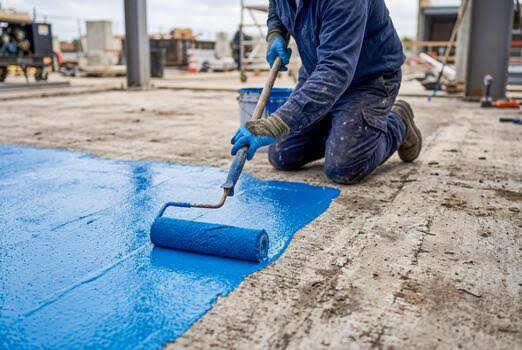
Waterproofing products can be brush-applied, roller-applied, sprayed, trowelled or installed as prefabricated sheets. The application method affects labor requirements, equipment needs and project scheduling.
Temperature, humidity, substrate moisture and curing time can influence installation quality. Buyers should review the manufacturer's application instructions and confirm that site conditions are suitable.
Technical Standards and Product Documentation
Technical documentation helps buyers compare products using measurable performance information. Relevant details may include adhesion, water permeability, elongation, crack bridging, chemical resistance and service temperature.
Standards depend on the product type and intended use. For example, EN 1504-2 addresses surface protection systems for concrete, while EN 13956 covers plastic and rubber sheets used for roof waterproofing. Buyers should verify the applicable standard and required test results against project specifications.
5. Important Buyer Considerations When Sourcing Waterproofing Chemicals
Product selection is only one part of procurement. Buyers must also assess supplier reliability, documentation, packaging and the consistency of supplied materials.
Product Quality and Consistency
Waterproofing performance depends on the formulation and quality of the supplied product. Buyers should review technical data sheets and certificates of analysis where applicable.
For larger projects, consistency between batches is important. Changes in product characteristics can affect application, curing and final performance.
Supplier Experience and Technical Support
Suppliers should be able to explain the product's intended applications, limitations and installation requirements. Technical support is particularly useful when a project involves unusual surfaces, complex details or demanding exposure conditions.
Buyers should also evaluate the supplier's ability to provide suitable documentation and respond to technical questions.
Cost, Coverage and Project Requirements
The lowest purchase price does not necessarily represent the best procurement value. Buyers should compare the recommended application rate, number of coats, required primers, protective layers and installation costs.
Coverage estimates should be checked against the actual surface condition and product instructions. A complete system may require several compatible materials rather than a single coating.
Storage, Packaging and Delivery
Waterproofing chemicals may be supplied in pails, drums, bags or membrane rolls. Buyers should confirm packaging sizes, storage conditions, shelf life and transportation requirements.
Delivery planning is also important for construction projects with fixed application schedules. Delays or unsuitable storage conditions can affect project progress and product quality.
6. Market Trends and Future Requirements
Demand for waterproofing chemicals is linked to construction activity, infrastructure development, building renovation and the need to protect existing structures. Industrial facilities and commercial buildings also require suitable waterproofing systems to manage moisture-related maintenance risks.
Manufacturers continue to develop products with improved flexibility, adhesion, application convenience and durability. Liquid-applied membranes and advanced cementitious formulations are among the options used for projects with different surface and exposure requirements.
Sustainability is also influencing product development. Buyers are increasingly interested in formulations that support longer service life, efficient material use and reduced maintenance requirements. Product evaluation should still rely on verified technical performance rather than broad environmental claims.
For suppliers and distributors, these requirements create opportunities to provide specialised product ranges, dependable documentation and technical support. Buyers who assess the complete waterproofing system can make more informed decisions and reduce the risk of selecting products that do not match site conditions.
7. Making Better Waterproofing Procurement Decisions
Waterproofing chemicals help protect buildings and industrial infrastructure from moisture penetration and water-related deterioration. Cementitious coatings, PU membranes, bituminous systems, crystalline products and integral admixtures each serve different purposes.
The most suitable product depends on the substrate, water exposure, structural movement and required service conditions. Buyers should compare technical specifications, verify relevant standards and assess supplier reliability before placing orders.
A well-planned procurement process considers the complete waterproofing system rather than focusing on the price of an individual product. This approach supports better material selection, more reliable application and long-term protection of construction assets.
Coconut Water
Found this useful?